
Does ADHD Get Worse with Age: A Lifespan Guide

The most popular advice about ADHD and aging is also the least useful: “You should grow out of it.” That answer treats ADHD as a childhood behavior problem and ignores what often changes later, including sleep, hormones, workload, emotional health, and the amount of structure in daily life.
A better answer to does ADHD get worse with age is more precise. ADHD doesn't usually follow a steadily progressive path, but its symptoms can become more disruptive when adult demands rise, compensating strategies fail, or another condition affects attention. The question isn't only whether symptoms are stronger. It's what is amplifying, masking, or exposing the existing pattern at this stage of life.
Rethinking the Question Everyone Asks About ADHD and Aging
The answer to does ADHD get worse with age is rarely a simple yes or no. ADHD is a neurodevelopmental disorder that typically persists rather than degenerating year after year. What changes is often the symptom profile, the demands placed on attention, the burden of other health problems, or the brain's normal aging process.
Research also shows why “outgrowing” ADHD can be misleading. In a 10-year follow-up of boys diagnosed in childhood, 35% still met full criteria as adults, while 78% showed some evidence of persistence when subthreshold symptoms, impairment, or treatment were included. The same evidence base estimated mean adult persistence at 43%, with studies published after 2011 reporting 55% persistence compared with 34% in studies from 1985 to 2011 in the long-term follow-up study. A person may fall below the diagnostic threshold and still lose track of tasks, miss appointments, struggle with organization, or need treatment.
The more useful question is what has shifted around the ADHD pattern and within the person's overall health.
Four forces can change the experience
A student may function reasonably well with a fixed timetable, reminders from adults, and frequent feedback. Years later, the same person may face open-ended projects, email overload, household administration, parenting, or caregiving. The underlying pattern may feel stronger because daily life now requires more self-directed planning and fewer external supports.
Four forces deserve attention:
Symptom profile: Running and climbing may give way to inner restlessness, fidgeting, excessive talking, or difficulty relaxing. Inattention may remain more visible than hyperactivity.
Demand mismatch: Work, finances, relationships, parenting, and caregiving can exceed the organizational systems that once kept life manageable.
Comorbidity load: Anxiety, depression, sleep disorders, substance use, and chronic stress can intensify distractibility, emotional reactivity, and poor impulse control.
Aging cognition: Normal changes in processing speed or memory can resemble ADHD. Brand-new or rapidly changing cognitive symptoms may suggest another condition and deserve assessment.
A careful re-evaluation asks:
Which difficulties have been present since earlier life?
What new responsibilities or losses changed daily demands?
How are sleep, mood, medications, hormones, and physical health affecting attention?
Is the problem longstanding, or is it a new cognitive change?
Those answers help a clinician separate persistent ADHD from conditions that mimic or amplify it, rather than labeling every later-life difficulty as ADHD progression.
What ADHD Actually Is Beyond the Stereotypes
ADHD isn't a character flaw, a lack of discipline, or proof that someone doesn't care. It involves persistent difficulties with attention regulation and executive functioning, the mental skills that help a person hold information in mind, estimate time, begin tasks, regulate emotion, and follow a plan.
Inattention doesn't mean laziness. It can mean losing the thread during a long conversation, shifting away from an important task when it becomes dull, or forgetting a step that was understood moments earlier. Hyperactivity doesn't always mean disruptive behavior. It may reflect inner restlessness, frequent movement, excessive talking, or discomfort with stillness. Impulsivity is difficulty creating a pause between an urge and a response, which can appear as interrupting, rapid decisions, emotional reactions, or impulsive spending.
Executive function in everyday language
Think of executive function as the brain's project-management system. ADHD can affect several parts of that system:
Working memory: You know what you intended to do, but the intention disappears when another demand interrupts.
Time management: A task feels far away until a deadline is suddenly close.
Task initiation: You understand the importance of an activity but can't reliably get started.
Emotional regulation: Frustration arrives quickly and takes longer to settle.
Prioritization: Several tasks feel equally urgent, making it difficult to choose the first action.
The difference between ADHD and everyday forgetfulness is pattern, duration, and impairment. Diagnostic evaluation considers whether symptoms have been present from childhood, occur across more than one setting, persist over time, and interfere with work, school, relationships, or daily responsibilities. Occasional distraction during a stressful week doesn't establish ADHD.
For a plain-language comparison of common presentations, see ADD versus ADHD symptoms. A clinician still needs to assess the full history because anxiety, depression, trauma, sleep problems, medication effects, and medical conditions can produce similar complaints.
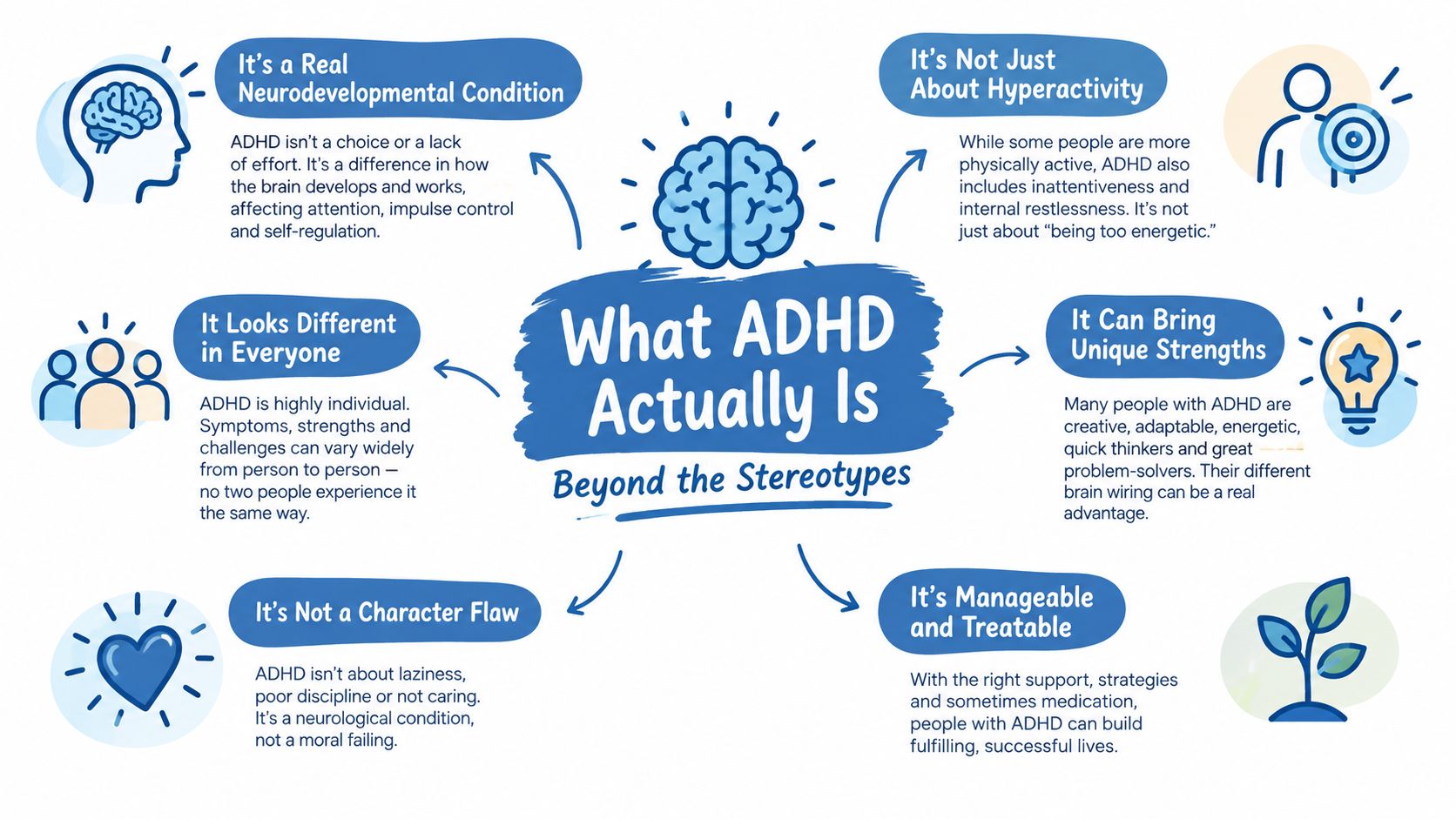
This executive-function lens helps separate two questions: Are the core symptoms changing, or are the consequences becoming greater? That distinction becomes especially important across adulthood.
How ADHD Symptoms Change From Childhood Through Older Adulthood
ADHD does not simply become better or worse with age. The more useful question is what changes around it: the symptom pattern, the demands placed on the person, other health conditions, and the cognitive effects of aging. A child may draw attention through classroom behavior. An adult may struggle with missed deadlines, unfinished paperwork, or chronic lateness while appearing outwardly composed.
A lifespan view
Life stage | Approx. persistence | Common difficulties |
|---|---|---|
Childhood | Symptoms begin early by definition | Distractibility, impulsive behavior, visible hyperactivity |
Adolescence | Symptoms often fluctuate | Inattention, restlessness, emotional reactivity, school difficulties |
Young adulthood | Persistence varies across reviews | Time management, relationship strain, academic or work disruption |
Midlife | Persistence varies by study and criteria | Disorganization, competing demands, sleep and mood-related amplification |
Older adulthood | Persistent ADHD prevalence was estimated at 0.8% above age 60 in one lifespan review | Inattention, missed appointments, medication-management difficulty, diagnostic overlap |
Reviews of childhood ADHD suggest that a substantial minority continue to experience clinically important symptoms in adulthood. Later studies have generally reported higher persistence than earlier studies in the lifespan review. Differences in diagnostic criteria, follow-up methods, treatment, and the age of participants affect these estimates, so no single percentage can predict one person's course.
The same lifespan review reported that persistent ADHD prevalence declined from 5.1% at ages 18 to 24 to 0.8% above age 60. That pattern may reflect symptom change, differences in diagnosis, under-recognition, survival and participation factors, or the limited amount of older-adult research. A lower diagnosis rate in later life does not prove that ADHD has disappeared.
A large New Zealand cohort followed participants for 18 years and found worse functioning across more than 60% of measured outcomes among adults with childhood ADHD compared with siblings and controls in the longitudinal cohort report. Persistent ADHD was also associated with worse outcomes than remitted ADHD in several areas. These findings describe the effects of ongoing symptoms as responsibilities expand. They do not show that ADHD necessarily worsens biologically.
What tends to drive difficulty at each stage
School structure can reveal problems with sustained attention, waiting, and impulse control in childhood. Adolescence removes some supervision while adding changing schedules, social pressure, emotional stress, and possible mood symptoms. The same vulnerability may therefore cause different problems at each age.
Young adults often manage deadlines, transportation, finances, work expectations, and relationships with less external structure. In midlife, caregiving, sleep disruption, anxiety, depression, hormonal changes, and overlapping responsibilities can reduce the margin for error. A person who once managed through reminders from parents or teachers may now be responsible for every reminder themselves.
Older adulthood adds a more complicated diagnostic question. Lifelong ADHD may involve disorganization and missed appointments, while new memory or cognitive changes require medical assessment rather than automatic attribution to ADHD. A careful review should ask whether the difficulty is longstanding, whether it occurs across settings, what changed recently, and whether sleep, mood, medication, hearing, medical illness, or cognitive decline could be contributing.
For practical activities that may complement professional care, see the Velma attention exercises guide. Adults who identify a mainly restless or impulsive pattern can also read about hyperactive ADHD in adulthood.
The apparent contradiction is common: symptoms may remain familiar while the setting changes dramatically. Re-evaluating the symptom pattern, daily demands, comorbid conditions, and age-related cognitive changes gives a clearer answer than asking whether ADHD naturally gets worse.
Why Hyperactivity Fades but Inattention Often Lingers
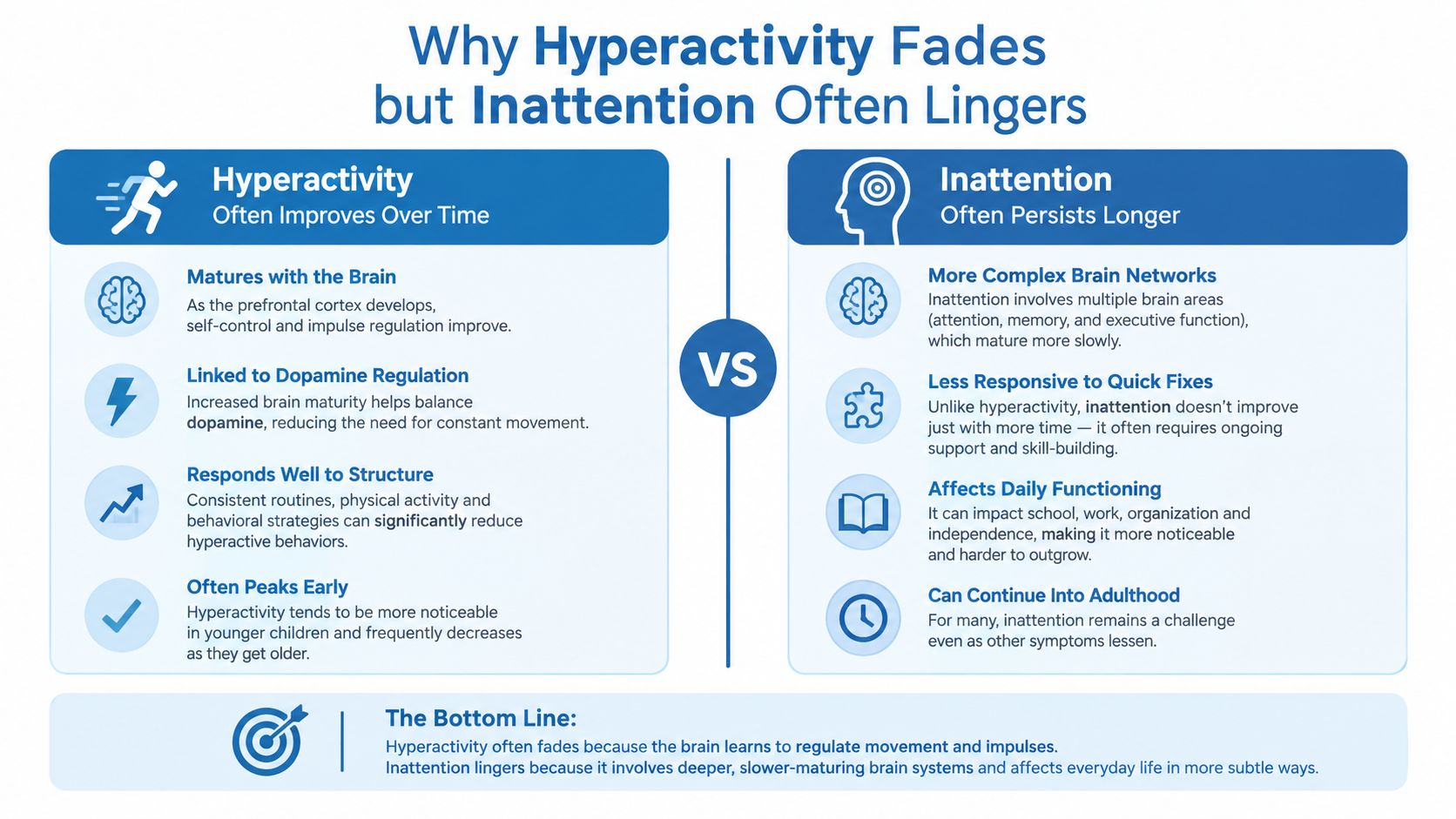
Many adults expect ADHD to mean obvious physical hyperactivity. When that symptom becomes less visible, they may assume ADHD has resolved. In practice, hyperactivity and impulsivity often become quieter or more internal, while problems with attention, organization, and sustained mental effort remain costly.
A child may leave a seat repeatedly or run through the classroom. An adult may tap a foot under a desk, pace during phone calls, talk rapidly, change tasks constantly, or feel unable to relax. Social expectations also teach adults to suppress visible movement. Holding still can hide the symptom from others without making the underlying restlessness disappear.
The adult demand mismatch
Inattention becomes especially disruptive when life requires self-directed executive functioning. A workplace may expect an employee to prioritize several projects without a clear sequence. Parenting can require remembering school messages, medical appointments, meals, clothing, and transportation. Financial management involves bills, forms, renewals, and long-term planning.
The same attention difficulty that caused unfinished homework may later produce an unfinished tax form, an unopened medical letter, or a project that remains untouched until pressure becomes intense. The consequence feels larger because fewer people are monitoring the task.
The Centers for Disease Control and Prevention explains that adult ADHD symptoms can change with age, with hyperactivity decreasing or appearing as extreme restlessness, and symptoms becoming more severe when adult demands increase in its overview of ADHD in adults. That description fits the clinical distinction between symptom expression and functional impairment.
Why the experience can feel sudden
A person may report that ADHD became “worse” in their thirties or forties after a promotion, a new baby, a divorce, or a move into remote work. Often, the person's previous supports had been doing essential work without them noticing. A structured school day, a highly organized partner, a predictable job, or a shared household calendar may have compensated for weaknesses in planning and working memory.
When those supports disappear, the person must generate the structure internally. That can expose a lifelong difficulty that had been managed rather than cured. Adults who mainly struggle with sustained attention may find inattentive ADHD more closely matches their experience than the childhood stereotype.
Hidden Reasons ADHD Can Feel Like It Is Getting Worse
A mid-career professional starts missing meetings after years of reliable performance. A new parent reads the same email repeatedly without absorbing it. A perimenopausal executive forgets familiar names and loses the thread of conversations. These experiences can reflect ADHD, but they can also reflect new factors acting on an existing vulnerability.
Consider a burned-out parent who sleeps in fragments and has no protected time to recover. Sleep disruption can reduce attention, working memory, and emotional control, making ordinary ADHD symptoms feel dramatically stronger. If loud snoring, morning headaches, restless sleep, or persistent daytime fatigue are present, a clinician may need to evaluate for a sleep disorder rather than just increase ADHD treatment.
A mid-career professional may be carrying untreated anxiety or depression. Anxiety can pull attention toward threat and rumination, while depression can reduce energy and task initiation. The person may describe “worse ADHD,” but the most effective intervention may involve treating the mood condition, improving sleep, and reducing chronic stress alongside an ADHD plan.
Common amplifiers deserve direct questions
Sleep problems: Insomnia, irregular schedules, and possible sleep apnea can impair concentration and worsen irritability.
Anxiety and depression: These conditions can mimic or intensify inattention, poor motivation, and forgetfulness.
Alcohol or cannabis: Some people use substances to quiet restlessness or make sleep easier, but the aftereffects can worsen attention, mood, and sleep quality.
Hormonal transitions: Perimenopause can coincide with changes in attention, memory, sleep, and emotional regulation. The evidence supports clinical attention to the pattern, but it doesn't justify assuming every midlife cognitive complaint is ADHD.
Accumulated disorganization: Years of unpaid bills, clutter, missed follow-ups, and unfinished projects create additional stress, which further reduces available executive capacity.
Clinical rule: A sudden change after a long stable period deserves a broad assessment, not an automatic conclusion that ADHD has progressed.
The relationship between fatigue and ADHD is particularly important because tiredness can be both a symptom amplifier and a sign of another condition. Older adults also need careful evaluation when new forgetfulness appears. Emerging literature has explored associations between ADHD and some non-amnestic dementia subtypes, including Lewy body disease, but ADHD doesn't turn into dementia. The evidence in older adults remains limited, and lifelong symptoms must be distinguished from a genuine departure from previous functioning in the recent review of ADHD, aging, and dementia questions.
Signs It Is Time for a Re-Evaluation at Any Age
A re-evaluation isn't reserved for a crisis. It makes sense whenever symptoms, health, treatment, or life demands change enough that the current explanation no longer fits.
Use these signals as prompts
A new loss of focus: Attention has changed after a previously stable period, especially if the shift was rapid or affects familiar tasks.
Symptoms after stopping medication: Difficulties return after a medication change, missed follow-up, or decision to stop treatment.
Mood or anxiety changes: Worry, low mood, irritability, panic, or emotional volatility now occur alongside attention problems.
Safety and relationship effects: Forgetfulness contributes to driving concerns, accidents, serious conflict, financial problems, or repeated broken commitments.
Hormonal or medical changes: Perimenopause, suspected andropause, thyroid problems, chronic pain, new medications, or other health changes coincide with cognitive complaints.
New cognitive symptoms later in life: Memory loss, confusion, language changes, or difficulty with familiar activities represent a departure from lifelong ADHD patterns.
Life transitions can also reveal previously compensated symptoms. Retirement removes workplace structure. Divorce may remove shared calendars and household reminders. A new medical diagnosis can add appointments, medications, and paperwork that overwhelm an already stretched system.
Bring concrete examples to an appointment. Note when the change began, where it occurs, what makes it better or worse, how sleep has been, and whether another person has noticed it. A clinician can then separate core ADHD symptoms from medication effects, mood symptoms, sleep disorders, hormonal changes, medical illness, or age-related cognitive conditions.
Urgent evaluation is appropriate for sudden confusion or major cognitive change. If depression includes thoughts of self-harm, seek same-day help through emergency services or a crisis resource.
Treatment, Lifestyle, and Next Steps That Actually Help
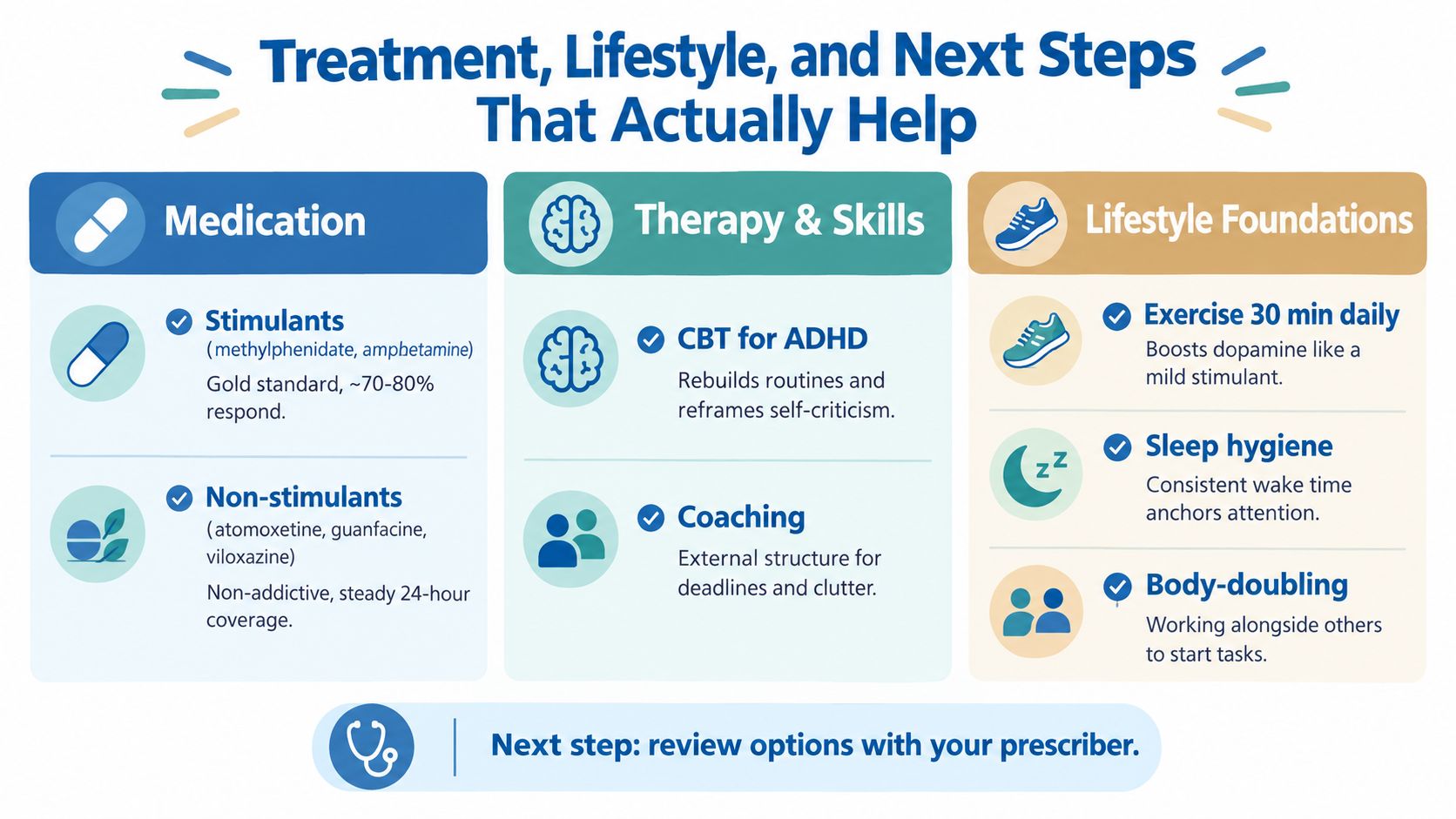
Treatment should match the person's symptoms, health history, age, priorities, and response over time. Medication can help attention and impulse control, but it works best when paired with external systems that reduce the number of tasks the brain must hold at once.
Medication requires individualized monitoring
Stimulants, including methylphenidate and amphetamine medications, are commonly used for ADHD. Non-stimulants, including atomoxetine, guanfacine, and viloxazine, may be considered when stimulants aren't tolerated, aren't appropriate, or don't provide adequate coverage. A prescriber may review sleep, appetite, blood pressure, cardiovascular history, anxiety, other medications, and substance use before adjusting treatment.
Age doesn't automatically rule out a medication, but changing metabolism, sleep, heart health, and medical conditions can affect tolerability. Adults should never change a dose or stop a prescribed medication without discussing it with the prescriber. For a focused overview of alternatives, see non-stimulant medication for ADHD.
Build support outside the brain
Cognitive behavioral therapy for adult ADHD can target procrastination, self-criticism, planning, emotional regulation, and follow-through. ADHD coaching or skills groups can add external accountability and help translate goals into visible next actions.
Practical tools often include:
One calendar: Use a single system, such as Google Calendar or a paper planner, rather than scattering commitments across several apps.
Time blocking: Assign a task to a specific period instead of writing “work on project” on an unscheduled list.
External reminders: Set a reminder when the appointment or obligation is created, not when you hope you'll remember it.
Visible organization: Keep keys, medication, paperwork, and charging devices in fixed locations.
Body doubling: Work alongside another person, in person or through a structured virtual session, to make task initiation easier.
Sleep protection: Keep a consistent wake time and address insomnia, delayed sleep, or suspected sleep apnea.
Movement and regular meals: Aerobic activity and consistent meals may support energy and attention, while individual supplement claims require caution. A neutral overview of supplements is available in this ADHD supplement guide from VitzAi.com.
Workplace accommodations may include written instructions, quieter work areas, deadline buffers where appropriate, project-management tools, or scheduled check-ins. Couples may benefit from shared calendars, agreed reminder systems, and clear division of household responsibilities rather than relying on one partner's memory.
Prepare for a useful evaluation
Before an appointment, write a one-page history covering childhood patterns, current symptoms, work and relationship effects, sleep, mood, medications, medical conditions, and previous treatments. Bring school records or a family member's observations if available, but don't assume you need a childhood diagnosis to begin an assessment.
Refresh Psychiatry & Therapy offers psychiatric evaluations, ADHD treatment planning, medication management, therapy, and telepsychiatry for Florida residents. A practical next step is to schedule an evaluation, ask whether baseline medical testing is appropriate, and bring a partner or family member when collateral history could clarify the pattern.
Refresh Psychiatry & Therapy can help adults review lifelong ADHD symptoms, changing demands, sleep, mood, medication options, and cognitive concerns through coordinated psychiatric care and therapy. Visit Refresh Psychiatry & Therapy to explore evaluation and treatment options, and review your benefits with Aetna, UnitedHealthcare, Cigna, Blue Cross Blue Shield, Humana, TRICARE, UMR, or Oscar. Contact us or call Refresh Psychiatry at (954) 603-4081 to schedule your evaluation. We accept Aetna, United Healthcare/ UHC, Cigna, Blue Cross Blue Shield, Humana, Tricare, UMR, and Oscar insurance plans. This blog is for informational purposes only and does not constitute medical advice. Please consult a qualified mental health professional for personalized guidance.