
🧠 Mental Health Awareness Mens: A 2026 Guide for Men

Men account for roughly 3.9 times as many suicide deaths as women globally, a gap that has remained large across decades (global analysis). That fact changes the question. Men's mental health awareness isn't only about encouraging men to talk. It's about helping a man recognize what's happening, find care he can realistically use, and follow through before a crisis forces the issue.
I treat men across Florida, and the same pattern appears repeatedly. A man may understand that therapy could help, yet reject an appointment because it conflicts with work, feels too exposed, costs more than expected, or sounds like an open-ended conversation with no practical outcome. The most useful response is to make care concrete, private, coordinated, and easy to start.
What Men's Mental Health Awareness Really Means in 2026
Public discussion has grown, but recognition hasn't consistently become treatment. Awareness is incomplete if it stops at identification. In practice, mental health awareness means moving through four steps: noticing a meaningful change, naming the possibility of a treatable condition, choosing an appropriate entry point, and staying engaged long enough to evaluate whether the plan is working.
That distinction matters because depression, anxiety, trauma, ADHD, bipolar disorder, insomnia, and substance-related concerns don't always appear as sadness. A man may present with anger, overwork, poor sleep, physical tension, drinking, withdrawal, or risky decisions. A useful overview of how depression can look different in men is available in Refresh Psychiatry's guide to depression in women versus men.
Awareness must lead somewhere
A practical awareness message answers questions that slogans usually leave open:
What should I notice? Changes in sleep, mood, concentration, relationships, substance use, or risk-taking deserve attention when they persist or interfere with life.
What should I do first? A primary-care visit, psychiatric evaluation, therapy consultation, or telepsychiatry appointment can all be reasonable starting points.
What happens next? A clinician should explain the working diagnosis, treatment choices, expected trade-offs, and follow-up plan in plain language.
What if I don't want to talk for an hour? Treatment can be structured around goals, symptoms, skills, medication decisions, or a combination.
Telehealth and integrated therapy-plus-medication care can shorten the distance between concern and treatment. A man in Miami, Orlando, Tampa, Jacksonville, or a rural Panhandle community may not need to lose commute time or announce a mental-health visit to everyone around him. Secure virtual care also makes follow-up more practical, which matters because a good first appointment is only the beginning.
Men's Mental Health Awareness Month is observed in November in the United Kingdom, where mental-health organizations use it to promote conversation, support, and action (Mental Health UK awareness days). The calendar matters less than what a person does with the message. The goal is not to make men perform vulnerability. It's to make evidence-based help easier to recognize and use.
The Numbers Men Don't Talk About
The World Health Organization reports that in 2021, suicide deaths worldwide reached 12.6 per 100,000 males compared with 5.4 per 100,000 females. In higher-income countries, men die by suicide at more than triple the rate of women. The global suicide-burden analysis shows that this disparity has endured, with men accounting for about 3.2 times as many suicide deaths as women in 1950, 3.6 times as many in 1995, and 3.9 times as many in 2020. The same analysis estimates about 740,000 suicide deaths each year, or one every 43 seconds.
These figures describe population burden, not an individual's destiny. They do show why recognition must lead to accessible treatment rather than stop at awareness.
Treatment use tells a second story
U.S. treatment data show a clear gap in medication use. The Centers for Disease Control and Prevention reports that 7.4% of men took medication for depression compared with 15.3% of women. A national survey summary from the National Institute of Mental Health's 2021 mental health estimates reports mental-health treatment at 13.4% for men versus 24.7% for women, with talk therapy at 7.2% versus 11.7%.
The British Journal of Psychiatry study found that men were less likely than women to intend to seek help, with an odds ratio of 0.78, and less likely to have sought help, with an odds ratio of 0.66. In U.S. reporting cited by Healthline's overview of men's mental health, 40% of men with a mental health condition received support from mental-health services in 2021, compared with 51.7% of women.
Statistic | Men | Women |
|---|---|---|
Depression medication use in U.S. CDC data | 7.4% | 15.3% |
Mental-health treatment in national survey estimates | 13.4% | 24.7% |
Talk therapy in national survey estimates | 7.2% | 11.7% |
Mental-health service support in 2021 reporting | 40% | 51.7% |
The treatment gap is a conversion problem as much as a stigma problem. Awareness may help a man recognize risk, yet treatment still requires disclosure, clinician access, scheduling, cost decisions, and follow-up. Low-friction options such as telepsychiatry can remove travel and scheduling barriers for Florida patients. Integrated therapy and medication management can also reduce handoffs between providers, making it easier to turn concern into sustained care. Awareness opens the door. A workable care pathway helps a man enter and continue treatment.
How Men's Mental Health Symptoms Actually Show Up
A man I might see in practice rarely begins with, “I think I'm depressed.” He may say he's exhausted, under pressure, or irritated by everyone. His partner may describe a different picture: he comes home tense, snaps at the children, stops answering friends, and spends late nights scrolling or drinking because sleep won't come.
Consider the man whose depression shows up as a short fuse. At work, he's still meeting deadlines, but minor mistakes trigger disproportionate anger. At home, he says everyone is overreacting. The emotional pain is real even when sadness isn't the symptom he recognizes first.
The body and behavior often speak first
Another patient may report headaches, jaw clenching, stomach discomfort, or a racing mind at three in the morning. He calls it stress and postpones care because stress sounds temporary. Yet early-morning waking, persistent rumination, low energy, and loss of interest can signal depression or anxiety that deserves an evaluation.
Substance use can follow the same path. A man starts using alcohol or cannabis to quiet his thoughts after work, then needs it to relax, sleep, or tolerate social situations. The substance may provide short-term relief while worsening sleep, mood stability, motivation, and medication decisions. That pattern calls for honest assessment, not moral judgment.
You might also see withdrawal from a partner, children, friends, or hobbies that once provided pleasure. A formerly engaged father becomes physically present but emotionally absent. A recreational athlete stops attending. A business owner makes sudden, reckless gambles or drives aggressively because the usual consequences no longer feel important.
For a fuller discussion of these presentations, including irritability, risk-taking, substance misuse, sleep disturbance, and suicidal thoughts, see Refresh Psychiatry's guide to signs and symptoms of depression in men.
Clinical perspective: Calling a pattern “burnout” doesn't rule out depression, anxiety, trauma, substance misuse, or another treatable condition.
Recognizing one of these changes isn't proof of weakness or failure. It's a legitimate reason to schedule an evaluation, especially when symptoms affect safety, work, relationships, sleep, or substance use.
Why Men Still Don't Ask for Help
Men face two kinds of friction, and they reinforce each other. The first is attitudinal. A man may believe he should solve problems alone, distrust mental-health professionals, or worry that disclosure will change how his family, colleagues, or friends see him. The British Journal of Psychiatry findings above show that reluctance to seek help is tied to more than appointment availability.
Research involving men with recent suicidal or self-harm ideation found that only 8.5% were currently engaged with professional support. Lower help-seeking was strongly associated with reluctance to disclose mood symptoms to a physician, self-reliance and problem-solving norms, and uncertainty about psychotherapy (help-seeking study). A man may not reject care itself. He may reject a version of care he expects to be vague, exposing, or disconnected from his goals.
Access can defeat motivation
Structural barriers include cost, long waiting lists, limited service availability during working hours, and distrust of professionals. A UK and U.S. qualitative synthesis found that 27% of coded barriers involved access constraints (cross-national barriers study). Florida patients can also face provider shortages, travel demands, work conflicts, and insurance authorization delays, particularly when medication changes require coordination.
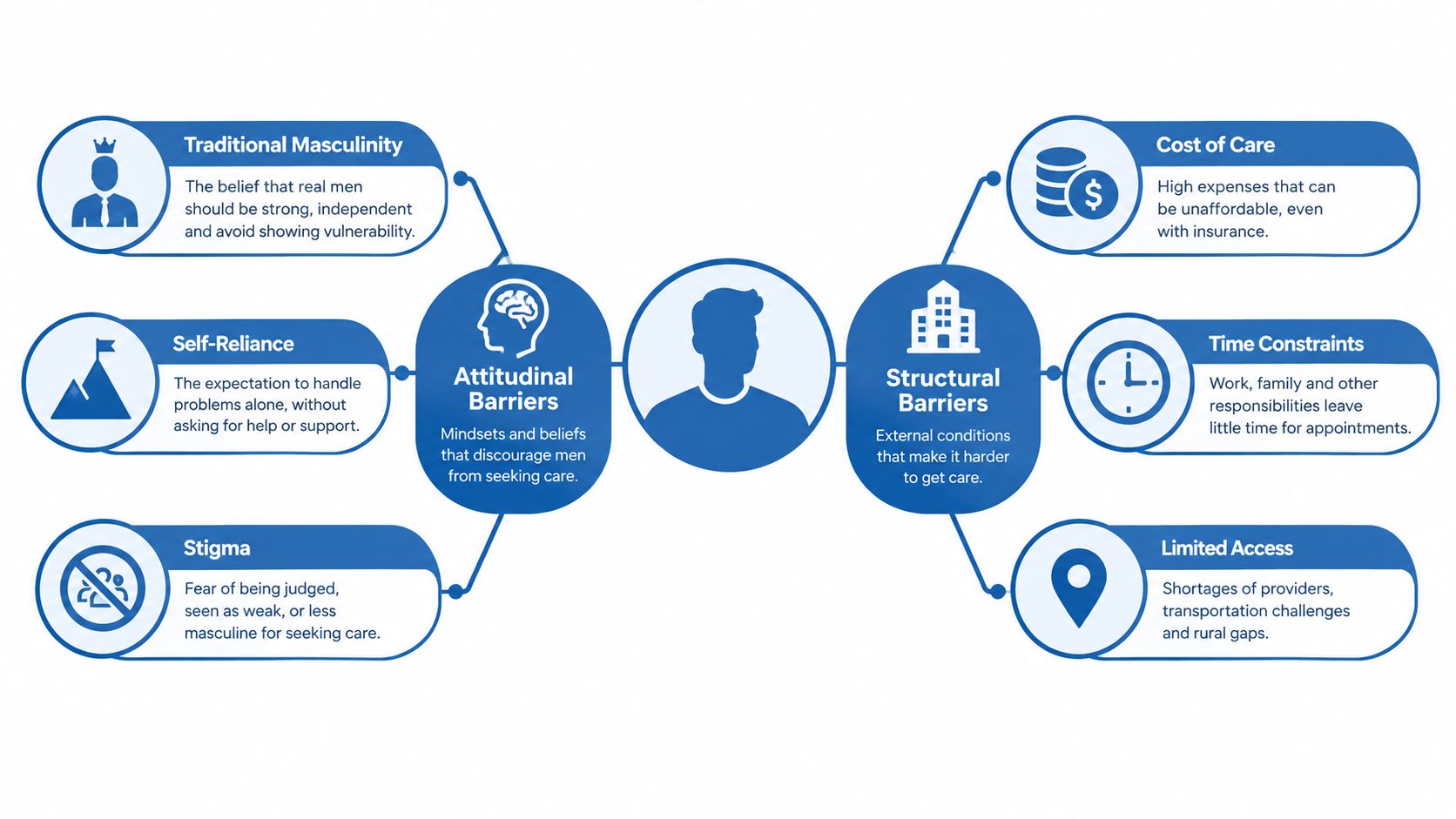
These barriers compound. Someone who already doubts whether he needs help is less likely to tolerate a complicated intake form, an appointment during work, or an unclear treatment recommendation. Family members can use practical tools such as Guiding Growth caregiver support resources to prepare for supportive conversations without turning them into confrontations.
A short educational video can also help families understand why a man may resist care even when symptoms are visible.
The central issue is treatment conversion. Reducing stigma matters, but so does reducing the number of steps between “something is wrong” and “I'm meeting with someone who can help.” Telepsychiatry, evening availability, clear explanations, insurance verification, and coordinated therapy and medication management address that practical gap. More detail on these obstacles appears in Refresh Psychiatry's discussion of barriers to mental-health treatment.
Evidence-Based Treatment Options That Work for Men
Treatment should match the problem, the person, and the level of risk. Men aren't resistant to treatment by definition. Many become active participants once the clinician explains the purpose of each intervention, respects autonomy, and connects care to outcomes they value, such as sleep, focus, relationships, work performance, or reduced anger.
Therapy can be structured and practical
Cognitive-behavioral therapy, or CBT, helps identify the relationship between thoughts, behaviors, emotions, and physical symptoms. For a man caught in rumination and avoidance, a therapist may use behavioral activation, problem-solving, exposure, sleep strategies, and specific between-session experiments. CBT doesn't require a person to narrate every feeling before doing anything useful.
Dialectical behavior therapy, or DBT, can be particularly relevant when distress appears as anger, impulsivity, self-harm urges, unstable relationships, or substance use. Skills for distress tolerance, emotion regulation, mindfulness, and interpersonal effectiveness give the patient something to practice during the moment a reaction usually takes over.
Medication management is another tool, not a character judgment. SSRIs and SNRIs may help depression and anxiety, while other agents may be considered based on diagnosis, sleep, attention, pain, mood instability, substance use, medical history, and prior response. A psychiatrist should discuss expected benefits, possible side effects, interactions, and what will be monitored. Medication decisions usually require follow-up rather than a single appointment, and the right choice may involve adjustment or a different option.
Telepsychiatry lowers logistical friction
Telepsychiatry removes travel and waiting-room barriers, but it isn't automatically the right format for every situation. It works well for many routine evaluations, medication follow-up visits, and therapy sessions when the patient has privacy, a stable connection, and a plan for emergencies. In-person care may be more appropriate when a clinician needs hands-on assessment or when safety and privacy cannot be managed virtually.
Modality | Best For | Typical Timeline | Delivery |
|---|---|---|---|
CBT | Rumination, avoidance, anxiety, depression | Structured sessions with progress reviewed over time | In person or telehealth |
DBT | Anger, impulsivity, self-harm urges, substance-related distress | Skills practice with ongoing coaching and review | In person or telehealth |
Medication management | Symptoms requiring pharmacologic treatment | Evaluation followed by monitoring and adjustment | Psychiatric visits |
Telepsychiatry | Privacy, travel, scheduling, and follow-up barriers | Based on clinical need and response | Secure virtual visits |
For medication questions, patients can review Refresh Psychiatry's overview of common anxiety medications, then discuss personal risks and options with a qualified prescriber. For moderate-to-severe presentations, combining therapy and medication often offers a stronger treatment plan than relying on either approach alone. The best plan is the one the patient understands, can access, and will continue.
How Friends and Family Can Actually Help
Start by dropping the language that creates shame. “Man up,” “just exercise,” and “you have nothing to be upset about” may sound motivating to the speaker, but they often tell the man that his distress is inconvenient or illegitimate. Don't force a diagnosis conversation, and don't rush to solve a problem he hasn't finished describing.
Use observations instead:
Name the change: “I've noticed you're sleeping poorly and pulling away from everyone. How have you been holding up?”
Ask directly about safety: “Are you thinking about hurting yourself or ending your life?” A direct question doesn't plant an idea. It creates room for an honest answer.
Offer one concrete option: “I can sit with you while you call a psychiatrist,” or “I'll drive you to the appointment.”
Respect his agency: “You don't have to decide everything today. We can start with one evaluation.”
Follow up: Send a text tomorrow, then check in again. A single intense conversation rarely changes an entrenched pattern.
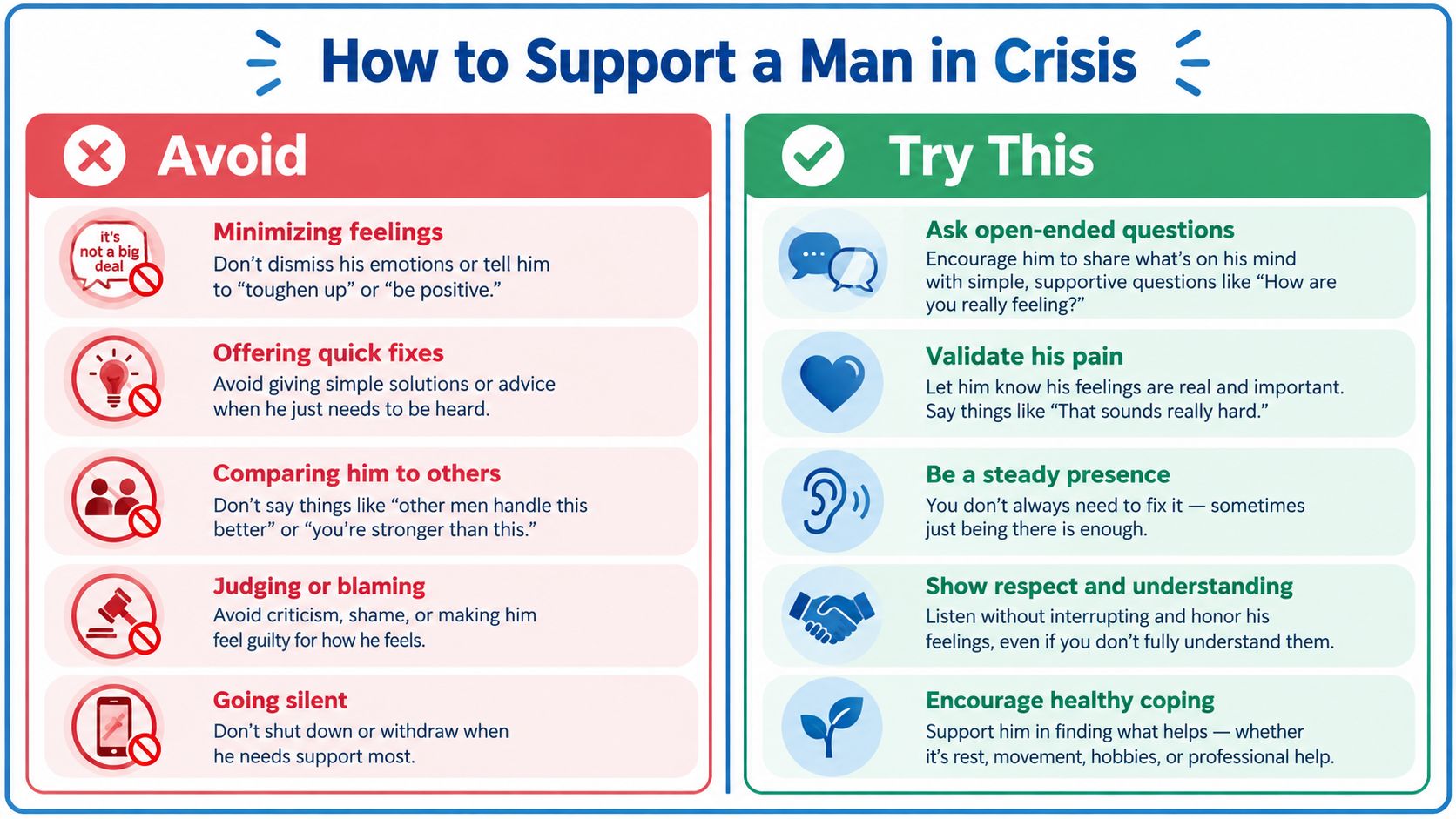
If he has a plan, access to a lethal means, or appears unable to stay safe, treat it as an emergency. Call or text 988, call 911, or go to the nearest emergency department. Support isn't about becoming his therapist. It's about making the next safe action easier.
Finding the Right Mental Health Care in Florida
The lowest-friction path usually begins with a short scheduling conversation, not a commitment to years of treatment. Ask whether the practice treats the symptoms you're experiencing, what the evaluation includes, whether telehealth is available in your location, and how insurance verification works. Patients comparing practices can also review practical guidance on how to find a psychiatrist.
Refresh Psychiatry & Therapy provides telemedicine across Florida, with secure visits available for patients who prefer care from home. Its published insurance list includes Aetna, UnitedHealthcare and UHC, Cigna, Blue Cross Blue Shield, Humana, Tricare, UMR, and Oscar, subject to eligibility and plan benefits. Confirming coverage before the appointment can prevent avoidable surprises.
A straightforward intake path
The practice describes a workflow that begins with a 15-minute scheduling call, followed by secure patient-portal paperwork and a 60-minute diagnostic evaluation with a board-certified psychiatrist. When appropriate, the psychiatrist can coordinate a warm hand-off to an in-house therapist for CBT or DBT. That structure keeps medication decisions and psychotherapy connected rather than forcing the patient to manage two unrelated systems.
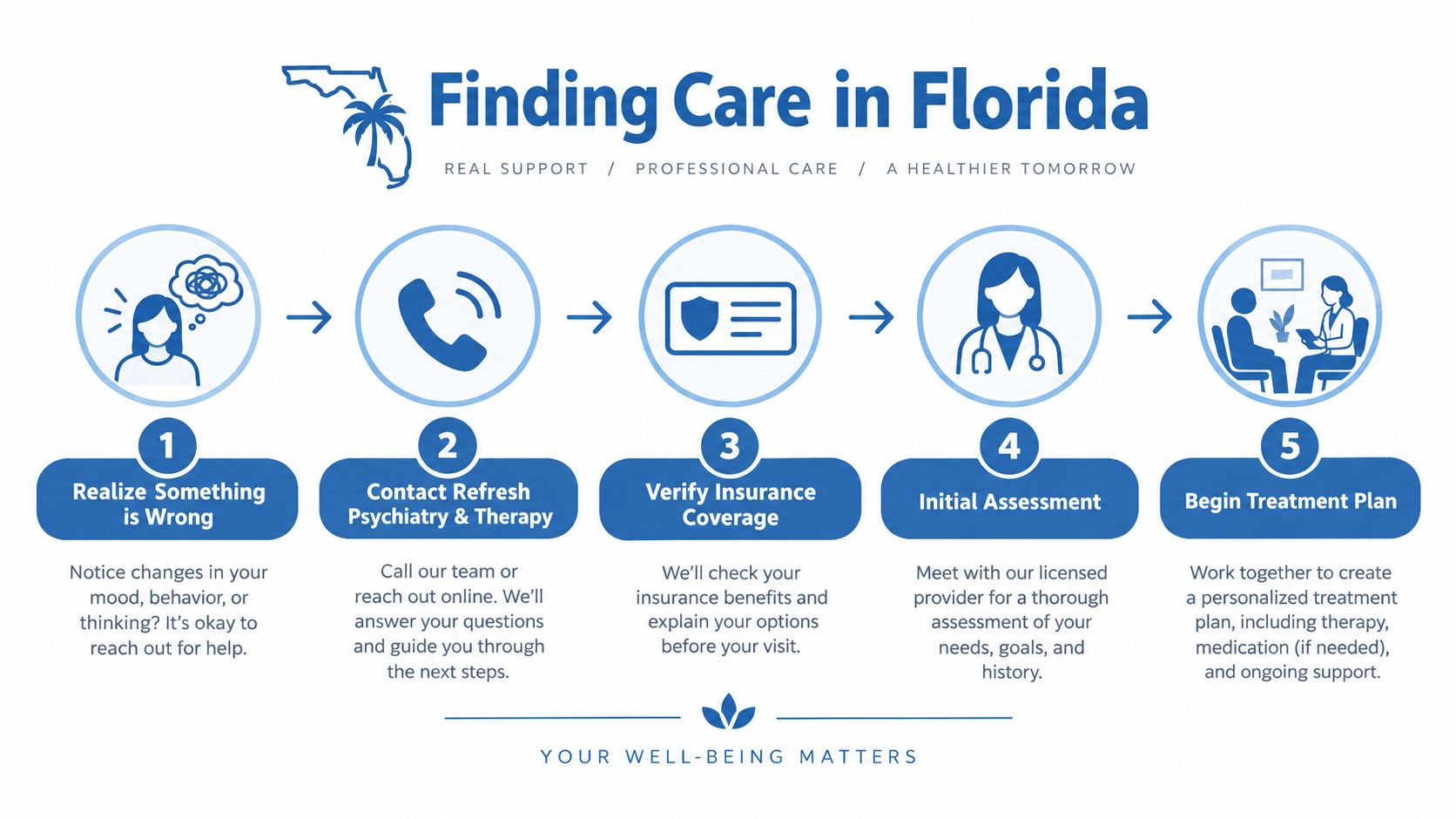
Telehealth can be useful for people in major metro areas and rural communities alike because it removes the commute and makes follow-up easier. It still requires a private setting, a reliable device, and accurate location information at each visit. Adult patients also control their own protected health information. A partner or parent can support scheduling or attend with permission, but clinicians generally need the adult patient's consent before discussing clinical details.
Routine care is a protective factor, but it isn't a substitute for crisis intervention. Call or text 988 for the Suicide & Crisis Lifeline, text HOME to 741741, or call 911 for an active emergency. Healthcare organizations and their marketing partners also need to communicate these services responsibly, which is why guidance on targeting for medical ads should prioritize accurate, ethical patient information rather than exaggerated promises.
Your Next Step Toward Better Mental Health
Reading this guide may already mean you've noticed a change in yourself, your partner, your father, your brother, or a friend. Don't turn that recognition into another item to postpone. Within the next 24 hours, choose one action: schedule a telehealth evaluation, call a psychiatric practice, send this article to someone you trust, or save 988 in your phone.
The suicide disparity won't close through awareness alone. It closes when awareness becomes disclosure, assessment, treatment, and follow-up. Men are more likely to reach that point when care respects privacy, offers practical goals, explains medication clearly, and gives them more than one way to participate.
Refresh Psychiatry & Therapy offers coordinated psychiatric evaluation, medication management, and therapy for Florida patients through telemedicine. Its insurance list includes Aetna, United Healthcare/UHC, Cigna, Blue Cross Blue Shield, Humana, Tricare, UMR, and Oscar, with coverage subject to individual plan details. Therapy may include CBT or DBT, and the treatment plan should be personalized to symptoms, diagnosis, safety, preferences, and response.
If you're in immediate danger, call or text 988, call 911, or go to the nearest emergency department. This article is for informational and educational purposes only. It isn't medical advice, doesn't create a patient-clinician relationship, and can't replace an evaluation by a qualified mental-health professional.
Recovery doesn't require a perfect explanation or a dramatic breakthrough. It can start with one scheduled visit, one honest answer, and one clinician who listens carefully enough to help you decide what comes next.
Refresh Psychiatry & Therapy provides psychiatric evaluations, medication management, and evidence-based therapy through secure telepsychiatry for men across Florida. Visit Refresh Psychiatry & Therapy or call (954) 603-4081 to schedule your evaluation, and verify whether your Aetna, United Healthcare/UHC, Cigna, Blue Cross Blue Shield, Humana, Tricare, UMR, or Oscar plan is accepted. This blog is for informational purposes only and does not constitute medical advice. Please consult a qualified mental-health professional for personalized guidance.