
🛫 Snowbird Mental Health: How to Keep Care Consistent

You've arrived in Florida, the boxes are still open, and the first week already feels less relaxing than expected. Your sertraline refill may run out soon, your therapist is back home, and your insurance card doesn't tell you whether a Florida appointment will be covered. That's the moment many seasonal residents discover that snowbird mental health depends less on good intentions than on a reliable two-state care plan.
A seasonal move can support mood through warmth, outdoor activity, and a fresh routine. It can also interrupt medication access, therapy, sleep, family contact, and crisis response. The practical solution is to arrange continuity before you leave home, then verify every part of the plan after you arrive.
Why Snowbird Mental Health Deserves a Real Plan
A seasonal move often fails without fanfare. There may be no dramatic breakdown. Instead, you miss a dose because the refill went to the wrong pharmacy, postpone therapy because your provider isn't licensed where you're staying, sleep at irregular hours, and tell yourself you'll sort it out next week. By the time symptoms become obvious, several small disruptions may have accumulated.
That pattern is especially frustrating in a Florida condo or rental where everything else feels temporary. Your medication bottles may be in a suitcase, your medical records may be on a laptop at home, and your spouse may not know which prescriber to call. If you're already managing anxiety, depression, ADHD, bipolar disorder, PTSD, insomnia, or another psychiatric condition, uncertainty adds work your brain doesn't need.
Practical rule: Treat the move as a clinical handoff, not a vacation interruption.
Build the plan before departure
Start with one written document containing your medication list, diagnoses, prescriber contacts, therapist information, insurance details, pharmacy location, preferred Florida hospital, and emergency contacts. Give a copy to the person most likely to help you, such as a spouse, adult child, or trusted friend. Keep another copy in a secure cloud folder.
Your home psychiatrist should know your travel dates and Florida address. Your therapist should know whether sessions can continue remotely and under what licensing rules. Your insurer should confirm whether Florida telehealth and in-person behavioral healthcare are covered. If you're unsure where to begin, this guide to barriers to mental health treatment can help you identify practical obstacles before they become treatment gaps.
A useful companion for arranging the nonclinical side of the move is this overview of Florida snowbird housing and healthcare, which can help you think through location, local services, and seasonal living logistics. Housing decisions affect transportation, pharmacy access, family visits, and how quickly you can reach care.
Snowbird mental health is protected by continuity. Make the medication plan, therapy plan, insurance plan, and crisis plan while you're still in your primary state. Once you arrive, confirm that each one works in real life.
The Mental Health Risk Profile of Seasonal Migration
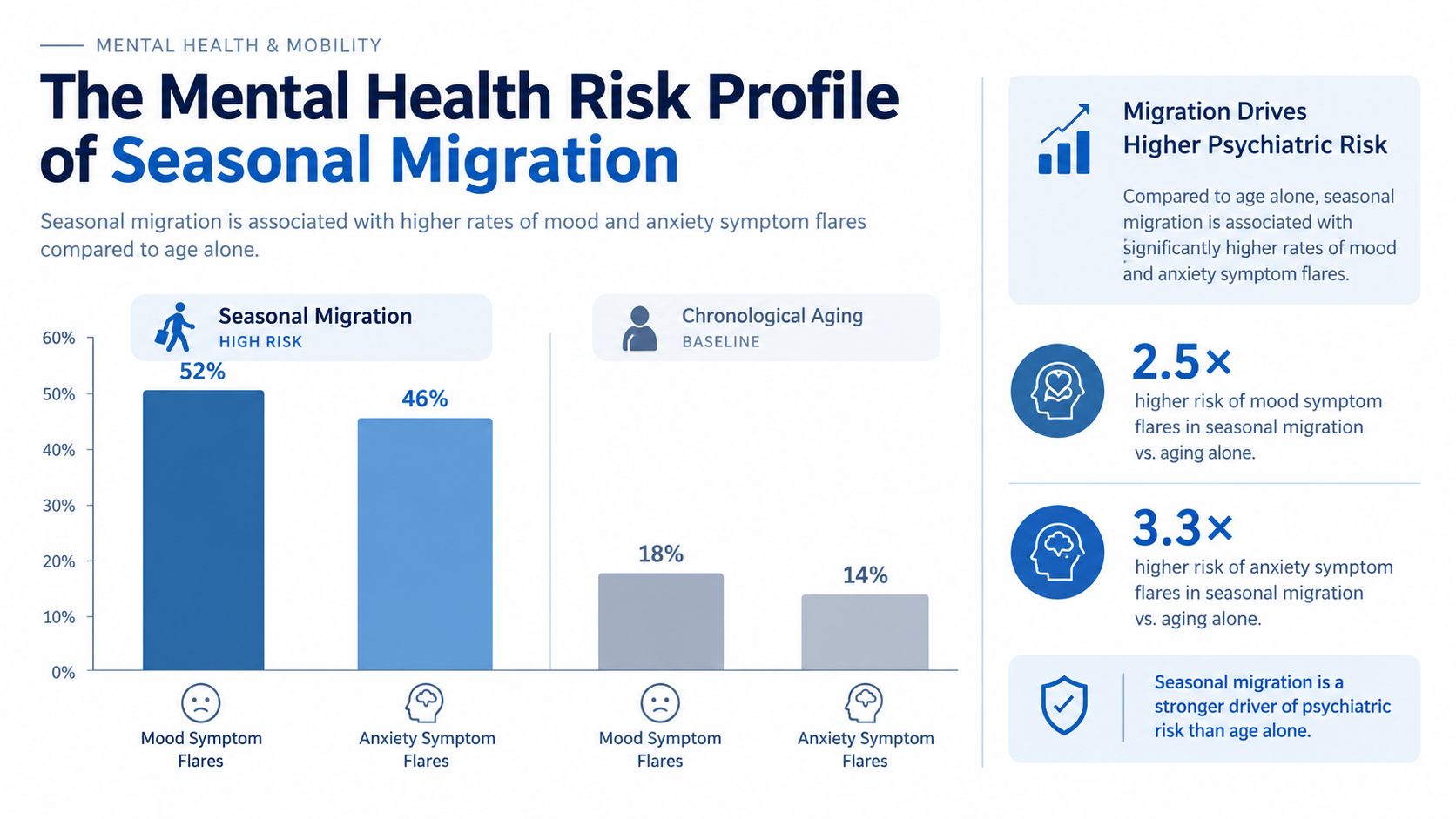
Seasonal migration creates a distinct psychiatric risk profile because it repeatedly changes the setting in which care, relationships, and routine occur. A 2024 review estimated 34.3 million older migrants worldwide in 2020 and reported that older migrants commonly experience depression, loneliness, anxiety, and PTSD symptoms. The review also notes reduced social support and difficulty accessing health systems among older migrants, factors that can intensify psychological distress later in life. The review of older migrants provides the broader context for understanding snowbird mental health.
The issue isn't just chronological age. A person may feel better in Florida because walking is easier, daylight supports activity, and a familiar winter community provides companionship. The same person may feel worse after leaving lifelong friends, a trusted therapist, a primary-care team, or an established daily role back home. A seasonal move can relieve one stressor while creating another.
Adjustment or relapse
Feeling unsettled during the first part of a move doesn't automatically mean a psychiatric relapse. An adjustment reaction often improves as you establish meals, sleep, exercise, social contact, and appointments. A relapse is more concerning when symptoms intensify, persist, or impair ordinary functioning.
Watch for a return of symptoms that previously signaled trouble, such as markedly reduced sleep, racing thoughts, hopelessness, panic, escalating irritability, compulsive behavior, or withdrawal from people you usually contact. Missed medication, a broken sleep schedule, and loss of therapy can make the distinction harder to judge, so contact your prescriber early rather than waiting for certainty.
A 2010 growth-curve analysis found that migration effects on depressive symptoms vary among individuals, with moves connected to negative life events appearing especially depressive. Separate seasonal-mobility research describes snowbirding as a recurring pattern in which older adults build routines, stable social relationships, and peer support at the destination while still struggling with separation from lifelong relationships at home. This older-adult migration research supports a straightforward conclusion: the quality of the transition depends heavily on preserved relationships and routine.
Season-linked mood differences can also be measurable. In a large population-representative cohort of older adults, depressive symptoms were highest in winter and lowest in spring, with mean scores of 6.56 in winter versus 5.81 in spring. The cohort report doesn't prove that every snowbird will improve in Florida, but it reinforces the value of tracking mood, sleep, and activity instead of relying on assumptions about climate.
If seasonal relocation leaves you isolated, disorganized, or disconnected from care, address the problem directly. Seasonal affective disorder treatment options may be relevant when light, season, sleep, and mood changes interact.
Pre-Departure Preparation for Your Mind and Meds
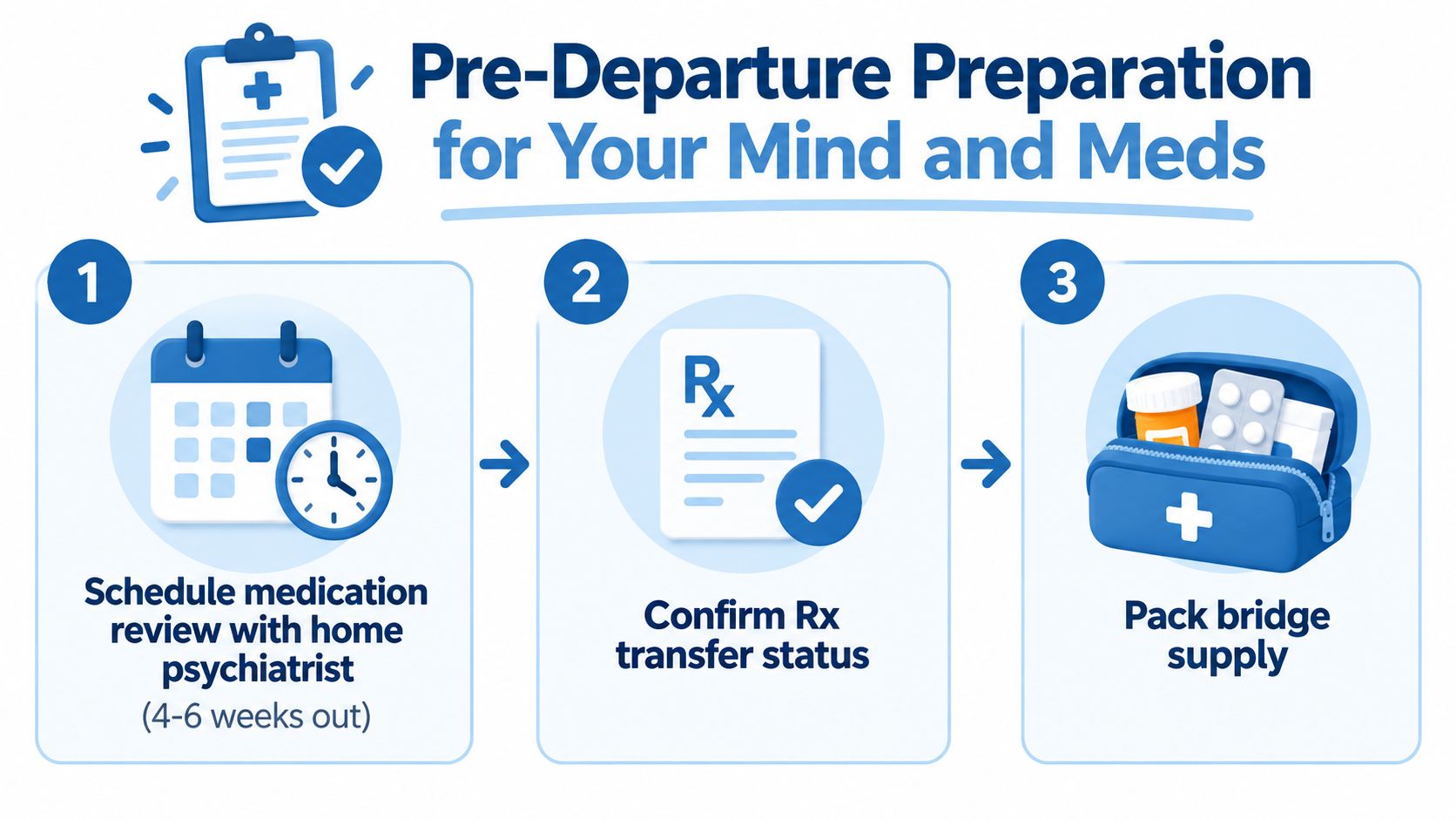
Leave home with a clinical handoff, not a collection of loose bottles and phone numbers. The preparation is simple when you assign each task a date.
Use a short priority list
Schedule the medication review early: Meet with your home psychiatrist four to six weeks before departure. Review symptom control, side effects, refill timing, and what should happen if you miss a dose or develop new symptoms.
Request supplies and records: Ask whether a longer supply is permitted and obtain printed records, a current medication list, diagnoses, allergies, prior treatment responses, and a one-page psychiatric summary.
Confirm the Florida pathway: Identify a pharmacy chain with locations in both states. Verify whether your prescriber can provide care while you're physically in Florida, or arrange a Florida-licensed clinician before leaving.
Notify your therapist: Provide the travel window, Florida location, and contact information for any collaborating clinician. Ask how urgent communication will work.
Pack a mental-health go-bag: Include your medication list, prescriber contact details, insurance card front and back, advance directive, healthcare power-of-attorney information, and crisis contacts.
Keep the go-bag in your carry-on, not checked luggage. Store the electronic version in a secure folder that you and your designated support person can access.
The week before departure, verify every item again. Recheck the prescription status, pharmacy hours, insurance benefits, appointment links, Florida address, and emergency contacts. If your treatment relationship needs to change, this guide to switching psychiatrists explains why a structured handoff matters.
Medication and Prescription Strategies That Travel With You
Medication logistics should be handled like travel logistics. You need a supply, a destination pharmacy, a responsible prescriber, and a backup plan.
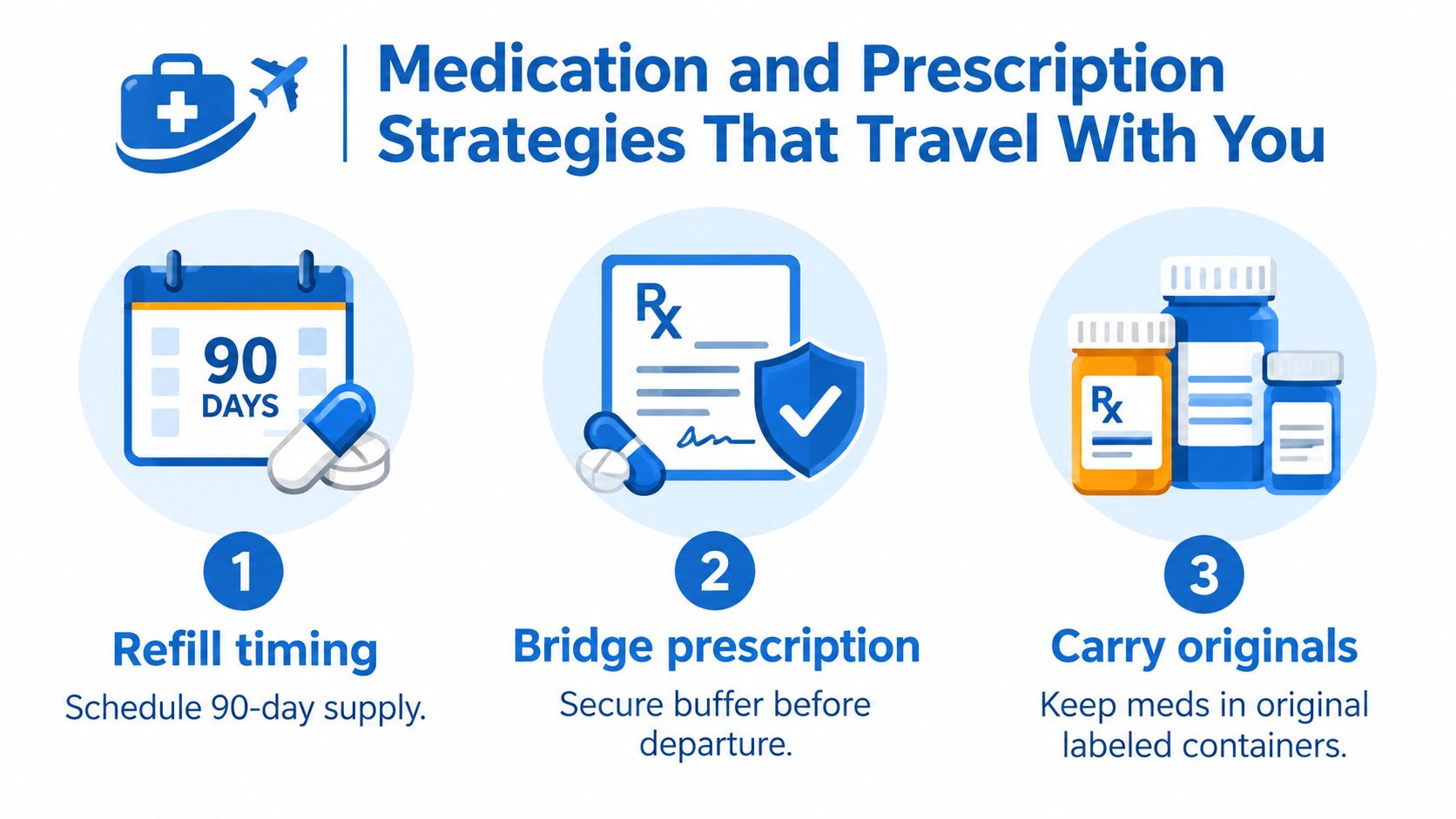
Request a 90-day supply when allowed and arrange a bridge prescription before departure if the timing leaves you exposed. Don't wait until the last tablets to discover that the pharmacy has a prior-authorization problem or that your insurer treats Florida as out of network. Call the pharmacy and insurer while you're still home, then document the name of the representative and the date of the conversation.
Decide who owns the record
A split-prescriber arrangement can work, but only when responsibilities are explicit. Your primary psychiatrist should retain the master treatment history. A Florida collaborator may manage refills or follow-up during the season, with written permission to review records and a clear agreement about who changes medication.
Controlled substances require extra planning. Schedule II stimulants and benzodiazepines generally can't be phoned or faxed across state lines under standard DEA practice. Electronic prescribing by a clinician properly registered to prescribe in the relevant state is usually the cleanest path, but your prescriber and pharmacy must confirm the details before travel. For questions about prescriber roles, who can prescribe depression medication offers useful general context, though your own clinician must determine the appropriate treatment.
Choose one major pharmacy chain with a Florida location near your residence. Confirm that the chain can see your prescription history, process prior authorization, and contact the prescribing office. Carry medication in the original labeled containers, especially controlled medications. That packaging helps clarify what the medication is, who prescribed it, and how it should be taken during airport screening or a traffic stop.
Never leave psychiatric medication in a Florida vehicle or trunk. Heat can degrade medication and may alter its effectiveness. Keep bottles in a temperature-controlled interior space, away from direct sunlight, and follow the storage instructions on the label.
Using Telepsychiatry in Florida for Continuity of Care
Florida telepsychiatry can make seasonal care practical because the appointment, pharmacy, and local emergency system can all remain connected to the state where you're staying. The key licensing rule is simple: the prescriber must be authorized to practice in Florida, and you must be physically located in Florida when the appointment occurs. Don't assume that a clinician who can treat you in your home state can automatically treat you across state lines.
A workable rhythm might include scheduled video visits from your Florida address, secure portal messages for agreed follow-up questions, and electronic prescriptions sent to a Florida pharmacy. Your clinician should know your exact location at each visit. A documented handoff letter from your home psychiatrist should summarize diagnoses, medications, recent changes, risk concerns, and the plan for follow-up.
Confirm three things before booking:
Florida authorization: Verify that the prescriber is licensed or otherwise authorized to practice in Florida.
Secure technology: Ask whether the platform is HIPAA compliant and what to do if the video connection fails.
Local backup: Identify a Florida hospital, urgent behavioral-health service, and support person who can respond if symptoms worsen.
Florida is different from a remote campground with unreliable broadband or an international destination where licensing, time zones, and pharmacy access may change at once. If you travel by RV, reviewing RV internet options compared may help you assess whether your connection can support video care, but internet access alone doesn't solve licensing or emergency coverage.
Continuity Factor | Florida | Remote or International Destination |
|---|---|---|
Prescriber authorization | Confirm Florida authorization before the visit | Licensing may change across state or national borders |
Appointment location | You must be physically in Florida | Time zones and local rules may complicate scheduling |
Pharmacy access | A nearby Florida pharmacy can receive prescriptions | Availability, language, and transfer rules may vary |
Backup care | Identify a local hospital or urgent service | In-person backup may be distant or unfamiliar |
Technology | Use a secure platform with a backup contact method | Broadband and device reliability may be inconsistent |
Florida telemedicine psychiatry provides additional practical context for maintaining care through secure virtual visits.
Insurance and Coverage Across Two States
Insurance is where many otherwise solid snowbird plans break down. Your card may be valid nationally for emergencies while offering limited routine behavioral-health coverage outside your home network. Ask about the specific service, provider location, and appointment type rather than asking only whether your plan “works in Florida.”
Identify your coverage scenario
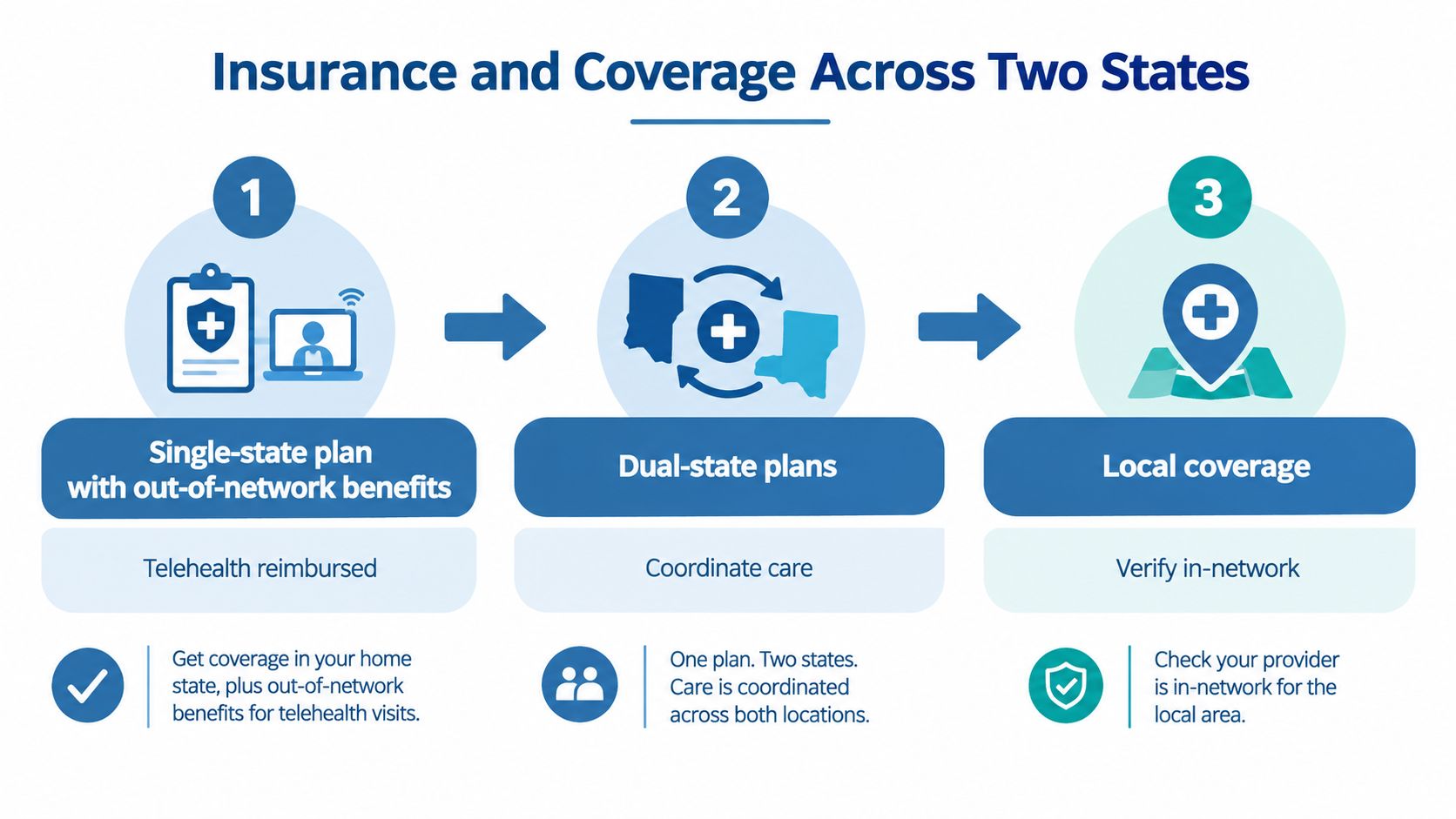
A single-state plan with out-of-network benefits may reimburse Florida telehealth or office-based care only when the provider qualifies and the benefit explicitly applies. Some Florida psychiatrists also don't participate in northern Blue Cross or HMO networks. A multi-state or national PPO may travel more reliably, but premiums and out-of-pocket costs can differ.
Medicare paired with a Part D plan requires its own verification. Confirm that the prescriber is enrolled in Medicare and that your Florida pharmacy participates in the prescription network. Medicare Advantage plans vary, especially between HMO and PPO designs, so don't infer Florida coverage from your home-state experience.
Call the member-services number and ask these questions:
Out-of-state telehealth: Is routine psychiatric telehealth covered when I'm physically in Florida?
Provider network status: Is this specific clinician in network for my plan, not merely affiliated with a participating group?
Out-of-network reimbursement: What applies to an in-person psychiatric evaluation or therapy visit outside the network?
Referral rules: Can my current psychiatrist refer me to a Florida clinician within the plan?
Pharmacy network: Can my Florida pharmacy process psychiatric prescriptions under my Part D or commercial benefit?
Urgent care: Which behavioral-health urgent-care centers and hospitals in Florida are in network?
Write down the answers and request a reference number. Check again after arrival if the insurer's portal shows different information.
Emergency care can also create financial surprises. Before departure, identify an in-network Florida hospital and ask your insurer how behavioral-health urgent care, emergency evaluation, and ambulance services are handled. If you already know the names of the clinicians you're considering, verify each one individually.
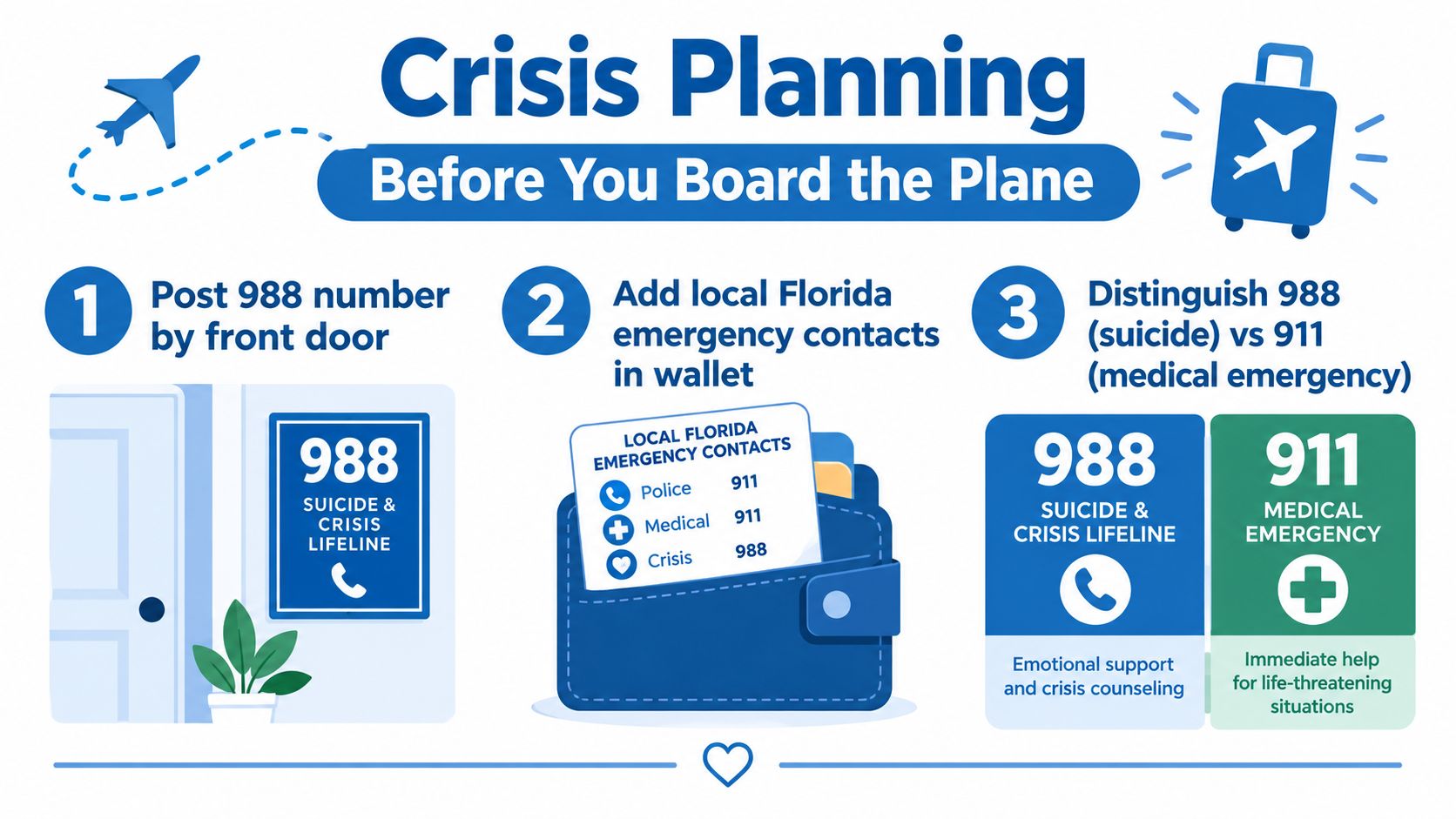
Crisis Planning Before You Board the Plane
A crisis plan should be one page, easy to read, and available to someone other than you. Put 988 by the Florida front door and in your wallet. Use 988 for suicide concerns, mental-health crisis support, or urgent emotional distress. Use 911 when there's an immediate physical-safety or medical emergency, such as an overdose, serious injury, or imminent danger requiring emergency responders.
Explain the Florida Baker Act plainly
Florida's Baker Act permits an authorized process for involuntary examination when a person appears to meet the legal standard for serious mental-health concern and may be unable or unwilling to seek evaluation voluntarily. Law enforcement officers, mental-health professionals, and certain other authorized parties may initiate the process under applicable circumstances. The examination period can last up to 72 hours, and the Baker Act isn't an arrest or a criminal conviction.
The process can feel unfamiliar if your home state uses different terminology or procedures. Ask your psychiatrist or local crisis service about Florida-specific details before an emergency occurs, and don't use a crisis plan to threaten or control a family member. Its purpose is to make the response faster and safer.
Your one-page plan should include:
Medication location: State where the current medication list and bottles are kept.
Preferred facility: Name the Florida hospital or emergency department you'd use first.
Decision-maker: List the healthcare agent and provide healthcare power-of-attorney information.
Clinical contacts: Add the home prescriber, Florida clinician, therapist, and pharmacy.
Support instructions: State who should be called first, who can provide transportation, and what symptoms require immediate action.
Write this before you need it: “If I become unsafe, severely confused, unable to care for myself, or disconnected from reality, call my designated support person and use 988 or 911 according to the emergency.”
Read the plan with your spouse, adult child, or caregiver. Update it each season. Use the video below as a general educational resource, not as a substitute for individualized crisis guidance.
Tailored Guidance for Adults, Students, and Caregivers
Snowbird mental health planning changes depending on who carries the responsibility. The right next step for an independent adult isn't the same as the right next step for a caregiver coordinating treatment for someone else.
Adults managing their own care
Create two master records before departure: one wallet card and one secure cloud folder. The card should list medications, allergies, diagnoses, prescriber contacts, pharmacy, insurance information, and emergency preferences. The folder can hold records, treatment summaries, insurance documents, advance directives, and appointment details.
Once in Florida, keep your daily routine deliberately boring. Take medication at the same part of your day, attend scheduled visits, walk or exercise regularly, and maintain contact with people at home. If you notice worsening sleep, anxiety, depression, impulsivity, or isolation, contact your clinician before the problem becomes a crisis.
Students and young adults
Students who divide time between a northern campus and a Florida family home need a handoff between the university counseling center and the Florida clinician. Ask the student to sign appropriate releases so providers can coordinate, while recognizing that FERPA rules may limit what a school can share without the student's authorization.
ADHD stimulant prescriptions deserve special attention. The campus prescriber, Florida clinician, pharmacy, and insurer should agree on who manages the medication during each location period. Don't leave the transfer until a student is already in Florida with no remaining supply.
Caregivers of older relatives
Use a shared medication log that records the medication name, dose, prescribing clinician, refill date, and observed concerns. Choose a Florida hospital before arrival, identify the healthcare agent, and schedule check-in calls around the time difference between homes. Social withdrawal, missed refills, confusion, poor sleep, and a sudden decline in daily activity deserve prompt attention.
Audience | Before Departure | Once in Florida | Key Warning Sign |
|---|---|---|---|
Adult managing personal care | Prepare the wallet card and cloud folder | Keep appointments and routines consistent | Worsening symptoms or missed medication |
Student or young adult | Coordinate the campus center, Florida clinician, and releases | Confirm stimulant and therapy responsibilities | Running out of medication or losing follow-up |
Caregiver | Build the shared log and name the Florida hospital | Review medication and wellbeing regularly | Withdrawal, confusion, or missed refills |
The common lesson is straightforward: continuity is built before the plane takes off, not after a crisis in an unfamiliar emergency department.
Refresh Psychiatry & Therapy offers Florida telepsychiatry, psychiatric evaluations, medication management, and therapy that can help seasonal residents maintain an organized care plan while they're in Florida. Visit Refresh Psychiatry & Therapy to review available services and schedule care that fits your location and treatment needs. Contact us or call Refresh Psychiatry at (954) 603-4081 to schedule your evaluation. We accept Aetna, United Healthcare/ UHC, Cigna, Blue Cross Blue Shield, Humana, Tricare, UMR, and Oscar insurance plans. This blog is for informational purposes only and does not constitute medical advice. Please consult a qualified mental health professional for personalized guidance.