
ADHD Doctor Near Me: How to Find the Right One

You're staring at a half finished email, your phone is somewhere under a pile of laundry, and the deadline you swore you'd remember passed two hours ago. If that pattern feels familiar, searching for an ADHD doctor near me is often less about a map pin and more about finding someone who can sort out what's going on. The right clinician won't rush you through a checklist. They'll help you understand the pattern, rule out lookalikes, and build a plan you can follow.
Why Finding the Right ADHD Doctor Matters
Consider a common story. A project manager in her thirties has always relied on last minute pressure to finish work. She loses track of meetings, rereads the same paragraph five times, and feels exhausted from trying to appear organized. For years she called it stress or poor discipline. A parent sees a similar pattern from the other side, with school emails about unfinished assignments, impulsive comments in class, and homework battles every night.
In both cases, the question isn't whether attention is a problem. It's why attention is a problem, how long it's been happening, and whether it shows up at home, at work, or at school. Sleep problems, anxiety, depression, trauma, learning difficulties, and medical issues can all interfere with focus. Treating every concentration problem as ADHD can lead to the wrong medication, missed conditions, and months of frustration.
ADHD Is Common in Adults, Not Just Children
The scale helps explain why so many adults start this search later in life. In 2023, an estimated 15.5 million U.S. adults, 6.0% of the adult population, reported a current ADHD diagnosis, approximately half received that diagnosis at age 18 or older, and about one-third weren't receiving any ADHD treatment, according to CDC data on adult ADHD diagnosis and treatment in 2023. That gap between diagnosis and care is important. A label alone doesn't improve organization, sleep, relationships, or job performance.
A thorough clinician looks at functional impairment, not just a symptom count. Are bills paid late despite good intentions? Does a student understand material but fail to turn it in? Does impulsivity affect driving, spending, or conversations? Those details shape treatment goals and help you measure whether care is working.
Practical rule: Faster access isn't always better access if the visit skips history, collateral information, and a follow-up plan.
That distinction is the core idea to carry through your search. A quick symptom and prescription visit may feel efficient, especially when you're overwhelmed. Yet it can miss the very factors that determine whether medication is appropriate, which supports you need, and how progress should be monitored. The right doctor slows down at the start so treatment doesn't have to be undone later.
Where to Search for an ADHD Doctor
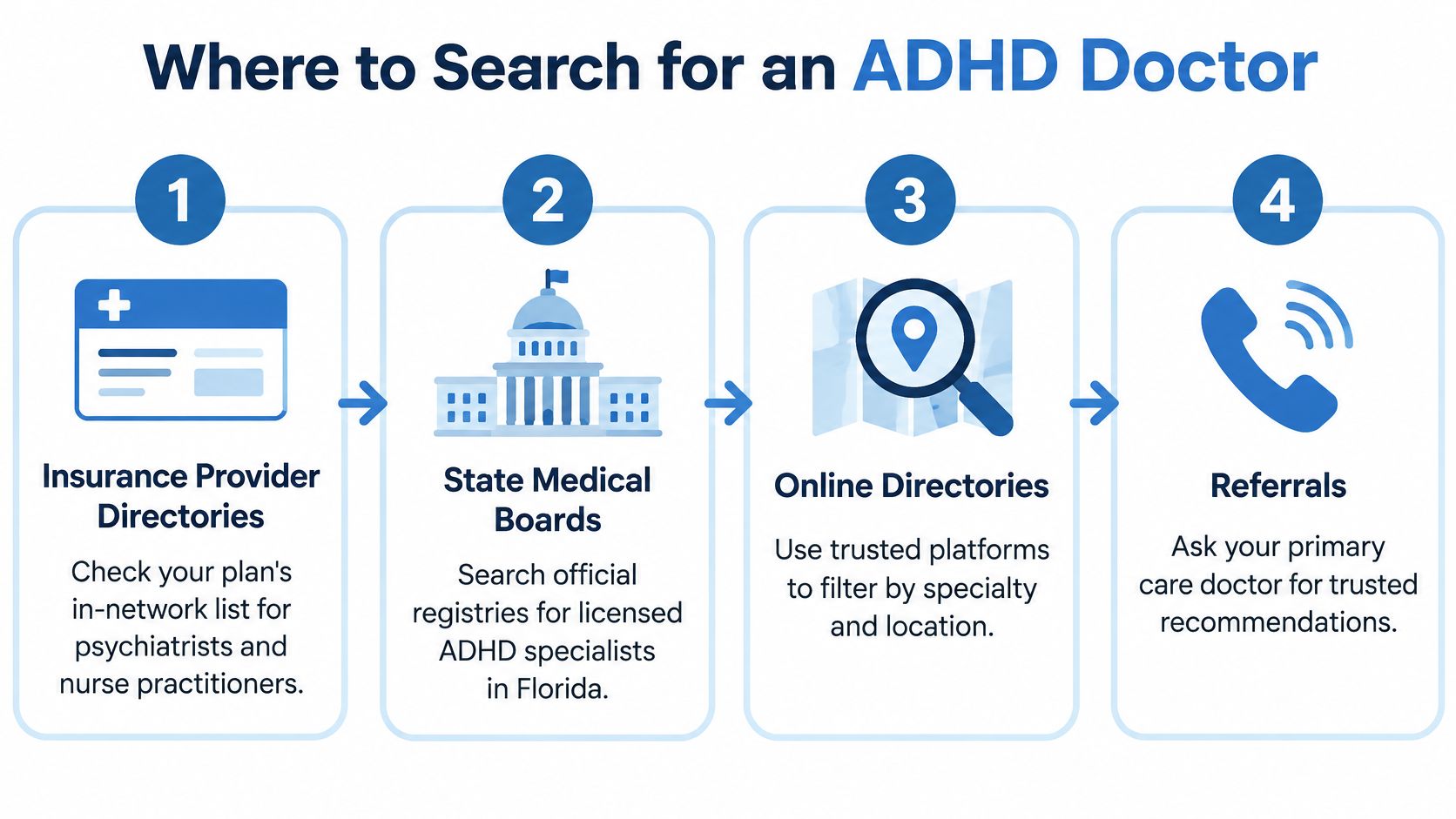
Start where payment and licensing are easiest to verify. Your insurer's provider directory can filter psychiatrists and psychiatric nurse practitioners by location, telehealth availability, and network status. Don't assume a listing is current, though. Call the practice or check its website to confirm it's accepting new patients, evaluates ADHD in your age group, and offers follow-up rather than only a one time assessment.
This visual summarizes four practical routes for building a shortlist before you start calling offices.
Build a Shortlist From Several Sources
Use more than one source so you can compare fit, not just availability.
Insurance directories: Confirm in network status, telepsychiatry coverage, and whether prior authorization is required.
State licensing listings: Verify the clinician is licensed in Florida and note the credential type.
Primary care referrals: Ask who your doctor trusts for adult or child ADHD assessment, especially when medical conditions may overlap.
Therapist or school recommendations: Counselors and school staff often know which practices request records and communicate well.
For a broader walkthrough of comparing practices, scheduling, and first questions, see this guide on how to find a psychiatrist who fits your needs. Use it to organize your criteria before you contact anyone.
Rethink What Near Me Means in Florida
For Florida residents, near can also mean accessible by secure video from home. Telepsychiatry can help if you live far from a large clinic, work irregular hours, attend college away from your hometown, or need regular medication follow-up without repeated travel. A virtual practice should still verify identity, gather developmental history, collect rating scales or records, coordinate with primary care when needed, and explain how prescriptions and refills are handled.
Don't choose only by the earliest opening. Read the practice description for clues about its process. Mentions of evaluation, developmental history, co occurring conditions, and measurement based follow-up are stronger signals than promises of a rapid diagnosis. If the website focuses almost entirely on getting medication quickly, ask more questions before booking.
Credentials and Specialties to Look For
Different titles can be confusing because several professionals evaluate attention problems, but they don't all provide the same services. A psychiatrist is a medical doctor who can diagnose ADHD, prescribe medication, and manage medical or psychiatric conditions that occur alongside it. A psychiatric nurse practitioner can also evaluate, diagnose, and prescribe within state and practice rules. A psychologist can diagnose and provide therapy or testing, but typically doesn't prescribe. A therapist may treat coping skills, anxiety, or family stress without managing medication.
The image below reflects that team based reality. You may need one clinician, or coordinated care from more than one.

If you're deciding who to call first, this comparison of psychiatrist vs psychologist roles in mental health care can clarify training, prescribing, and therapy differences. Your choice should match your main need. If medication is a likely question, start with a prescriber. If detailed learning or cognitive testing is the priority, a psychologist may be central. If you want both medication and skills based support, look for coordinated care.
Credentials That Actually Matter
Board certification signals that a psychiatrist has completed specialty training and passed recognized examinations. For children and teens, child and adolescent training is especially relevant because development, school functioning, and family context shape the assessment. For adults, ask whether the clinician routinely evaluates adult ADHD and screens for mood, anxiety, sleep, trauma, and substance use concerns. Experience with your age group matters more than a generic claim to treat everything.
Also ask practical questions. Who handles follow-up if side effects appear? How are rating scales repeated? Can therapy be coordinated rather than leaving you to find separate care? Clear answers suggest a system, not just an initial appointment.
A competent evaluator can explain what evidence would support ADHD, what evidence would point elsewhere, and what happens if the picture is uncertain.
Red flags include a diagnosis promised before records are reviewed, no questions about childhood history, no screening for other explanations, and no plan to monitor sleep, appetite, blood pressure, functioning, or adverse effects. Another warning sign is pressure to commit to medication before goals are defined. You should leave the first conversation understanding the clinician's process, even if a final diagnosis requires more information.
What a Thorough ADHD Evaluation Looks Like
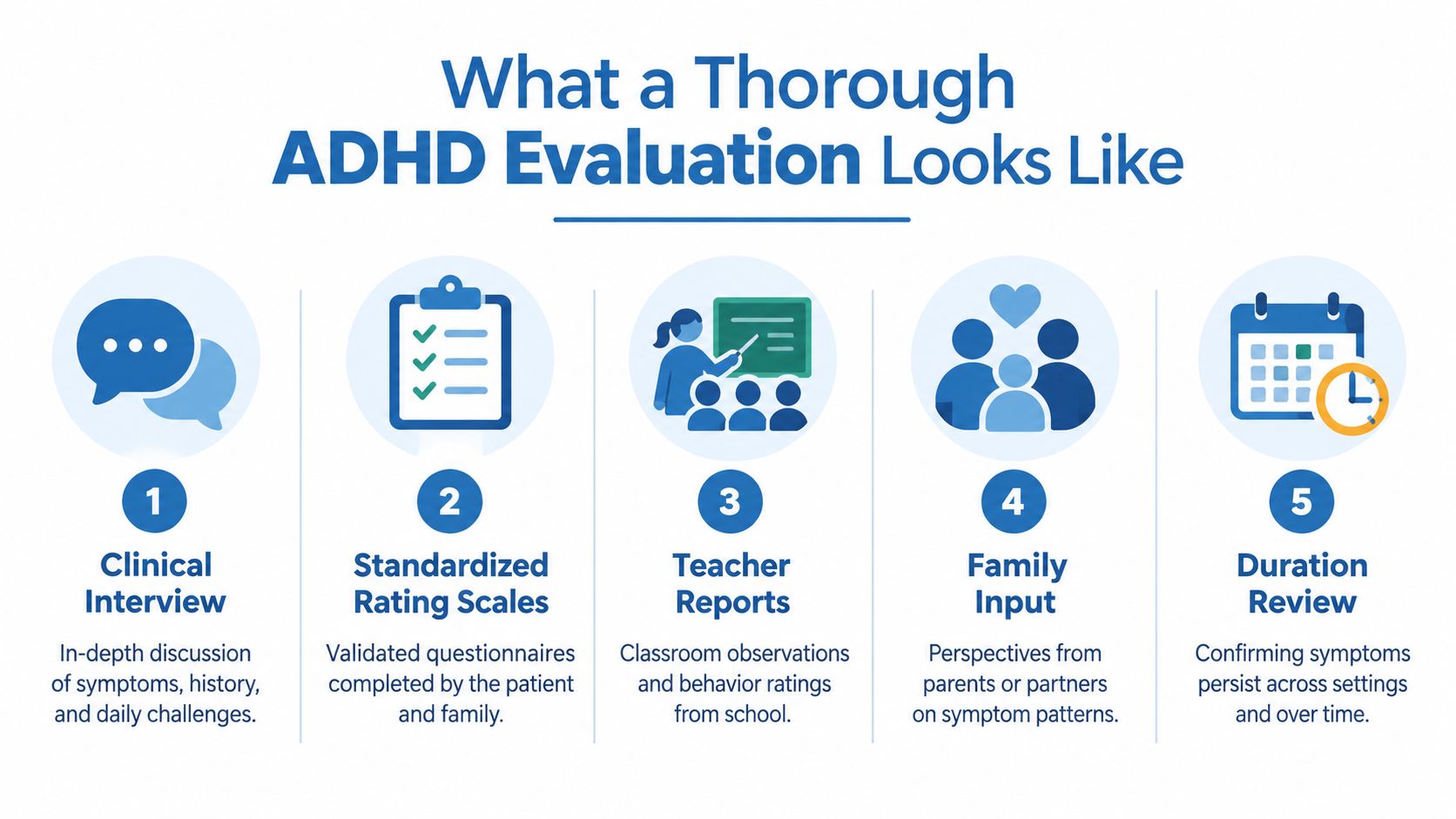
A good evaluation feels like careful detective work. The clinician asks when symptoms began, where they occur, what they interfere with, and what else could explain them. You'll discuss attention, hyperactivity, impulsivity, organization, emotional regulation, school or work history, relationships, sleep, medical history, and prior treatment. That breadth isn't bureaucracy. It's how the clinician separates a lifelong neurodevelopmental pattern from a recent reaction to stress or illness.
This diagram shows the main pieces that should support, rather than replace, clinical judgment.
Multiple Informants Make the Picture Clearer
For children and adolescents ages 4 to 18, the clinician should document academic or behavioral impairment and symptoms of inattention, hyperactivity, or impulsivity, then collect observations from the patient, parents or guardians, school personnel, and other involved mental health professionals, while standardized rating scales support but don't replace the clinical interview and DSM-5 criteria, as described in American Academy of Pediatrics ADHD evaluation guidance. Adults may not have teacher reports, but old report cards, partner observations, work reviews, or family memories can still help establish the timeline.
Collateral information is useful because memory is selective. An adult might remember being a daydreamer but forget frequent comments about careless errors. A parent might see homework struggles, while a teacher sees strong focus during preferred activities. Neither view automatically cancels the other. The clinician weighs patterns across settings and over time.
Ruling Out Other Explanations
ADHD isn't diagnosed by a single lab test or brain scan. The clinician should screen for anxiety, depression, learning or language disorders, autism, tics, sleep disorders, and other relevant conditions, and consider medical contributors. For adults, history matters because current focus problems alone don't establish onset, persistence, or impairment. You can read more about the wider process in this overview of what a psychiatric evaluation involves.
By the end, you should hear a clear formulation. That means the clinician explains the likely diagnosis, any co occurring concerns, remaining questions, and why a particular treatment is or isn't recommended. If more records or specialist input are needed, that's not failure. It's a sign the assessment is being done carefully.
Treatment Options Medication and Therapy
Treatment works best when it's tied to specific goals. Finishing assignments on time, reducing careless work errors, following conversations, or getting out the door without chaos are more useful targets than a vague hope to focus better. Medication can reduce core symptoms for many people, while therapy and behavioral supports build systems for planning, time management, emotional regulation, and follow through. Those are different jobs, which is why combined care is often discussed.
The comparison below separates what medication and therapy each contribute so you can ask informed questions.
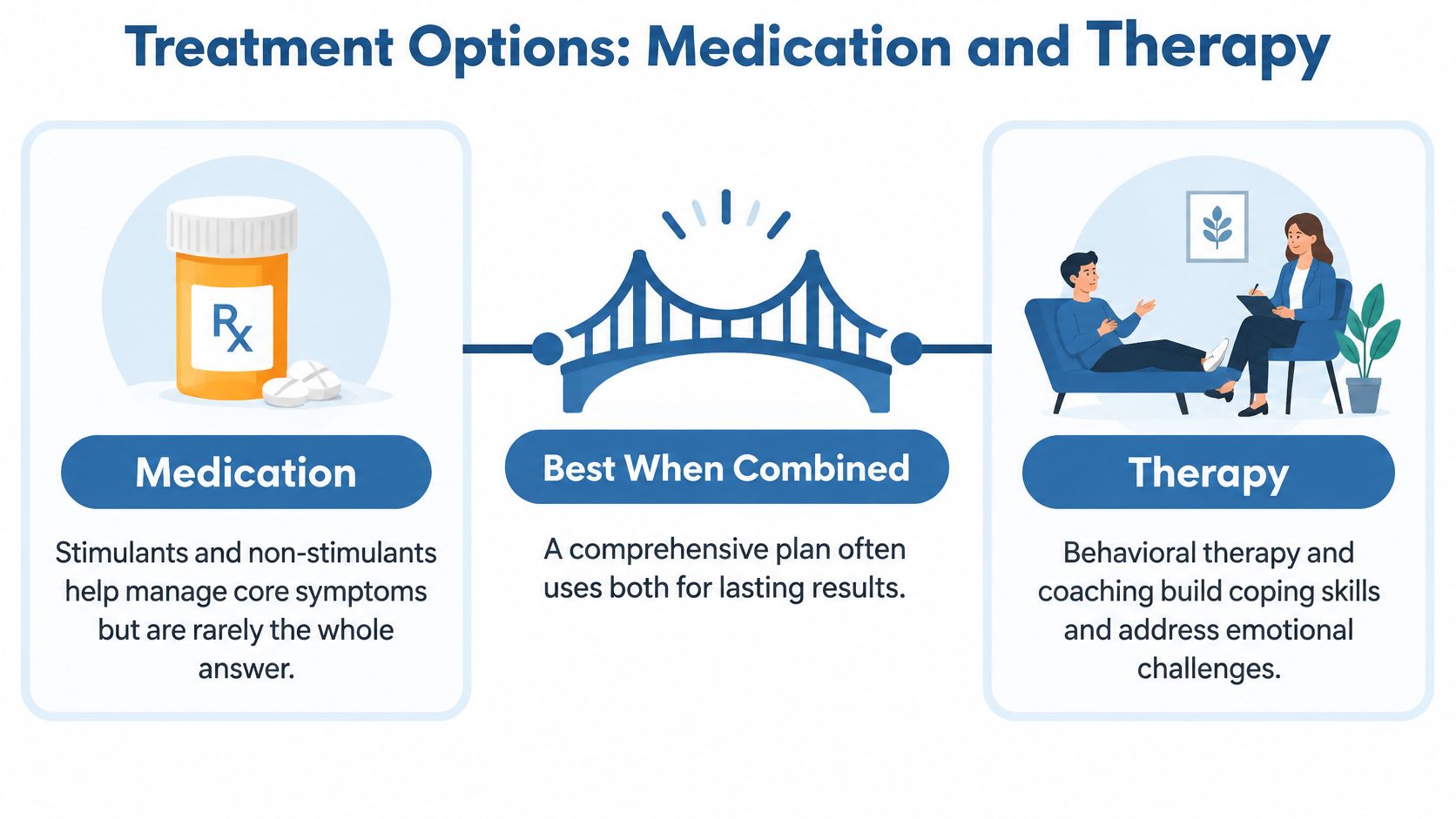
Current U.S. survey data show that 50.4% of adults with ADHD reported prescription medication use during the prior year, 35.2% reported both medication and counseling or behavioral treatment, and 36.5% reported no treatment, according to CDC treatment recommendations and adult ADHD survey data. Those figures show combined care is common, but they also highlight how many adults remain without a workable plan.
Medication Requires Monitoring, Not Just a Prescription
Stimulant medications are commonly used for ADHD, and nonstimulant options may be considered based on history, side effects, co occurring conditions, preference, or response. This guide to non-stimulant medication for ADHD and when it may be considered explains that alternative category in plain language. Whatever is prescribed, follow-up should track benefit and tolerability. Sleep, appetite, mood, blood pressure, work or school performance, and substance use risk all deserve attention.
Age also matters. Younger children often start with parent training and classroom behavioral supports, while older children, adolescents, and adults may combine medication with behavioral strategies. If impairment continues despite partial symptom improvement, the plan should be revised rather than declared finished. Sometimes that means adjusting treatment, adding therapy, addressing sleep, or coordinating school or workplace supports.
The short video below offers another explanation of how clinicians think about ADHD treatment choices and follow-up.
Ask what success will look like and when it will be reviewed. A strong plan defines target outcomes, explains possible adverse effects, and tells you whom to contact between visits. It also prepares you for real life issues such as pharmacy availability or refill timing. Don't change doses, borrow medication, or switch products on your own. Contact the prescriber so any change is documented and safe.
Preparing for Your First Appointment
Preparation can make a first visit far more productive, especially by telehealth where the clinician can't observe a classroom or workplace directly. You don't need a perfect binder. A few concrete records and examples will help the clinician see patterns instead of relying only on general descriptions like forgetful or distracted.
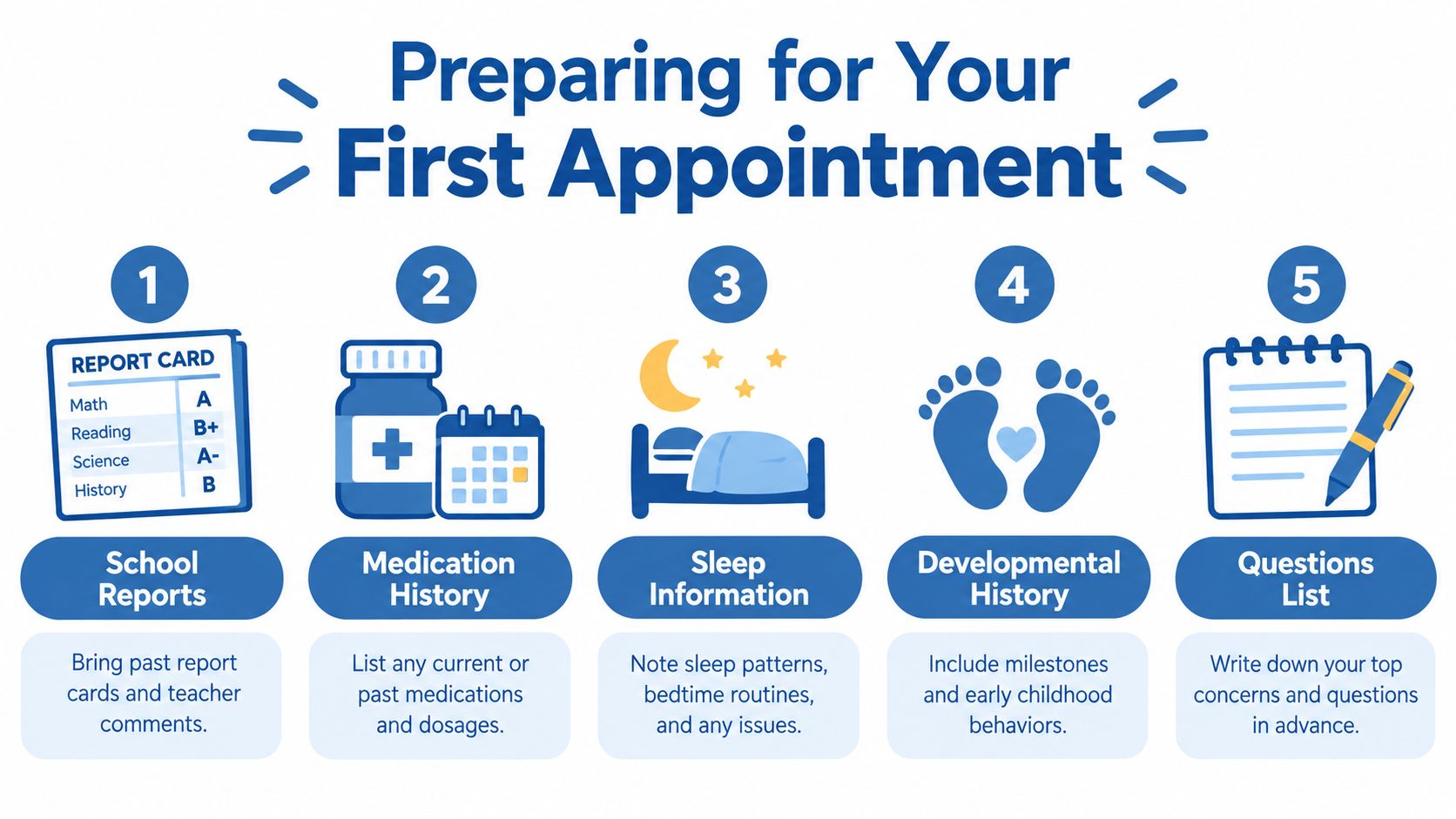
This checklist turns preparation into manageable steps you can complete before the appointment.
What to Gather
School or work evidence: Report cards, teacher comments, evaluations, or examples of missed deadlines and unfinished tasks.
Medication history: Current prescriptions, past psychiatric medications, doses if known, benefits, and side effects.
Sleep information: Bedtime, wake time, snoring, insomnia, daytime sleepiness, and caffeine or other substance use.
Developmental history: Early milestones, childhood behavior, learning concerns, and when attention symptoms were first noticed.
Examples across settings: Brief notes showing how symptoms affect home, school, work, driving, money, or relationships.
If you want a sense of the visit flow, review what happens at a psychiatry appointment from intake to follow-up before you log on. Then test your camera, microphone, and internet connection, choose a private space, and keep your pharmacy and insurance details nearby.
Questions Worth Asking
Ask how the clinician confirms ADHD and rules out other causes. Ask whether rating scales or collateral input will be requested, how often follow-up occurs, and how progress is measured. It's also reasonable to ask how medication refills, side effect concerns, and communication between visits are handled.
Write your top three goals in advance. For example, a college student might prioritize turning in assignments, a parent might focus on classroom behavior and homework, and an adult might target work organization. Clear goals help you and the clinician judge whether the first plan is helping or needs adjustment.
Your Next Steps and How Refresh Psychiatry Can Help
Turn your search into a short sequence. First, list two or three Florida clinicians who evaluate ADHD for your age group and offer ongoing follow-up. Second, verify license, credential, telehealth availability, and insurance participation. Third, prepare records and examples. Finally, schedule the evaluation and ask what information the practice wants before the visit. That process filters out providers who offer speed without structure.
Refresh Psychiatry & Therapy is one Florida option to consider if you want statewide telepsychiatry with ADHD evaluation, medication management, and therapy coordination. Its model is relevant here because ADHD care often needs more than an initial diagnosis. You may need follow-up to review response, side effects, sleep, functioning, and whether behavioral supports should be added or changed. A practice that can coordinate those pieces can reduce the burden of managing separate referrals on your own.
Contact us or call Refresh Psychiatry at (954) 603-4081 to schedule your evaluation. We accept Aetna, United Healthcare/ UHC, Cigna, Blue Cross Blue Shield, Humana, Tricare, UMR, and Oscar insurance plans. Before booking, confirm your individual benefits, network status, and any authorization requirements with your plan, since coverage varies by policy.
This blog is for informational purposes only and does not constitute medical advice. Please consult a qualified mental health professional for personalized guidance.
If you're ready to move from searching for an ADHD doctor near me to getting a careful evaluation and a practical follow-up plan, visit Refresh Psychiatry & Therapy to learn about Florida telepsychiatry for ADHD, medication management, and coordinated therapy. Reach out to schedule an evaluation and discuss the next step for you or your child.