
🛑 Postpartum Rage: What It Feels Like and What Helps

At 3 a.m., the baby is crying again. Your chest feels hot, your pulse is racing, and your hands tighten around the edge of the changing table. You want to scream, throw something, or run from the room, then shame arrives almost immediately. You may wonder how a loving parent could feel such intense anger.
I hear this from new parents regularly. Postpartum rage is real, distressing, and treatable, but it remains under-studied as a stand-alone condition and is often overlooked or folded into postpartum depression. Cleveland Clinic notes that it most often appears during the first six weeks to one year after delivery, while almost 1 in 4 people experience a postpartum mental health condition overall (Cleveland Clinic's clinical summary).
The important clinical question isn't only, “Why am I so angry?” It's also, “Is this anger part of an overwhelmed postpartum nervous system, or does it signal a psychiatric emergency?” The distinction matters because reassurance alone doesn't protect a parent or infant when safety is deteriorating.
What Postpartum Rage Actually Feels Like
A partner may sleep through a feeding, a bottle may take too long to warm, or an infant's crying may continue without a pause. The parent knows the trigger is ordinary, yet her body reacts as if the situation is dangerous. Heat spreads through her chest, her jaw locks, her pulse accelerates, and the room can suddenly feel impossible to tolerate.
Postpartum rage feels sudden, disproportionate, and difficult to interrupt. Some parents yell, swear, slam doors, clench their fists, shake, punch objects, or feel an urge to throw something. Others remain irritable for hours rather than having one clear outburst. The Cleveland Clinic's symptom overview includes losing control of temper, dwelling on situations longer than usual, and feeling unable to cope with emotions among experiences linked with postpartum rage.
The difference between frustration and rage
Ordinary frustration generally rises and settles as the immediate problem changes. Rage can continue after the trigger has passed, interfere with caregiving or relationships, and leave the parent frightened by the intensity of her response. Guilt, fear, and emotional exhaustion often follow.
Shame can keep the pattern hidden. A mother may worry that her partner will judge her, her obstetrician will dismiss her, or disclosure will lead others to assume she cannot safely care for her baby. That silence has a cost. Bottling up emotions can make distress harder to recognize and address. Parents may also find practical, compassionate steps for new moms useful while arranging professional support.
Anger deserves direct clinical attention, especially when it becomes frequent, escalates, impairs relationships, or creates fear about what might happen next. Feeling rage does not make someone a bad mother. It does signal that her nervous system and circumstances need attention.
A clinician should ask whether the parent can pause, place the baby safely in a crib, and step away when anger surges. Thoughts of harming herself or the infant, losing contact with reality, severe confusion, or an inability to control impulses require urgent psychiatric assessment rather than reassurance alone. In Florida, telepsychiatry can provide a rapid route to evaluation when leaving home is difficult, while emergency services are appropriate when immediate safety is at risk.
The Biology Behind the Burn
Postpartum rage can emerge when biological changes, severe sleep disruption, and psychological strain converge. Each factor can lower the threshold for anger. Together, they can make a manageable demand feel like an immediate threat.
Hormonal shifts change the baseline
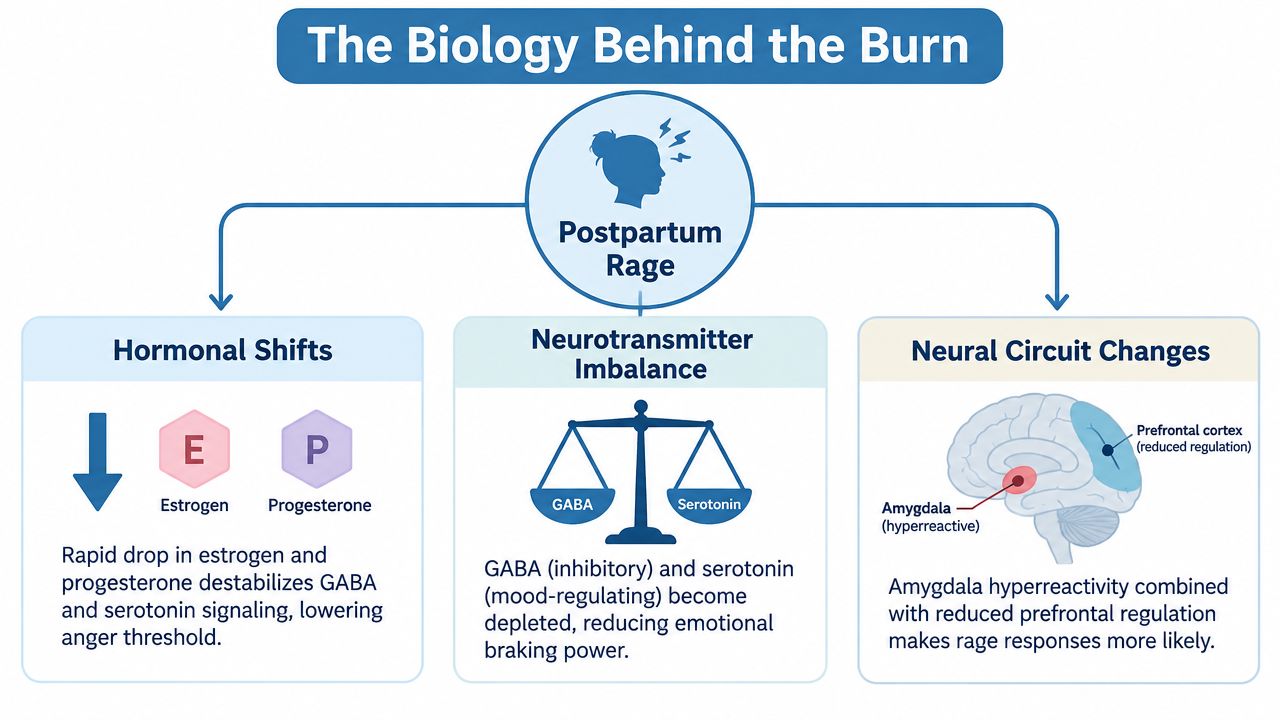
After delivery, estrogen and progesterone fall rapidly. These hormones interact with mood-regulating systems, including GABA and serotonin signaling. For a practical overview of how neurotransmitters differ, see dopamine versus serotonin. As the postpartum brain adjusts, emotional reactions may arrive faster and become harder to regulate.
Hormonal withdrawal is one contributor, not a complete explanation. It can narrow the margin between irritation and a full-body surge of anger, while sleep loss, pain, anxiety, and inadequate support determine how often that surge occurs.
Sleep loss weakens emotional braking
Fragmented sleep reduces frustration tolerance, attention, and impulse control. A postpartum grounded-theory study identified sleep challenges as a significant contributor to intense anger, and research has associated maternal sleep quality and anger about infant sleep with higher state anger during the postpartum period (peer-reviewed postpartum anger research).
Sleep deprivation can make the brain's alarm system overly sensitive. A baby's cry, a careless comment, or another unmet need may then trigger a reaction that feels much larger than the event. The practical trade-off is clear: caring for an infant requires vigilance, but recovery requires protected sleep and relief from continuous demands.
Psychological load amplifies perceived threat
New parenthood can disrupt identity, autonomy, routines, and expectations. Feeling invisible, trapped, unsupported, or constantly touched can make another request feel like proof that help will not come. Birth trauma, relationship conflict, and anxiety may intensify the response.
For context on Lake City Physical Therapy on brain changes, postpartum changes can affect attention, stress responses, and emotional regulation. Rage is a signal of dysregulation, not evidence of moral failure. Its cause still matters clinically, because similar anger can occur with depression, anxiety, trauma, bipolar disorder, obsessive-compulsive disorder, or severe sleep deprivation. That distinction determines whether routine support is enough or rapid psychiatric assessment is needed.
How Postpartum Rage Differs From Depression and Psychosis
Postpartum rage isn't a formal DSM-5-TR diagnosis. Clinicians generally treat it as a mood-disruption phenotype that may overlap with postpartum depression, anxiety, PTSD, bipolar disorder, or OCD. An integrative review identified anger as a salient symptom cluster in postnatal depression, alongside depression, powerlessness, and violated expectations (integrative review of postnatal depression).
Anger may be the most visible symptom, but the underlying condition determines the treatment and urgency. The table below is a starting point, not a substitute for an evaluation.
Differentiating postpartum rage from related conditions
Condition | Dominant symptom | Hallmark feature | When rage appears |
|---|---|---|---|
Postpartum rage | Intense anger or irritability | Sudden, disproportionate reactions and loss of emotional control | Rage is the primary complaint, often worsened by exhaustion, overstimulation, or perceived lack of support |
Postpartum depression | Persistent sadness, emptiness, guilt, or loss of pleasure | Reduced interest, low energy, hopelessness, or difficulty bonding | Anger may express distress, resentment, guilt, or feeling overwhelmed |
Postpartum anxiety | Excessive worry and physiological tension | Catastrophic predictions, restlessness, and inability to relax | Rage may follow repeated reassurance-seeking or relentless fear |
Postpartum OCD | Intrusive, unwanted thoughts or images | Ego-dystonic thoughts and compulsive rituals intended to reduce anxiety | Anger can arise from distress, avoidance, or exhaustion caused by rituals. Parents can learn more about postpartum OCD |
Postpartum psychosis | Loss of contact with reality | Hallucinations, delusions, severe confusion, or disorganized thinking | Rage may accompany unsafe behavior, paranoia, or frightening beliefs involving the baby |
The emergency distinction
A parent who says, “I'm furious and need a break,” is describing a problem that deserves care. A parent who hears commands, believes the baby is possessed, cannot distinguish reality from a fear, or feels compelled to act on violent thoughts needs urgent assessment.
Rage can coexist with depression or anxiety, and a sadness-focused screen can miss it. That's why clinicians should ask directly about irritability, aggression, agitation, and episodes of losing control rather than relying on a single depression score.
Who Is Most at Risk
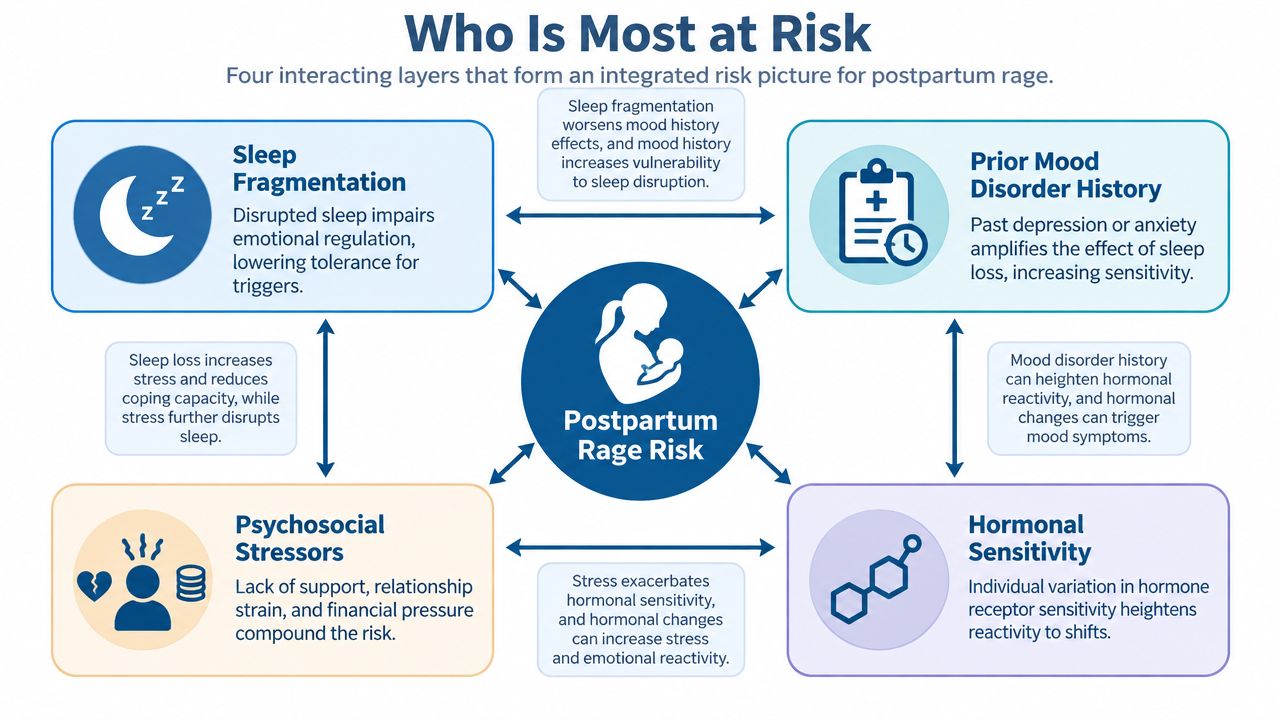
Risk rarely comes from one factor. Sleep fragmentation may destabilize someone with a previous depression history, while trauma can make a frightening birth or an infant's distress feel like an ongoing threat. Limited support then removes the recovery time that might otherwise prevent an episode from escalating.
A parent with hormonal sensitivity may notice stronger mood changes after delivery, particularly if she has experienced severe premenstrual mood symptoms. Birth complications, pain, feeding difficulties, financial pressure, relationship strain, and partner absence can add physiological and social load.
Why the factors multiply
Think of risk as interacting layers rather than a checklist. Sleep loss makes old anxiety more reactive. Anxiety increases vigilance, which makes it harder to rest. Relationship conflict then removes practical help, and the parent becomes even more vulnerable to the next trigger.
Protective factors work in the opposite direction:
Reliable support: Another adult can take over infant care before anger reaches its peak.
Stable relationships: A partner who listens and shares the mental load reduces isolation.
Planned resources: Paid leave, food assistance, transportation, and childcare can create recovery time.
Early psychiatric contact: Prompt assessment can identify depression, anxiety, trauma, bipolar symptoms, or medication needs before a crisis develops.
A well-rested parent with dependable help may tolerate postpartum biological changes that destabilize a sleep-deprived parent with prior mood symptoms and no backup. That difference isn't a character judgment. It's a reminder that treatment must address the environment as well as the individual.
Screening and Safety Planning at Home
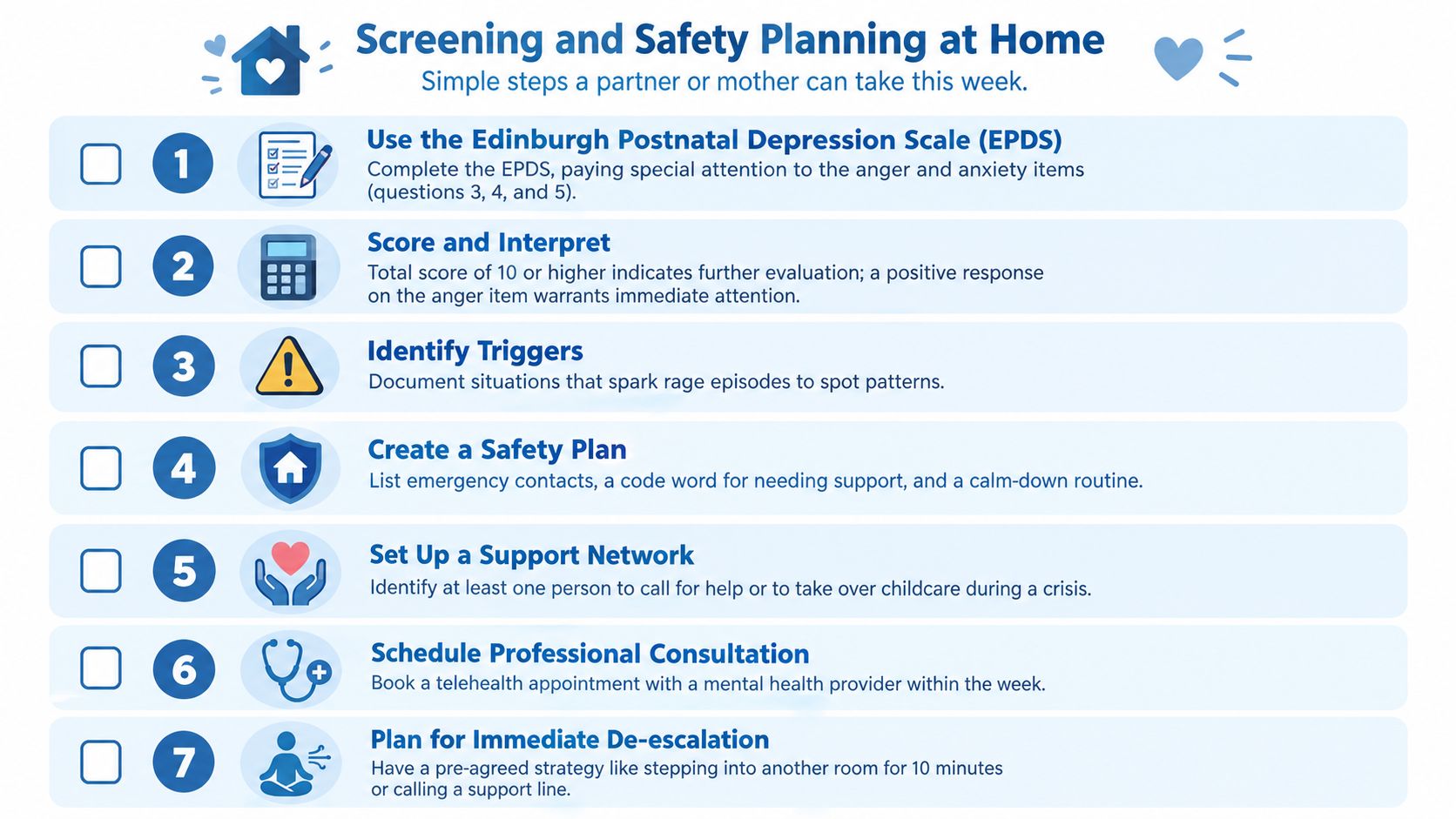
Start with observation, not accusation. The parent experiencing rage can write down what happened before each episode, how intense the body sensations became, whether sleep was interrupted, and what helped the episode end. A partner can ask, “What would make tonight safer?” rather than, “Why are you acting like this?”
The Edinburgh Postnatal Depression Scale can help identify postpartum depression and related distress. Pay attention to its anxiety and irritability-related items, but don't treat the score as a diagnosis. A positive response to a safety-related question or an inability to keep the baby safe warrants direct professional attention regardless of the total score.
A practical plan for tonight
Name the trigger: Was it crying, touch, pain, conflict, feeding pressure, or feeling abandoned?
Place the baby safely: If anger is rising, put the infant in a safe crib and step away briefly. A crying baby is safer in a secure sleep space than in the arms of an overwhelmed adult.
Use a code word: Agree that “I need a reset” means the other adult takes over without debate.
Trade caregiving shifts: Build a realistic rotation that gives each adult protected recovery time.
Reduce access to means: During high-risk periods, secure weapons, excess medication, and objects that could be used impulsively.
Ask five direct questions: How often is the rage happening? How quickly does it escalate? Have you hurt anyone or damaged property? Do you fear you might act on violent thoughts? Are you hearing or believing things others don't?
Escalate when needed: Contact emergency services or 988, the Suicide and Crisis Lifeline, for immediate danger. In Florida, the Mobile Response Team can also help connect a person experiencing a behavioral health crisis with urgent support.
A partner should ask these questions calmly and stay with the parent if safety is uncertain. Avoid arguing about whether the anger is justified. The immediate task is reducing stimulation, separating the parent and infant from danger, and connecting with clinical help.
Evidence-Based Treatments That Work
Treatment works best as a coordinated clinical stack, not as a contest between therapy and medication. The first step is an assessment that identifies whether rage is driven primarily by depression, anxiety, trauma, bipolar symptoms, OCD, sleep disruption, or a combination.
Modality | Target symptom | Onset of relief |
|---|---|---|
CBT | Catastrophic thinking, resentment, guilt spirals, and rigid expectations | Skills can help during early practice, while deeper change develops through repeated sessions |
DBT skills | Acute anger surges, impulsivity, and emotional flooding | Distress-tolerance and grounding tools are usable during an episode |
Trauma-focused therapy | Birth trauma, prior abuse, PTSD symptoms, and threat sensitivity | Relief develops as memories and body-based responses are processed safely |
Medication management | Depression, anxiety, severe irritability, or mood instability | Timing depends on the medication, diagnosis, dose, and individual response |
Matching the tool to the driver
CBT helps a parent examine thoughts such as, “If I need help, I'm failing,” or, “I must handle every nighttime wake-up.” Those beliefs can intensify guilt and resentment. DBT adds practical regulation skills, including paced breathing, mindfulness, distress tolerance, and opposite action when an impulsive response would make the situation less safe.
Parents with a traumatic birth or earlier adverse experiences may need trauma-focused care, such as EMDR or another trauma-informed approach. Processing trauma too aggressively during severe sleep deprivation can overwhelm the patient, so pacing and stabilization matter.
Medication decisions require a perinatal psychiatrist or another qualified prescriber who can review breastfeeding, medical history, bipolar risk, current symptoms, and the safety of each option. SSRIs, including sertraline in appropriate cases, may be considered, while specialized treatments such as brexanolone or zuranolone have narrower indications and require individualized discussion. Guidance on postpartum depression treatment can help explain why medication and psychotherapy are often combined rather than treated as competing choices.
Coping Strategies and How Telepsychiatry Helps
Clinical care becomes more effective when it changes the hours between appointments. Start with a 72-hour mood and trigger log. Record sleep interruptions, meals, conflict, feeding demands, anger intensity, and recovery time. Patterns often become clearer when they're written down rather than reconstructed through guilt.
Protect sleep through a partner shift, trusted relative, or paid support when available. The goal isn't perfect sleep. It's creating a dependable opportunity for the nervous system to downshift.
Eight actions that reduce escalation
Track the early body signs: Heat, jaw tension, shaking, racing thoughts, and a louder voice often appear before behavior becomes unsafe.
Take a micro-break: Put the baby in a safe place and step outside or into another room for a brief reset.
Use paced exhalation: Make the exhale longer than the inhale, then repeat until your pulse begins to settle.
Try a cold-water reset: Cool water on the face or hands can interrupt escalating physiological arousal.
Ground through the senses: Name five things you see, four you feel, three you hear, two you smell, and one you taste.
Use a direct script: “I'm becoming overwhelmed. Please take the baby now. I'll return when I'm regulated.”
Build a two-adult backup roster: List people who can answer a call, bring food, or supervise the baby while you sleep.
Protect one identity activity: Keep one meaningful activity each week that connects you with who you are beyond caregiving.
Telepsychiatry can remove practical barriers for a parent who can't easily travel with an infant. A video evaluation can support diagnostic assessment, medication management, therapy, or both, with coordination involving an OB/GYN or pediatrician when appropriate. Parents considering virtual care can review how telemedicine psychiatry works before scheduling.
Refresh Psychiatry & Therapy provides Florida telepsychiatry with board-certified psychiatrists and licensed therapists, including care for postpartum mood symptoms. The practice accepts Aetna, UnitedHealthcare and UHC, Cigna, Blue Cross Blue Shield, Humana, Tricare, UMR, and Oscar insurance plans. Confirm benefits and availability directly with the practice, because coverage and treatment recommendations depend on the patient's plan and clinical needs.
When to Seek Immediate Help and Next Steps
Postpartum rage crosses into emergency territory when safety, reality testing, or basic caregiving ability is compromised. Seek immediate help for thoughts of harming the baby or yourself, violent images paired with an urge or compulsion to act, command hallucinations, delusions involving the baby, severe confusion, dangerous impulsivity, or agitation that makes it impossible to care for the infant safely.
Do not wait for an outpatient appointment in those circumstances. Call 911 or 988, go to the nearest emergency department, or contact the Postpartum Support International HelpLine at 1-800-944-4773 for support and referral guidance. Florida's Mobile Response Team may also help during an acute behavioral health crisis.
Safety rule: Put the baby in a safe crib, create physical distance, and call for another adult before anger turns into action.
Many parents fear that disclosing violent thoughts will automatically lead to child removal. That fear can delay care. Mandated reporting focuses on an identifiable safety risk, not the mere presence of anger, intrusive thoughts, or a parent's decision to seek help. Honest disclosure allows clinicians to distinguish an unwanted, frightening thought from intent, plan, psychosis, or unsafe behavior.
Practical postpartum support includes medical recovery, not only psychiatric symptoms. Parents dealing with pain or difficulty caring for themselves may benefit from this resource on postpartum hygiene and pain relief, alongside medical guidance from an obstetric clinician.
Contact Refresh Psychiatry at (954) 603-4081 to schedule an evaluation. The practice provides Florida telepsychiatry and can discuss assessment, therapy, medication management, insurance verification, and urgent triage through its secure patient portal or online intake process. This blog is for informational purposes only and does not constitute medical advice. Please consult a qualified mental health professional for personalized guidance.
Refresh Psychiatry & Therapy offers coordinated psychiatric evaluation, medication management, and evidence-based therapy for postpartum rage and related depression, anxiety, trauma, OCD, and mood symptoms through Florida telepsychiatry. Visit Refresh Psychiatry & Therapy to request care, or call Refresh Psychiatry at (954) 603-4081 to schedule your evaluation. We accept Aetna, United Healthcare/ UHC, Cigna, Blue Cross Blue Shield, Humana, Tricare, UMR, and Oscar insurance plans.