
🛌 Psychiatrist Coral Springs Guide to Care Options

🛌 Psychiatrist Coral Springs Guide to Care Options
You're probably here because the search felt simple at first. Type in “psychiatrist Coral Springs,” scan a few profiles, maybe check a map, and hope the right answer appears.
Then the questions show up. Can you get seen soon? Is the clinician in network with your plan? Do they treat anxiety, depression, ADHD, PTSD, bipolar disorder, OCD, or insomnia? And if the appointment is virtual, does that change what care you can receive?
Those are the questions that matter most. In Coral Springs, the search for psychiatric care usually isn't just about finding a name. It's about finding access, fit, continuity, and a payment path that won't surprise you later.
Finding the Right Psychiatrist in Coral Springs
A common Coral Springs scenario goes like this. Someone has been pushing through panic symptoms, low mood, racing thoughts, poor sleep, or trouble focusing for months. They finally decide to get help, open a directory, and see a long list of names that all seem similar.
That list can make the process look easier than it is.
One clinician may treat adults only. Another may focus on children and adolescents. One may offer medication management but not therapy. Another may appear under your insurance company's directory but turn out to be out of network at the individual clinician level. If you want a broader starting point before narrowing your options, this short guide on how to search for psychiatry near you can help frame the process.
What people usually need to know first
Most readers aren't asking for a textbook definition of psychiatry. They're trying to answer a few practical questions:
Can this person evaluate what's going on? You want more than a quick symptom checklist.
Will I need medication, therapy, or both? Many people aren't sure which path fits.
How quickly can care start? Access matters when symptoms are affecting work, school, parenting, or sleep.
Will my insurance cover this specific clinician? That answer often decides whether booking feels realistic.
The best first appointment isn't the one with the prettiest profile. It's the one that fits your symptoms, your insurance, and your ability to follow through with ongoing care.
Coral Springs is part of a bigger access story
Finding a psychiatrist in Coral Springs can feel strangely hard, even in a busy South Florida market. That's not your imagination. Psychiatric care in Florida is shaped by supply constraints, insurance complexity, and the growing role of telepsychiatry.
So the goal isn't to collect the longest list of names. It's to narrow your search to clinicians who can provide the kind of care you need and whose scheduling and coverage setup you understand before the visit.
What a Psychiatrist Does and How Care Works
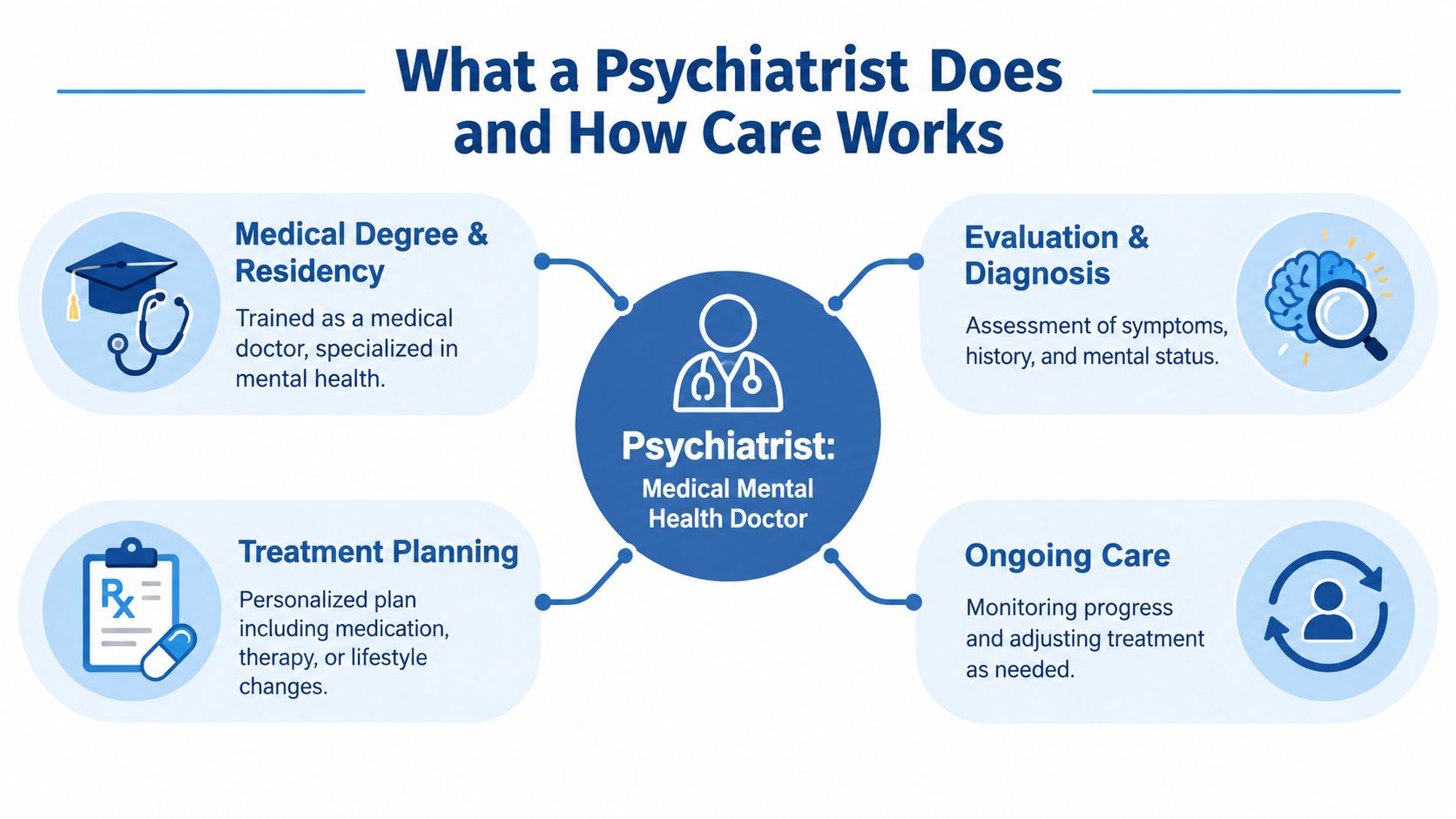
A psychiatrist is a medical doctor who specializes in mental health. That matters because psychiatric symptoms don't show up in neat boxes. Trouble sleeping can be insomnia, anxiety, depression, trauma, a medication effect, a medical issue, or a mix of several things. A psychiatrist's job is to sort through that carefully.
Think of the evaluation like building a map
A psychiatric evaluation is less like taking a quiz and more like building a map. The clinician looks at your symptoms, when they started, what makes them worse or better, your medical history, medications, sleep, stress, family history, and how daily life has changed.
If you've ever wondered what that first assessment tends to include, this overview of what a psychiatric evaluation involves gives a useful picture.
Three people can all say “I feel off,” but mean very different things:
One adult may have panic attacks, muscle tension, and constant worry.
One college student may be exhausted, distracted, and falling behind, with ADHD symptoms that were missed earlier.
One parent may report low motivation, irritability, and broken sleep that point more toward depression than stress alone.
The main parts of psychiatric care
Psychiatric treatment usually includes several layers, not just a prescription.
Part of care | What it means in plain language |
|---|---|
Evaluation | Understanding the full picture before labeling the problem |
Diagnosis | Naming the condition carefully, when the pattern is clear |
Treatment planning | Deciding whether medication, therapy, habit changes, or combined care makes sense |
Medication management | Starting, adjusting, monitoring, and sometimes stopping medication safely |
Follow-up | Checking progress and updating the plan as real life changes |
Why coordination matters
Medication can help reduce symptom intensity. Therapy can help people change patterns, build coping skills, process trauma, improve relationships, and stay functional when life gets messy. When those pieces work together, care tends to feel less fragmented.
Practical rule: A good psychiatric plan should answer three things clearly. What's most likely happening, what the first treatment step is, and how progress will be monitored.
That's especially important for conditions such as anxiety, depression, ADHD, PTSD, bipolar disorder, OCD, and insomnia, where symptoms often overlap and change over time.
Why Access Matters for Coral Springs and Broward County
Many people assume that if they live in or near Coral Springs, specialist care should be easy to find. The situation is more uneven.
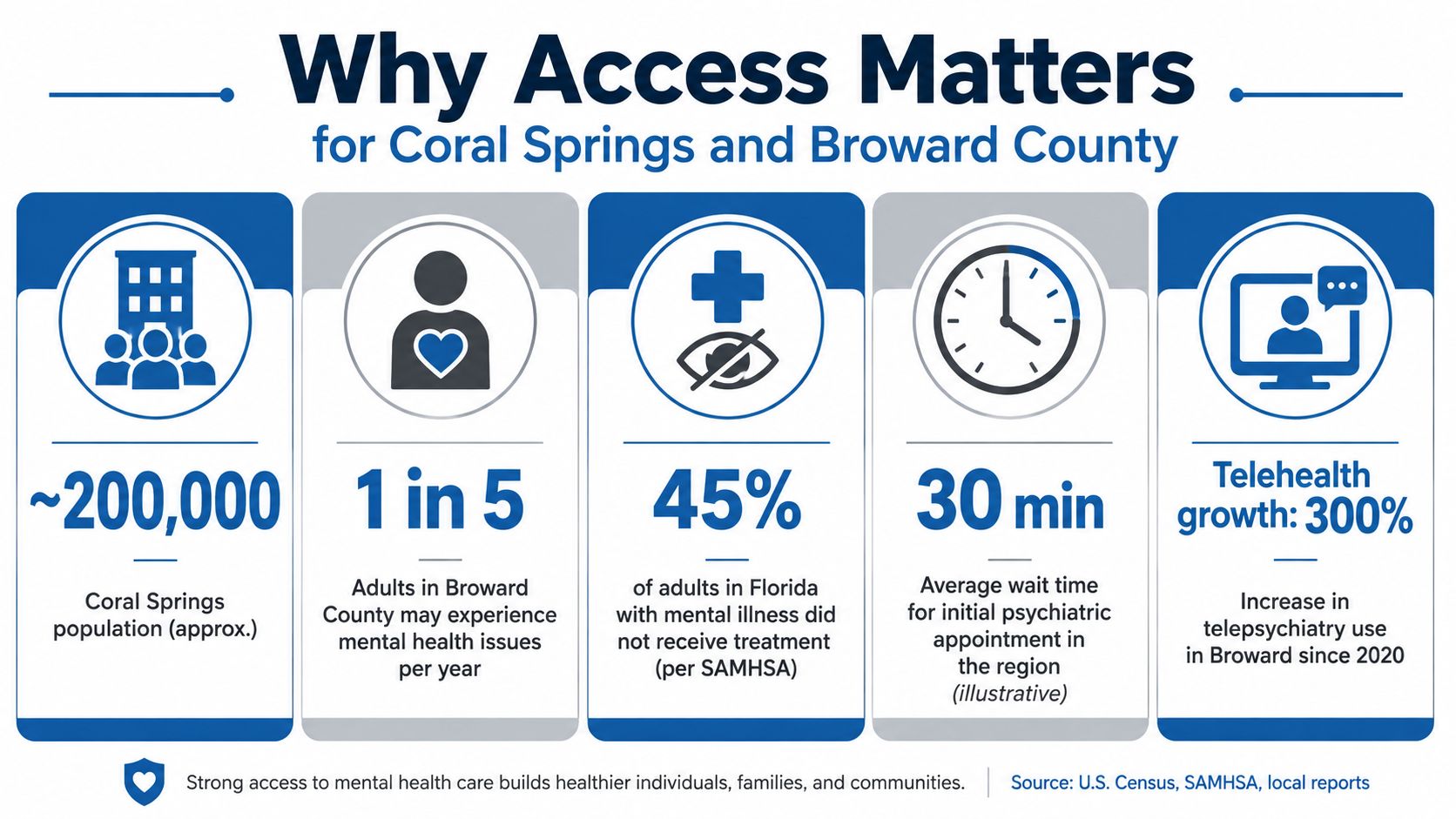
A 2025 Florida behavioral health gap analysis found that 98.5% of Florida counties have either a partial or complete shortage of mental health professionals. That report also notes that counties with fewer than one psychiatrist per 30,000 residents meet the shortage threshold, that at least 34 psychiatrists are needed statewide, and that 20 Florida counties with populations below 30,000 have no resident psychiatrist at all. For someone searching in Coral Springs, the practical meaning is simple. Supply is concentrated, and many patients are competing for limited psychiatrist time.
Broward County shows real need
Local need is substantial too. A Broward County adult mental health briefing reported that in 2020, Broward's hospitalization rates per 100,000 were 487.6 for mood and depressive disorders, 385.2 for schizophrenic disorders, and 1,070.6 for all mental disorders, compared with Florida rates of 430.3, 235.7, and 928.4 respectively. The same briefing found that about 20% of Broward adults said their activities were limited because of physical, mental, or emotional problems, about 11% reported poor mental health for at least 14 of the past 30 days, and nearly 13% had previously been diagnosed with depression. A separate Broward assessment reported an average of 3.4 unhealthy mental health days per month in the county versus 4.2 statewide.
Those numbers don't mean every person needs a psychiatrist. They do show why demand for timely evaluation, medication management, and coordinated therapy stays high.
Why telepsychiatry changed the search
When specialist supply is tight, telepsychiatry becomes more than a convenience feature. It becomes a way to widen access. A Florida access analysis explains that state law allows secure-video psychiatric care statewide, including for qualified out-of-state providers who register to practice in Florida, which is one reason telepsychiatry has become an important access model in Florida.
In a shortage setting, the biggest barrier often isn't whether a psychiatrist exists somewhere in the region. It's whether you can realistically get evaluated, followed, and adjusted without long delays or repeated travel.
That's why many Coral Springs searches now lead to a hybrid decision. You're not only choosing a clinician. You're choosing an access model.
Psychiatry Versus Therapy and When You Need Each
People often use “psychiatrist,” “therapist,” and “psychologist” as if they mean the same thing. They don't.
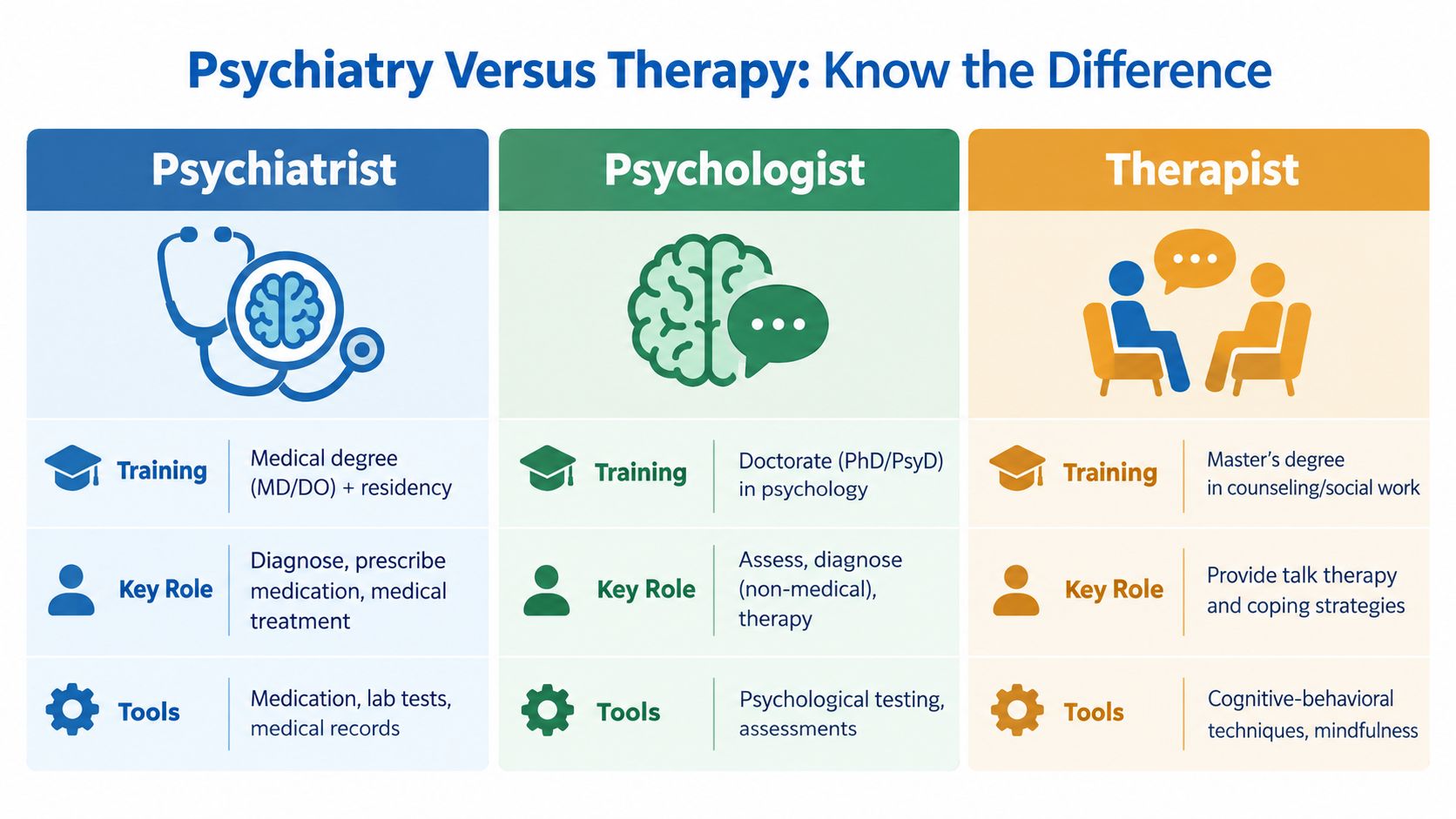
A psychiatrist is the medical specialist who evaluates mental health conditions, diagnoses them, and can prescribe medication when appropriate. A psychologist often focuses on assessment and therapy. A therapist or counselor provides talk therapy and skills-based treatment. The right fit depends on what problem you're trying to solve.
When psychiatry makes sense first
Psychiatry is often the better starting point when symptoms are affecting basic functioning or when the diagnosis isn't clear.
That can include:
Mood symptoms that won't lift such as persistent sadness, loss of motivation, hopelessness, or major irritability
Attention symptoms with real consequences like academic decline, missed deadlines, or chronic disorganization
Trauma-related symptoms including nightmares, hypervigilance, and emotional reactivity
Severe sleep disruption when insomnia is tied to anxiety, depression, bipolar symptoms, or medication questions
If sleep is part of the picture, a practical outside resource is this guide to better sleep for CEOs. Despite the title, the ideas are broadly useful for adults whose stress and sleep problems reinforce each other.
When therapy may be the main tool
Therapy can be the best first-line path when the core issue is pattern-based rather than medication-based. Examples include relationship conflict, stress management, grief, identity concerns, coping after a life transition, or learning skills for anxiety that hasn't escalated into major impairment.
Different therapy models fit different needs:
Therapy type | Often helpful for |
|---|---|
CBT | Anxiety, depression, panic, unhelpful thought patterns |
DBT | Emotion regulation, distress tolerance, interpersonal conflict |
Psychodynamic therapy | Repeating patterns, insight, deeper emotional themes |
Trauma-focused therapy | PTSD symptoms and trauma recovery |
Many people need both
Some patients need medication to lower the symptom volume so they can use therapy well. Others need therapy to maintain gains after medication improves concentration, mood, or sleep. The two approaches aren't competing teams.
If you're unsure which door to open first, this comparison of therapist versus psychiatrist can help you sort the decision based on symptoms, severity, and goals.
A simple test helps. If you're asking “Do I need medication?” start with psychiatry. If you're asking “How do I change this pattern?” therapy may be the clearer starting point. If both questions feel true, integrated care usually makes the most sense.
How to Choose a Psychiatrist in Coral Springs With Confidence
They don't need more names. They need a better filter.
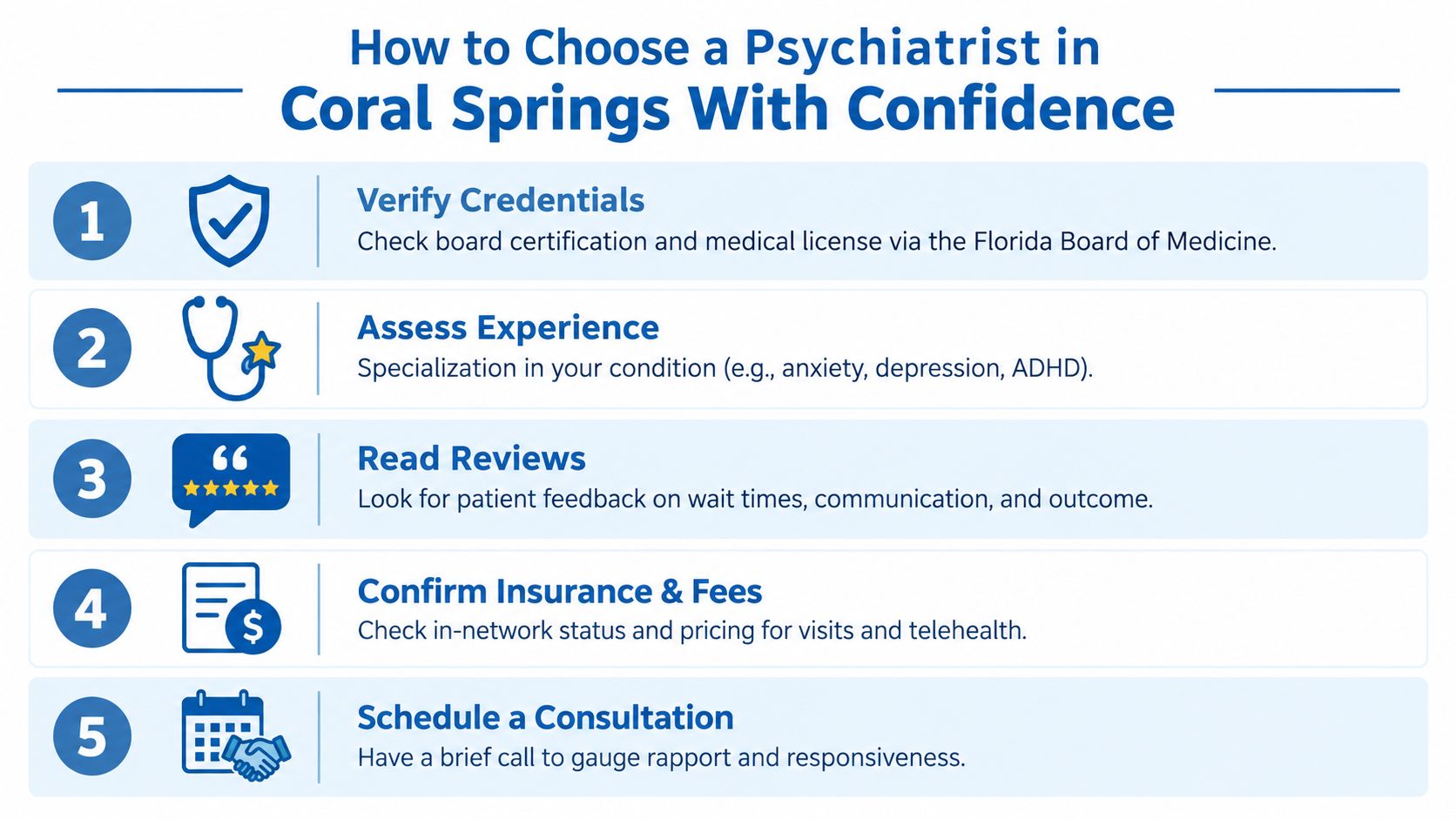
A strong choice usually comes from checking clinical fit and logistical fit at the same time. A psychiatrist may be excellent on paper but unavailable for follow-up, out of network at the clinician level, or mismatched for your age group or condition.
The questions worth asking before you book
Start with clinical basics, then move to insurance and scheduling.
Who do they treat most often? Adults, adolescents, children, or a mix.
What conditions are part of their routine work? Anxiety, depression, ADHD, PTSD, bipolar disorder, OCD, insomnia, or something more specialized.
What does ongoing care look like? Some practices do evaluations only. Others provide long-term medication follow-up and therapy coordination.
How do they handle communication and refills? This affects day-to-day care more than people expect.
Are visits in person, telepsychiatry, or both? That changes convenience and sometimes access speed.
Insurance is more complicated than the clinic logo
Many Coral Springs searches go sideways. A practice may accept your insurance broadly, but that doesn't always mean every individual clinician is in network under your plan. Behavioral health can also be managed through a separate vendor, so the medical insurer's directory may not give the full answer.
A practical insurance explainer from Refresh Psychiatry notes that network status can differ by clinician, not just by clinic, and that telebehavioral coverage depends on details such as modality, deductible, coinsurance, and whether your behavioral health benefits are carved out. It also explains that Medicare home-based telehealth has a six-month in-person rule before the first home session and again every 12 months starting October 1, 2025, while commercial plans are expected to cover telebehavioral health at parity and Medicaid can cover live video and, in some situations, audio-only services. You can read that overview here: does insurance cover a psychiatrist.
Florida also distinguishes coverage parity from payment parity. A state telehealth report explains that covered telehealth services must be treated as covered services, but reimbursement terms are separate and aren't automatically fixed by coverage rules, as outlined in the Florida telehealth policy report.
A quick decision matrix
Question | Good sign | Caution sign |
|---|---|---|
Condition match | Regularly treats your main symptoms | Focus appears unrelated to your needs |
Continuity | Offers follow-up and plan adjustments | One-time evaluation only |
Insurance clarity | Confirms clinician-level network status | Says only “we take your insurance” |
Telehealth logistics | Explains video platform and coverage | Vague about billing or modality |
Communication style | Clear answers, realistic expectations | Rushed or confusing responses |
Before you commit, it also helps to hear a clinician talk through what a good fit looks like. This short video gives a practical overview.
What to Expect at Your First Visit and Inside Refresh Psychiatry Services
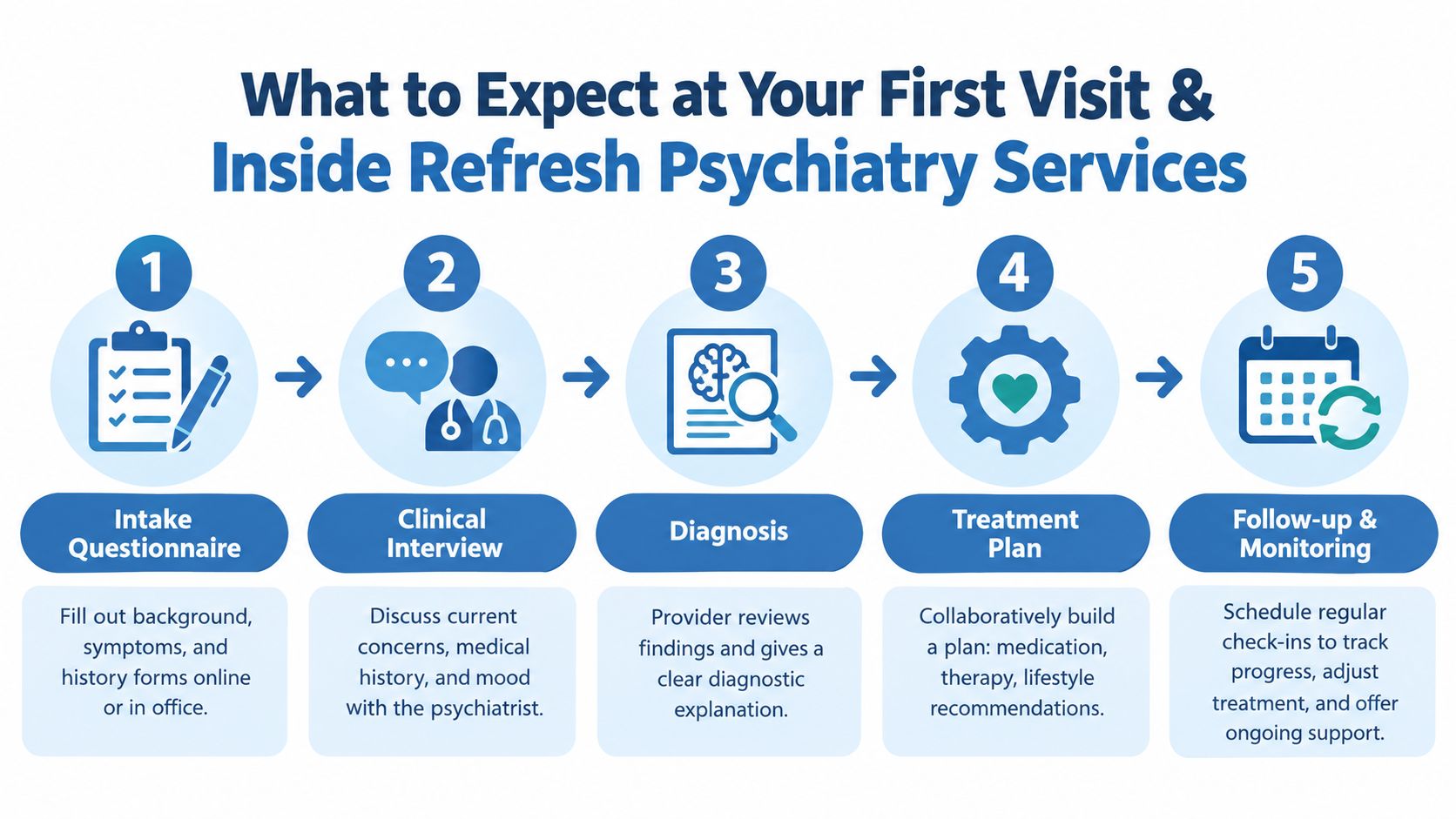
The first psychiatric visit usually feels better once you know the sequence. Most appointments move through a few clear stages rather than jumping straight to a prescription.
What the first visit often includes
You'll usually complete intake forms first. Those forms often ask about current symptoms, past treatment, medications, sleep, family history, substance use, medical conditions, and what prompted you to seek care now.
Then comes the interview. The psychiatrist asks questions that sound simple on the surface but help separate overlapping conditions. For example, “Can't focus” could reflect ADHD, anxiety, depression, sleep loss, trauma, or burnout. This walkthrough of what happens at a psychiatry appointment can help make that process feel less opaque.
What happens after the assessment
A careful appointment usually ends with a working formulation, not just a label. You should leave understanding what the clinician thinks is most likely happening, what alternatives are still being considered, and what the first treatment step is.
That treatment plan may include:
Medication management when symptom severity or diagnostic pattern supports it
Individual therapy such as CBT, DBT, psychodynamic, or trauma-focused treatment
Monitoring and adjustment because the first plan often needs refinement after real-world follow-up
Additional tools such as pharmacogenomic analysis, deprescribing review when appropriate, or emotional support animal evaluations in selected situations
How telemedicine-only care fits this model
For many Florida patients, especially those balancing school, work, parenting, or transportation issues, a telemedicine-only model reduces friction. Refresh Psychiatry & Therapy is a Florida-based option that provides statewide telepsychiatry, psychiatric evaluations, medication management, individual therapy, child and adolescent psychiatry, pharmacogenomic analysis, deprescribing when appropriate, and emotional support animal evaluations through HIPAA-compliant virtual visits on any device.
Good telepsychiatry should still feel structured. You should know who is treating you, what the diagnosis means, how follow-up works, and when the plan will be reassessed.
There is one important legal limit to know. Under Florida statute, a telehealth provider may not prescribe a Schedule II controlled substance through telehealth, as stated in Florida Statute 456.47. That doesn't eliminate telepsychiatry's value, but it does affect planning for some medication situations.
Scheduling Insurance and Telepsychiatry Next Steps
Once you've narrowed your options, the next step is less about searching and more about verifying. The most useful phone call or contact form message is the one that asks precise questions.
Have these details ready before you schedule:
Your insurance card information, including the behavioral health administrator if it's listed separately
The clinician's name, not just the practice name, so you can confirm network status accurately
Your preferred visit type, since telehealth versus in-person can affect logistics and coverage
Your main treatment need, such as evaluation, medication management, therapy, or child and adolescent care
A short insurance checklist
When you speak with a practice or insurer, ask:
Is this specific clinician in network under my plan?
Are behavioral health benefits managed by a separate company?
Does my plan cover telepsychiatry for this type of visit?
What will apply before coverage begins? Think deductible and coinsurance.
If video isn't possible, is audio-only ever covered?
For Florida Medicaid during the state of emergency analyzed by the legislature, telemedicine had to be covered no more restrictively than face-to-face care, and audio-only behavioral health became reimbursable when video wasn't available and access to audio-video technology was lacking, according to the Florida Senate telemedicine bill analysis. Commercial telehealth coverage and reimbursement rules can still vary in important ways, so it's worth confirming the details directly.
What scheduling speed can and can't tell you
Fast booking doesn't always mean a region has plenty of psychiatrists. Sometimes it means the appointment channel is efficient. Current Coral Springs listings on one booking platform show some psychiatrists with 1 to 3 day availability, while Florida-wide reporting cited there notes an average 28-day wait for a first mental health appointment versus 14 days nationally, as shown in these Coral Springs psychiatrist listings with insurance filters.
If you want a starting point for covered virtual care, this guide to an online psychiatrist that takes insurance can help you frame the right questions before you book.
Contact us or call Refresh Psychiatry at (954) 603-4081 to schedule your evaluation. We accept Aetna coverage information, United Healthcare and UHC coverage information, Cigna coverage information, Blue Cross Blue Shield coverage information, Humana coverage information, Tricare, UMR, and Oscar insurance plans. This blog is for informational purposes only and does not constitute medical advice. Please consult a qualified mental health professional for personalized guidance.
If you're looking for psychiatric care in Coral Springs, Refresh Psychiatry & Therapy offers psychiatric evaluations, medication management, therapy, and statewide telepsychiatry for adults, children, and adolescents in Florida. If you want care that helps you sort out access, insurance, and treatment options without added confusion, it's a practical place to start.