
Side Effects of Celexa Antidepressant: A Patient Guide

🛌 Side Effects of Celexa Antidepressant: A Patient Guide
You take your first Celexa tablet with breakfast, get through work, and by dinner your stomach feels queasy. Your mood hasn't lifted, your jaw feels slightly tight, and now you're wondering whether you've made a mistake. This is a common moment of uncertainty for people starting citalopram, especially when the medication's early effects arrive before its antidepressant benefits.
The two useful questions are how concerning is this symptom, and what should you do next? Most early effects are uncomfortable rather than dangerous, but a small group of symptoms requires prompt medical attention. The goal isn't to dismiss side effects or fear them. It's to match the symptom, timing, and severity with the right response.
Starting Celexa and Wondering What's Normal
A 32-year-old Florida patient once described this exact first-day experience to me. She took her first 20 mg citalopram tablet with breakfast, felt fine for several hours, and then noticed nausea, a flat mood, and mild jaw tightness by dinner. Her first thought was, “Is this the medication harming me?” Her second was, “Should I take tomorrow's dose?”
My approach is calm but specific. Nausea, dry mouth, sweating, sleep changes, mild restlessness, and a temporary sense of emotional unfamiliarity can occur early, often before mood improvement has had time to develop. In FDA-labeled placebo-controlled studies, nausea occurred in 21% of citalopram-treated adults compared with 14% receiving placebo, while dry mouth occurred in 20% compared with 14%. The same label reported increased sweating in 11% versus 9% and tremor in 8% versus 6%. These figures come from the citalopram prescribing information, and they describe groups, not a guaranteed prediction for you.
What to do during the first few days
Write down the timing. Record when you take the tablet, when the symptom begins, how intense it feels, and whether it changes after food, rest, or hydration.
Don't change the dose yourself. A mild symptom usually calls for observation and a message to the prescriber, not an abrupt stop or an extra dose.
Contact the prescriber promptly if the symptom is escalating, interferes with eating or sleeping, or feels unlike an ordinary medication effect.
Seek urgent help for fainting, a markedly irregular heartbeat, severe confusion, high fever, muscle rigidity, a seizure, trouble breathing, or thoughts of self-harm.
A flat mood on the first day doesn't mean Celexa has failed. Antidepressant effects build gradually, while side effects can appear sooner. If you're unsure whether a symptom reflects dose tolerance or inadequate treatment, review the signs your antidepressant dose may be too low with a qualified clinician rather than trying to solve the question through symptom searches.
What Celexa Is and How It Works
Celexa is the brand name for citalopram, a selective serotonin reuptake inhibitor, or SSRI. The FDA approved citalopram for major depressive disorder in adults. It is available as oral tablets in 10 mg, 20 mg, and 40 mg strengths, and the usual adult starting dose is 20 mg once daily, subject to individual clinical judgment and the prescribing information.
Think of serotonin signaling as mail moving between two neighboring brain cells. After one cell releases serotonin, the sending cell can collect some of it back through a transporter, much like a mailbox being emptied too quickly. An SSRI slows that reuptake process, leaving more serotonin available in the space between cells and giving the receiving cell more opportunity to respond.
That explanation doesn't mean serotonin is a simple “happiness chemical,” and it doesn't mean more medication automatically produces more benefit. Citalopram changes signaling over time, while the brain's broader mood circuits adapt more gradually. Many people notice side effects during the early days or first couple of weeks, whereas the antidepressant response commonly develops over four to six weeks, as reflected in FDA-labeled clinical data.
Why the timeline matters
Taking Celexa consistently helps your prescriber interpret what happens. If nausea starts soon after the first doses, it may reflect early tolerance. If severe agitation appears after a dose increase, that deserves a more direct clinical conversation. If dizziness begins after missed doses, discontinuation becomes part of the differential.
Celexa's closely related medication, escitalopram, sold as Lexapro, is its S-enantiomer, meaning it contains the more pharmacologically active mirror-image component of citalopram. That relationship is one reason clinicians sometimes discuss switching between them, although the two medications still have different dosing, indications, and individual tolerability.
Medication choice is rarely a contest between one universally superior SSRI and the rest. Your symptoms, medical history, other medications, cardiac risk, previous responses, and priorities such as sleep or sexual functioning all matter. A broader overview of medication classes can help when discussing SSRI versus SNRI treatment with your prescriber.
Common Celexa Side Effects in the First Weeks
The first question is usually practical: is this new feeling expected, or does it require a call? Judge common Celexa effects by frequency, timing, and impact. A mild symptom that is improving can be monitored differently from one that is severe, persistent, or begins after a dose change.
In the citalopram trials, treatment-related adverse reactions led 16% of patients to discontinue treatment, compared with 8% of placebo recipients. The DailyMed label also shows that some symptoms were reported by people receiving placebo, so a trial percentage indicates an association, not proof that the medication caused every symptom.
A practical timing map
Nausea and stomach upset often appear early. Taking Celexa consistently and asking your prescriber whether food timing is appropriate may help. Persistent vomiting, dehydration, or severe abdominal symptoms should prompt medical advice rather than continued self-monitoring.
Dry mouth and sweating can be uncomfortable without signaling a dangerous reaction. Water, sugar-free gum, and limiting excess heat may help. Florida's heat makes sweating more consequential because fluid loss can add to dizziness, weakness, or lightheadedness.
Fatigue, drowsiness, insomnia, or activation may occur in different patients, and sometimes the same patient notices a change in either direction. Sleepiness can affect driving, while feeling wired or restless can interfere with work and sleep. Avoid driving or operating machinery until you know how Celexa affects you.
Sexual effects may include reduced desire, delayed orgasm, delayed ejaculation, or erectile changes. These effects can matter greatly to quality of life even when they are not medically dangerous. Raise them directly with your prescriber instead of stopping treatment abruptly. A medication review informed by SSRI sexual side effects may identify reasonable options.
Side Effect | Approximate Frequency | Typical Onset | Likely to Resolve |
|---|---|---|---|
Nausea | 21% with citalopram, 14% with placebo | Often early in treatment | May lessen as tolerance develops |
Dry mouth | 20% with citalopram, 14% with placebo | Often early in treatment | May lessen with continued monitoring |
Increased sweating | 11% with citalopram, 9% with placebo | Early or after dose changes | Variable |
Tremor | 8% with citalopram, 6% with placebo | Early or after dose changes | Requires review if worsening |
Sexual dysfunction | At least 5% for the labeled male ejaculation-disorder reaction | May emerge during treatment | May persist and needs discussion |
Sleep or energy changes | Frequency varies by symptom | Early treatment or after dose changes | Depends on the individual response |
Keep a simple diary of mood, sleep, appetite, anxiety, sexual effects, and physical symptoms. A pattern over several days gives your psychiatrist more useful information than one difficult day.
Practical rule: Monitor a mild nuisance symptom for several days if it is stable or improving. Contact your prescriber if it worsens, limits daily function, or appears after a dose change.
Serious Reactions That Need Same-Day Attention
Many people taking citalopram won't develop a life-threatening reaction. Still, you need a clear threshold for action because severe symptoms can look different from ordinary nausea or restlessness.
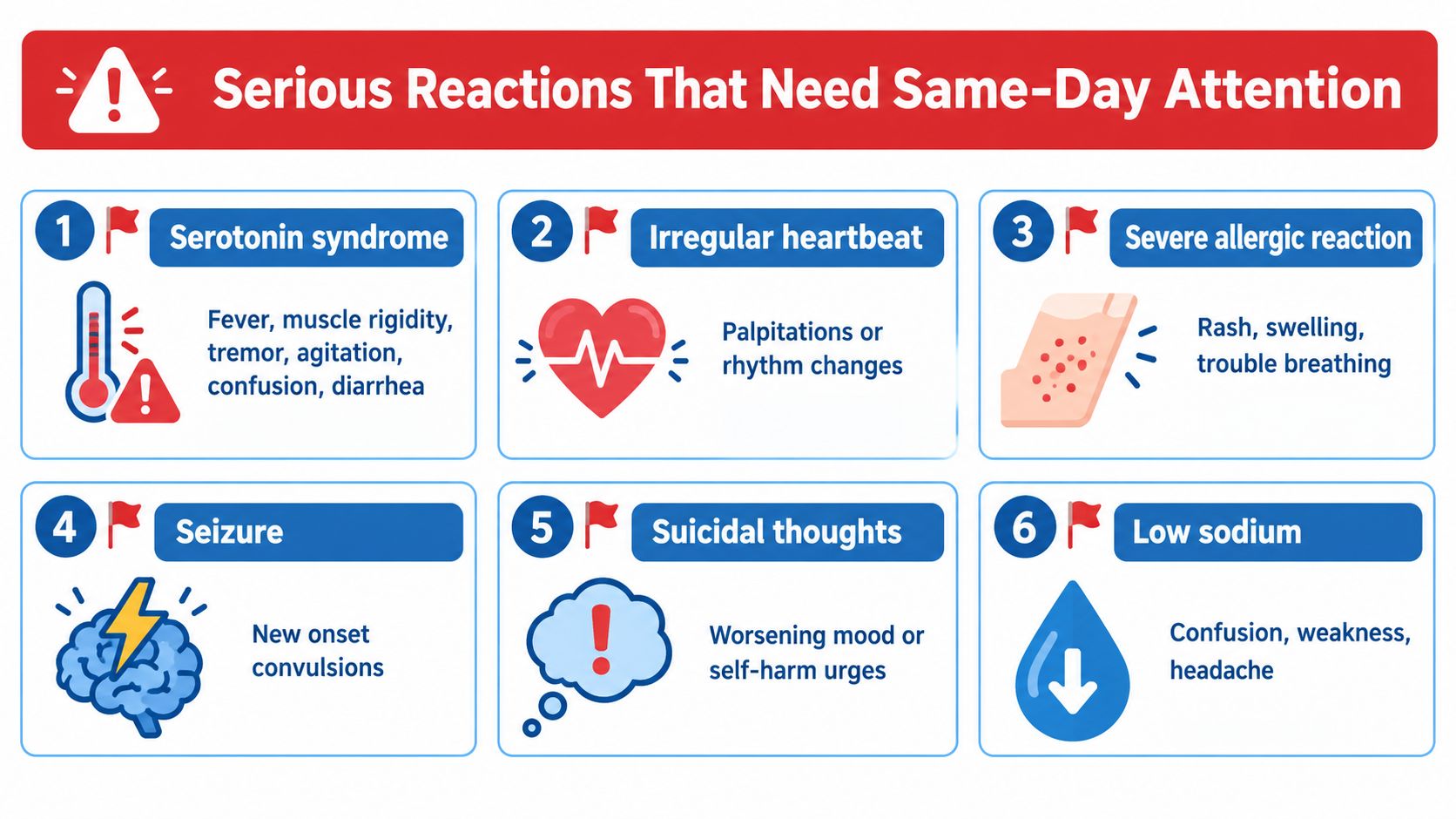
Recognize the red flags
Serotonin syndrome can occur when citalopram is combined with other serotonin-increasing medicines or supplements. Medication combinations requiring careful review include tramadol, triptans, linezolid, methylene blue, other antidepressants, and other serotonergic agents. Fever, sweating, confusion, agitation, a fast or irregular heartbeat, severe muscle stiffness or twitching, loss of coordination, hallucinations, vomiting, or diarrhea warrant immediate assessment. MedlinePlus information on citalopram describes the symptom cluster and the need for prompt help.
A severe allergic or dermatologic reaction may involve widespread rash, hives, facial or throat swelling, trouble breathing, blisters, peeling skin, or sores in the mouth or eyes. A severe rash should prompt same-day contact with the prescriber. Breathing difficulty or swelling of the airway calls for emergency help.
Low sodium, or hyponatremia, may present with headache, nausea, confusion, weakness, unsteadiness, falls, or seizures. Older adults, people taking diuretics, and patients with low body weight may need particular clinical attention when these symptoms occur. New confusion or falls should lead to urgent medical assessment and consideration of laboratory testing.
Mood and behavior changes matter too. New suicidal thoughts, worsening depression, extreme agitation, panic, impulsive behavior, or unusually high and frenzied energy require immediate clinical contact. Call 988 for a mental health crisis, or 911 when there is immediate danger, loss of consciousness, or a seizure.
The video below offers another visual review of medication warning signs:
A mild dry mouth or transient queasiness usually isn't an emergency. Severe symptoms, rapid deterioration, or several red flags occurring together are different. If you aren't sure, call the prescribing office or emergency services rather than waiting for a routine appointment.
The Heart Rhythm Question Most Articles Skip
Citalopram has a dose-dependent effect on the QT interval, a measurement of the heart's electrical recovery on an electrocardiogram. When the QT interval becomes too long, susceptible patients can develop torsades de pointes, ventricular tachycardia, or, rarely, sudden death. This is the central reason citalopram has a defined dosing ceiling.
For most adults, FDA labeling does not recommend doses above 40 mg once daily. The maximum recommended dose is 20 mg daily for adults over 60, people with hepatic impairment, CYP2C19 poor metabolism, or certain interacting medicines. The FDA-reviewed citalopram safety information reports a QTcF increase of more than 60 milliseconds in 1.9% of citalopram-treated participants compared with 1.2% of placebo-treated participants. A post-dose QTcF above 500 milliseconds occurred in 0.5% of citalopram recipients and in none of the placebo group.
Who needs a closer review
Risk can rise with congenital long-QT syndrome, a slow heart rate, low potassium, low magnesium, recent myocardial infarction, uncompensated heart failure, or another QT-prolonging medicine. Examples include amiodarone, sotalol, ondansetron, methadone, some antipsychotics, and certain antibiotics. Vomiting, diarrhea, and diuretics can contribute to electrolyte abnormalities.
Patient Profile | Maximum Daily Dose | Reason | Example | 48-Hour Rule |
|---|---|---|---|---|
Most adults | 40 mg | Higher exposure increases QT-related risk | Dose increases require prescriber oversight | Don't self-adjust after a missed dose |
Adults over 60 | 20 mg | Greater exposure and vulnerability to adverse effects | Older adult with dizziness or falls | Seek advice rather than doubling or changing doses |
Hepatic impairment or CYP2C19 poor metabolism | 20 mg | Slower clearance can increase exposure | Liver disease or known poor metabolism | Contact the prescriber about missed or changed doses |
Cardiac risk or interacting medicines | Individualized, often lower | Additive rhythm or electrolyte risk | QT-prolonging medicine or low potassium | Urgent review for fainting or sustained palpitations |
Not every patient needs routine ECG monitoring. A clinician may consider an ECG and electrolyte assessment before an increase when cardiac risk factors, interacting medicines, or electrolyte concerns are present. Persistent QTc above 500 milliseconds is a labeled reason to discontinue treatment, under medical supervision.
For home monitoring, a heart rate app can't diagnose QT prolongation or replace an ECG. It may help you understand what information wearable tools can and cannot provide, such as how to choose a heart rate app. New fainting, near-fainting, sustained palpitations, or an irregular heartbeat needs clinical evaluation, not app interpretation.
Stopping Celexa, Withdrawal, and Special Populations
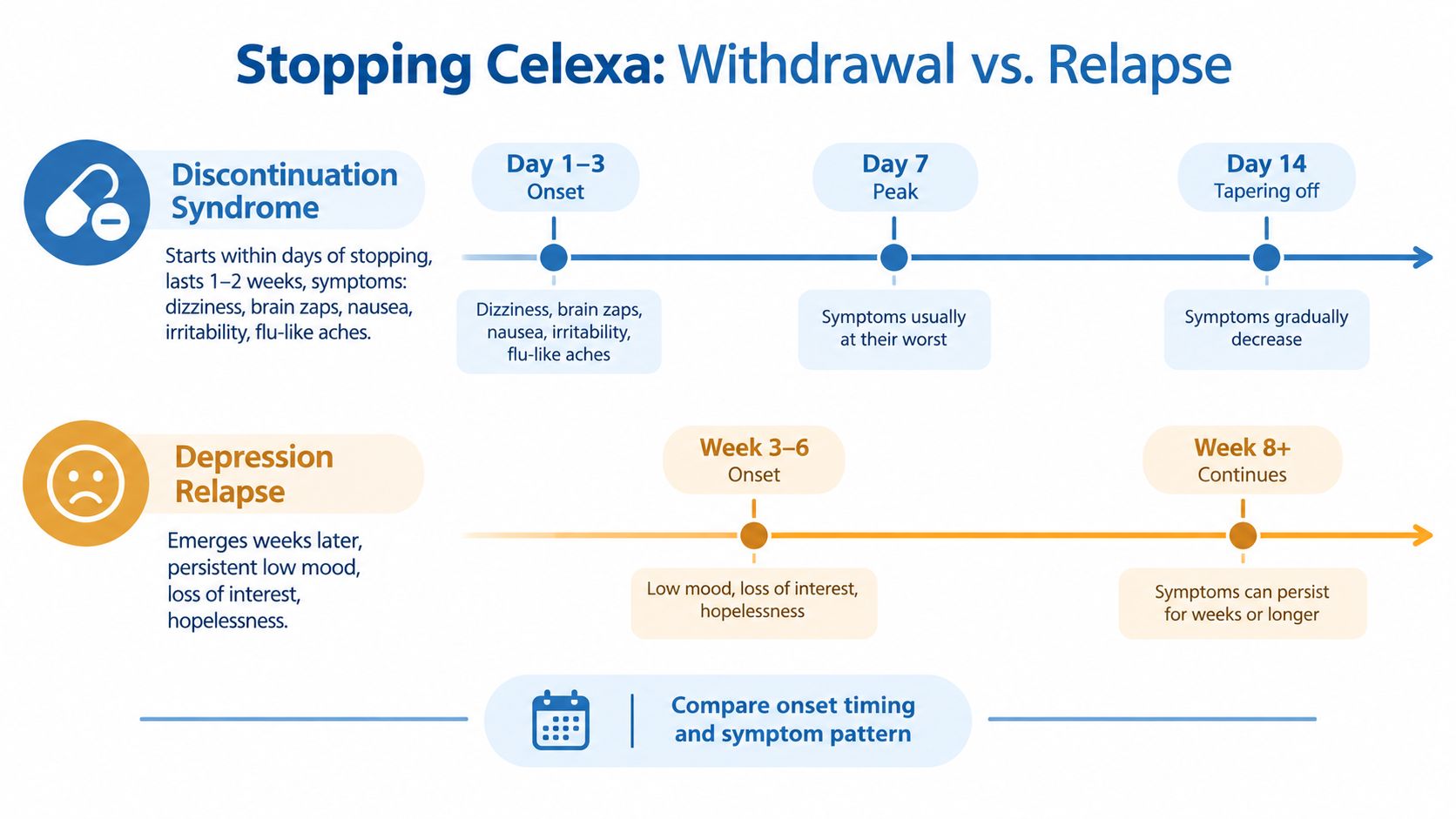
Stopping citalopram can produce discontinuation symptoms, especially after missed doses or a rapid reduction. These may include dizziness, unusual sensations or “brain zaps,” tingling, irritability, anxiety, insomnia, tearfulness, nausea, and flu-like feelings. They often begin soon after stopping and tend to follow a different pattern from depression relapse, which usually develops more gradually and persists or worsens without treatment.
The safest principle is simple: don't stop Celexa abruptly and don't create your own taper. The NHS recommends gradual reduction over several weeks under medical supervision because the appropriate pace depends on the current dose, treatment duration, prior withdrawal symptoms, and clinical history. If symptoms appear during a taper, your prescriber may pause or slow the plan.
Situations requiring individualized planning
Pregnancy and breastfeeding require a risk-benefit discussion. Untreated depression can also create meaningful health risks, so the decision isn't only medication risk versus no risk. Discuss treatment with both obstetrics and psychiatry before starting, stopping, or switching an antidepressant. Paroxetine has a particular cardiac concern in pregnancy, but that doesn't make an unsupervised switch appropriate.
Adolescents and young adults need close monitoring. Citalopram isn't FDA approved for pediatric depression, and antidepressants carry a boxed warning about increased suicidal thoughts and behaviors in children, adolescents, and young adults. MedlinePlus safety information identifies increased risk in people younger than 24, particularly during the first few months or after a dose increase.
Older adults may need more than a dose review. The lower maximum dose, fall risk, low sodium, medication interactions, and cardiac vulnerability all belong in the assessment. A new unsteady gait, confusion, severe weakness, or a fall deserves prompt medical attention rather than being written off as aging.
Keep a timeline that shows the last stable dose, missed doses, taper changes, physical symptoms, sleep, and mood. Celexa withdrawal guidance can help you prepare questions, but your own prescriber should direct the plan.
How Celexa Compares With Other SSRIs
There isn't one SSRI with the lowest risk across every side-effect category. The best choice depends on which trade-off matters most to you and which risks your medical history makes less acceptable.
SSRI | Sexual Side Effects | Weight Impact | Sedation or Activation | QT-Interval Risk |
|---|---|---|---|---|
Citalopram, Celexa | Can include delayed ejaculation and other sexual effects | Individual response varies | Can cause sleepiness, insomnia, or restlessness | Dose-dependent, with a defined FDA ceiling |
Escitalopram, Lexapro | Similar class effects, individual response varies | Individual response varies | Similar SSRI pattern | Requires its own medication and cardiac review |
Sertraline | Sexual effects can occur | Individual response varies | Can feel activating or cause gastrointestinal effects | Review cardiac history and interactions |
Fluoxetine | Sexual effects can occur | Individual response varies | Often considered more activating | Review interactions and cardiac history |
Paroxetine | Sexual effects can occur | Individual response varies | Can be more sedating for some people | Review interactions and cardiac history |
Citalopram and escitalopram are closely related, but a patient who tolerates one isn't guaranteed to tolerate the other identically. Sertraline may be considered when a clinician wants a different balance of indications or side effects. Fluoxetine's longer persistence in the body can make discontinuation easier for some patients, while its prolonged presence can complicate certain interactions.
Paroxetine may be less attractive when sedation, sexual functioning, weight concerns, pregnancy planning, or withdrawal sensitivity are major priorities. Those are clinical considerations, not universal rules.
The cardiac distinction is especially important with citalopram because its QT effect is dose-dependent and the FDA label sets explicit maximum doses. A medication review should compare the actual risks relevant to you rather than rely on a generic “best SSRI” list.
Your Next Steps With a Florida Telepsychiatry Team
A new symptom after starting Celexa can be uncomfortable without being dangerous. The next step depends on whether it is mild and improving, persistent and disruptive, or accompanied by warning signs.
Message or call your prescriber about nausea, dry mouth, sweating, sleep disruption, sexual changes, or restlessness that is not improving or is affecting daily life. Report your current dose, when you take it, when the symptom began, and whether it is improving or worsening. That information helps distinguish an expected early effect from a problem that needs a medication change.
Arrange a routine follow-up if you need to assess whether citalopram is helping, consider a dose adjustment, discuss ongoing sexual effects, or separate medication effects from continuing depression or anxiety. Have your medication and supplement list, doses, allergies, medical conditions, available recent laboratory results, and a short symptom timeline ready.
Seek same-day urgent care or emergency help for fainting, severe dizziness with palpitations, an irregular heartbeat, high fever with confusion or muscle rigidity, a seizure, trouble breathing, a severe blistering rash, new severe confusion, or immediate safety concerns. Call 988 during a mental health crisis and 911 for immediate danger. Do not stop citalopram abruptly while waiting for care unless emergency clinicians tell you to stop.
Florida patients can use telemedicine psychiatry for medication management to discuss tolerance without waiting for an office visit. Refresh Psychiatry & Therapy is a telemedicine-only practice serving patients across Florida, with medication-management appointments and coordinated therapy options. It accepts Aetna, United Healthcare and UHC, Cigna, Blue Cross Blue Shield, Humana, Tricare, UMR, and Oscar insurance plans. Confirm current coverage with the practice and your insurer because participation can change.
Bring side-effect questions to the appointment. They help your clinician decide whether to continue, adjust, taper, or change treatment safely.
This blog is informational and does not provide medical advice. Consult a qualified mental health professional for individualized guidance.
Contact Refresh Psychiatry at (954) 603-4081 to schedule an evaluation. Visit Refresh Psychiatry & Therapy for appointments, insurance information, and next steps.