
🧠 Lamotrigine 200 Mg: Target Dose Guide

If you're staring at a lamotrigine 200 mg prescription and wondering whether it's a standard dose, a target dose, or the wrong fit for your situation, that uncertainty is normal. In psychiatric practice, this number can mean very different things depending on the reason you're taking it, what else you take, and how slowly your clinician is building to it.
Lamotrigine 200 mg is best understood as a maintenance target, not a universal starting point and not a one-size-fits-all answer. For many adults with bipolar I disorder who are not taking interacting medicines, it's the usual goal dose for preventing future mood episodes, especially depressive recurrence, after stabilization with standard treatment. The FDA-approved role is maintenance, not rapid control of an acute manic or mixed episode, and the label specifically says lamotrigine has not been established for acute mania or mixed episodes FDA labeling.
What the 200 Mg Target Dose Actually Means
You may have picked up the bottle, seen 200 mg, and assumed that's the amount every patient eventually takes. That assumption is understandable, but it misses the most important detail, this dose only makes sense when the medication context is right. In bipolar disorder, lamotrigine is mainly used to help delay recurrence of depressive, manic, hypomanic, or mixed episodes after an acute mood episode has already been treated.
Why 200 mg became the reference point
The historical basis for this dose comes from maintenance data, not from guesswork. In an FDA-described randomized maintenance trial, 124 participants received lamotrigine 200 mg per day, and separate analyses found no additional benefit from 400 mg compared with 200 mg, which makes 200 mg a clinically meaningful reference dose rather than a random midpoint FDA-described trial data.
That matters because the medication's strength is not about speed. It's about relapse prevention, especially when the goal is steady long-term mood protection rather than immediate symptom relief. If someone is in a manic or mixed state, this drug is not the rapid fix.
Practical rule: if the question is “why am I not feeling a big change yet?”, the answer is often that lamotrigine is being used for maintenance, not for instant mood correction.
If you want a plain-language overview of what the medication does in bipolar treatment, this companion guide on what Lamictal does may help frame the prescription. The key point is simple, 200 mg is a target in the right setting, not a universal promise.
The Mandatory Titration Schedule and Safety Mechanics
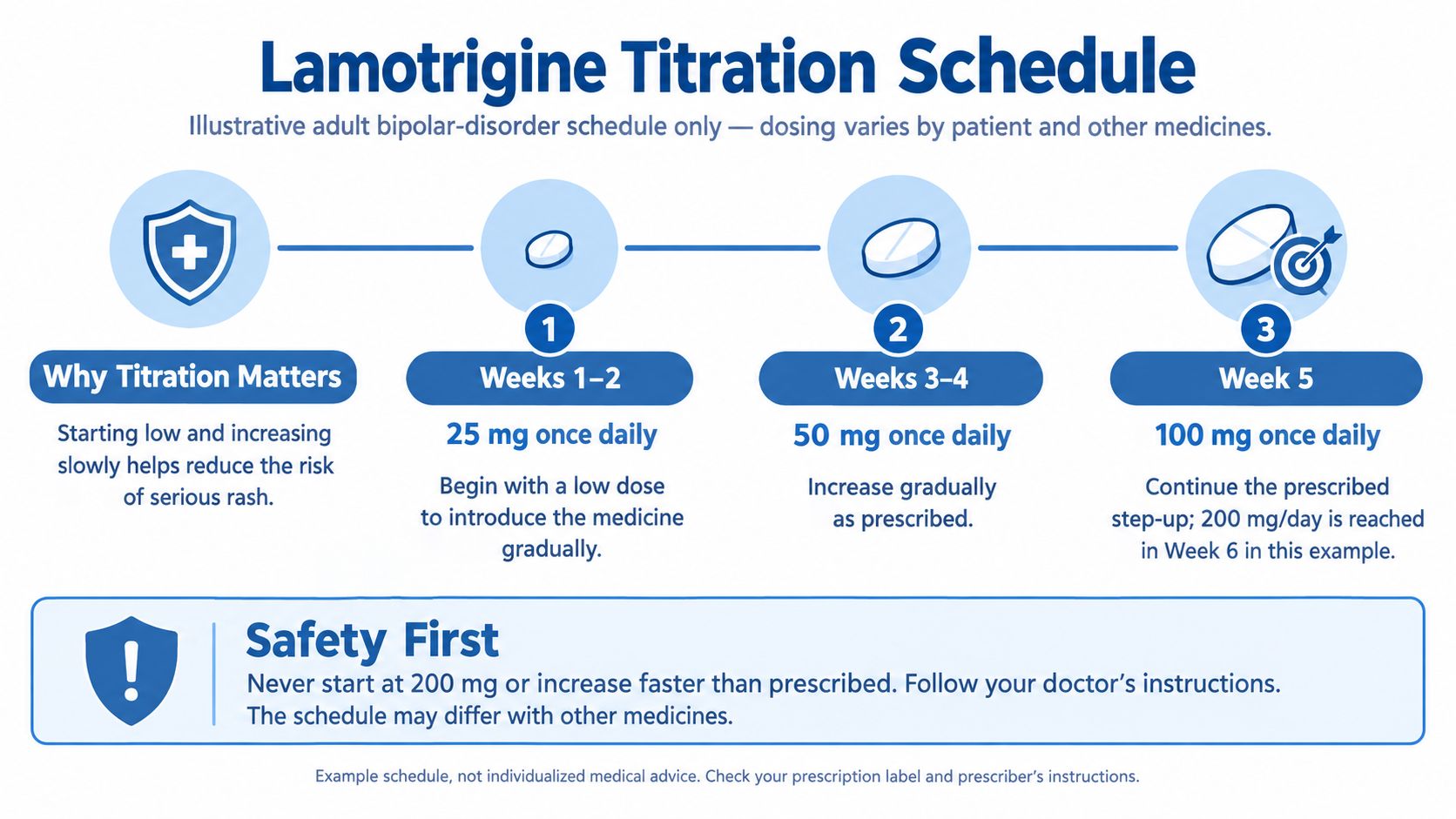
Lamotrigine must be started at a low dose and increased slowly because the body needs time to adapt, and because rapid increases raise the risk of serious skin reactions. That slow pace is not bureaucratic caution, it is a core safety mechanism.
The labeled climb to 200 mg
For adults with bipolar disorder who are not taking interacting medicines, the labeled schedule starts at 25 mg once daily for weeks 1 to 2, increases to 50 mg per day during weeks 3 to 4, then to 100 mg in week 5, and reaches 200 mg in week 6 DailyMed bipolar schedule. That slow build is designed to reduce the chance of serious dermatologic reactions, including Stevens-Johnson syndrome and toxic epidermal necrolysis serious rash warning.
Why patience matters more than speed
The early weeks can feel underwhelming, and that is expected. The schedule exists so the medication can be introduced without forcing the immune system and skin to react too quickly.
Starting low and rising slowly is the main safety feature, not an optional courtesy.
A useful way to think about the early phase is that the prescription is being introduced in a controlled way. Do not shorten the schedule because the first doses feel modest or because symptoms are still frustrating.
If you are comparing mood medications and asking whether antidepressants are safe, this discussion of whether antidepressants are safe gives useful context for why psychiatric dosing often prioritizes safety over speed. Lamotrigine is a clear example of that trade-off.
How Drug Interactions Shift Your Target Dose
A lamotrigine target dose only makes sense in the context of the rest of the medication list. Valproate, enzyme-inducing anticonvulsants, rifampin, and some HIV medicines can change how much lamotrigine stays in the body, so 200 mg may be too high for one patient and too low for another.
Side-by-side dosing logic
With valproate on board, lamotrigine clearance drops and the target usually falls to 100 mg per day interaction-based dosing. When a patient takes carbamazepine, phenytoin, phenobarbital, primidone, rifampin, or lopinavir/ritonavir, clearance rises, and labeled regimens may call for a 400 mg per day target.
Lamotrigine Target Dose Adjustments | ||
|---|---|---|
Concomitant Medication | Effect on Clearance | Adjusted Target Dose |
Valproate | Decreases lamotrigine clearance | 100 mg/day |
Enzyme-inducing medicines such as carbamazepine, phenytoin, phenobarbital, primidone, rifampin, or lopinavir/ritonavir | Increases lamotrigine clearance | 400 mg/day |
A patient can also move between dose ranges for reasons that have nothing to do with the tablet strength itself. Starting or stopping a co-medication, changing adherence, or adding a new treatment after the first prescription can all shift exposure enough to change the right target.
Why medication reconciliation comes first
That is why the dose conversation starts with a full medication list, including prescriptions outside psychiatry. The clinician needs to know what is taken every day, what was added recently, and what was stopped before deciding whether a target near 200 mg still fits.
If you are trying to understand how testing may fit into medication selection, this guide on GeneSight test cost is a useful related read. The practical point is simple. Interactions change exposure, and exposure changes the dose target.
Recognizing Side Effects and When to Seek Urgent Care
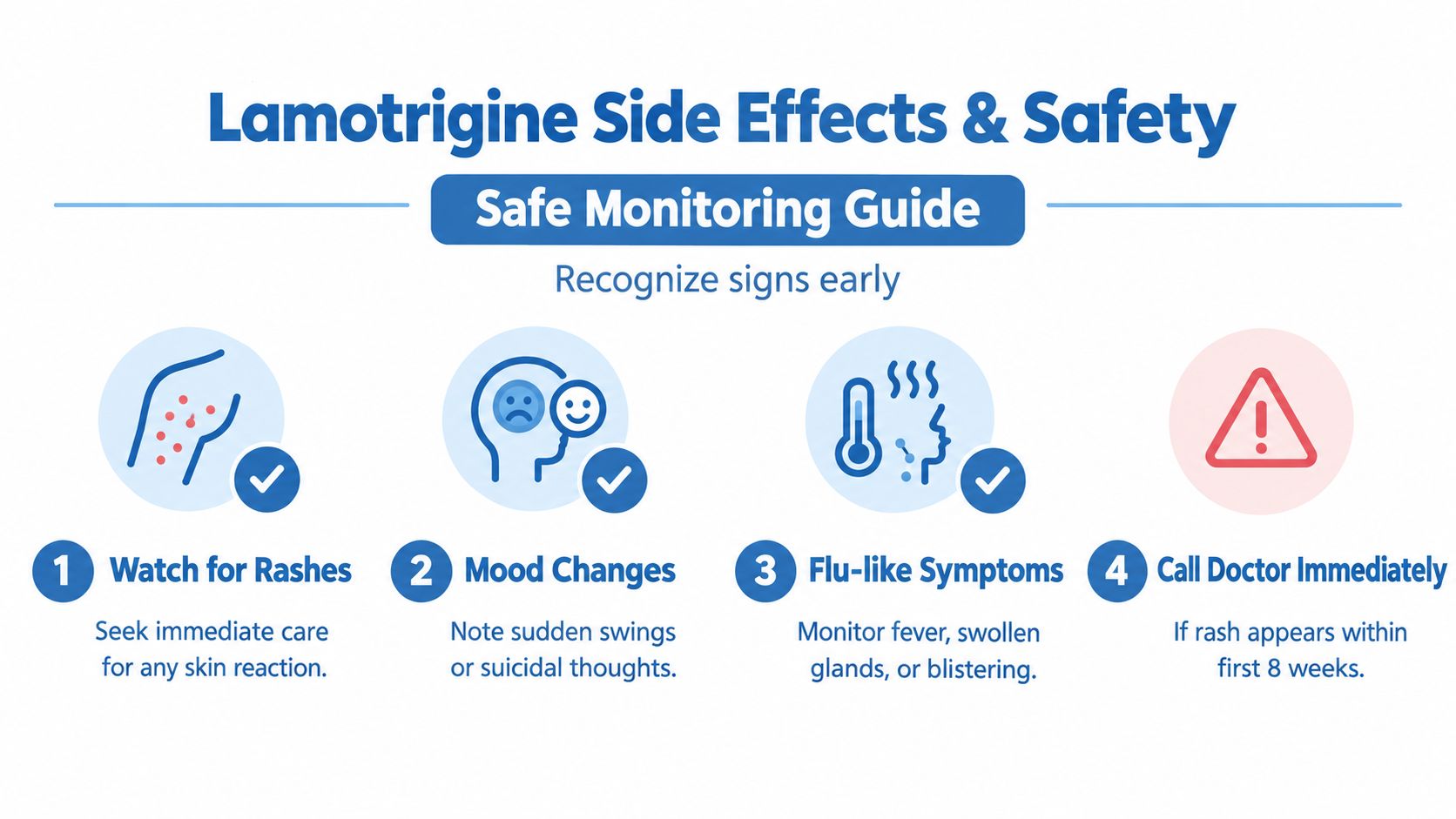
Lamotrigine is often well tolerated, but the early safety window deserves respect. Most problems are mild, yet the rare ones are serious enough that you should never dismiss a new rash. The safest habit is to treat any suspicious skin change as a reason to call quickly.
What to watch for in real life
A patient might notice a new rash and assume it's heat, dry skin, or a detergent reaction. That's a risky assumption early in treatment. If the rash appears with fever, blistering, mouth sores, eye irritation, facial swelling, or rapidly spreading redness, it needs urgent attention.
Other side effects can be less dramatic. Dizziness, headache, nausea, sleep changes, and word-finding trouble can happen early and often improve with time. Those symptoms are unpleasant, but they're not the same as the skin-related emergency signs that need immediate escalation.
If a rash appears and you're unsure, contact the prescriber the same day.
Why abrupt stopping is also a safety issue
A second mistake is stopping suddenly without guidance. That's especially dangerous in epilepsy, where abrupt withdrawal can trigger serious seizures. In bipolar treatment, stopping or restarting without supervision can also destabilize mood and complicate the next titration.
If fatigue is part of what you're noticing, this related piece on whether Lamictal makes you tired can help separate common adaptation effects from more concerning reactions. The key point is still the same, don't wait out a possible serious rash.
Special Considerations for Pregnancy and Aging
Life events can change what 200 mg means. A dose that worked well before pregnancy may feel inadequate during pregnancy, and then become more than you need after delivery if it isn't reassessed. That's why lamotrigine should be treated as a medication that sometimes needs active adjustment, not a set-and-forget prescription.
Pregnancy and postpartum changes
FDA labeling reports that pregnancy can lower lamotrigine concentrations, and that levels may return toward pre-pregnancy values after delivery, which means a previously effective 200 mg dose can become less effective during pregnancy pregnancy labeling. That doesn't mean everyone needs the same adjustment, but it does mean symptom tracking and prescriber follow-up matter.
The practical takeaway is straightforward. If you're planning pregnancy, are already pregnant, or have recently delivered, the dose should be reviewed in context, not left on autopilot.
Aging and medical complexity
Older adults often need more careful review of the full picture, including other medications, organ function, and any new cognitive or balance symptoms. Even without a specific lamotrigine level target, the clinician still has to think about tolerability and the whole regimen.
If you're comparing mood stabilizers, this overview of Lamictal vs. lithium is useful because the two drugs solve different problems and carry different monitoring burdens. Lamotrigine is often chosen for its maintenance role and simpler lab profile, but that doesn't remove the need for periodic reassessment.
Managing Complex Medications via Telepsychiatry
Complex titration works best when follow-up is easy to keep. Virtual care is a strong fit for lamotrigine because the medication depends on clear communication about rashes, missed doses, medication changes, and life events like pregnancy. A clinician can't safely manage this drug well without regular check-ins.

Why virtual follow-up works here
Telepsychiatry makes it easier to catch problems during the weeks when lamotrigine is being built up, especially if a patient develops a new symptom and needs quick guidance. It also reduces the chance that someone skips a review because getting to an office is inconvenient. For mood disorders, that consistency matters more than people realize.
Integrated care helps too, especially when medication management is paired with therapy such as CBT or DBT rather than handled in isolation. A patient tracking medication adherence with a tool like suivi des prises de médicaments can bring more accurate information to each visit, which makes dose decisions cleaner and safer.
What good follow-up should feel like
The ideal visit is practical, not rushed. You should be able to review rash symptoms, missed doses, sleep, mood shifts, and any medication changes in a structured way. That kind of follow-up is what keeps a titration from becoming guesswork.
Scheduling Your Evaluation and Insurance Navigation
If you're in Florida and want a psychiatric evaluation for mood symptoms, medication management, or a careful review of whether lamotrigine 200 mg is the right target for you, schedule a visit through a telemedicine provider that can handle medication reconciliation and titration follow-up. If insurance is part of your decision, it helps to check coverage first and understand prior authorization, especially for psychiatric medications and related services. A practical overview of the prior authorization process can make that step less confusing.
Refresh Psychiatry & Therapy accepts Aetna, United Healthcare/UHC, Cigna, Blue Cross Blue Shield, Humana, Tricare, UMR, and Oscar insurance plans. If you want details on plan-specific coverage, look for the individual insurance blog posts on the practice site before scheduling.
This blog is for informational purposes only and does not constitute medical advice. Please consult a qualified mental health professional for personalized guidance.
If you're ready to review whether lamotrigine fits your mood symptoms, Refresh Psychiatry & Therapy offers careful psychiatric evaluation, medication management, and coordinated therapy support for patients across Florida. You can visit Refresh Psychiatry & Therapy to explore care options and schedule an evaluation that takes drug interactions, titration, and life changes seriously.