
Why Cant I Sleep Even Though Im Tired

🛌 Why Can't I Sleep Even Though I'm Tired can feel like a contradiction. You spend the day dragging yourself from one task to the next, your body feels heavy, and your eyes burn with fatigue. Then you get into bed, expecting sleep to arrive, but your thoughts become sharper, your muscles stay tense, and the minutes seem to stretch.
This experience doesn't mean you're failing at sleep. Fatigue and sleepiness aren't identical, and the brain can remain alert even when the body feels depleted. Stress, a mistimed body clock, evening light, caffeine, anxiety, and learned associations with bedtime can all keep the sleep system from taking over.
The Exhausted But Awake Paradox
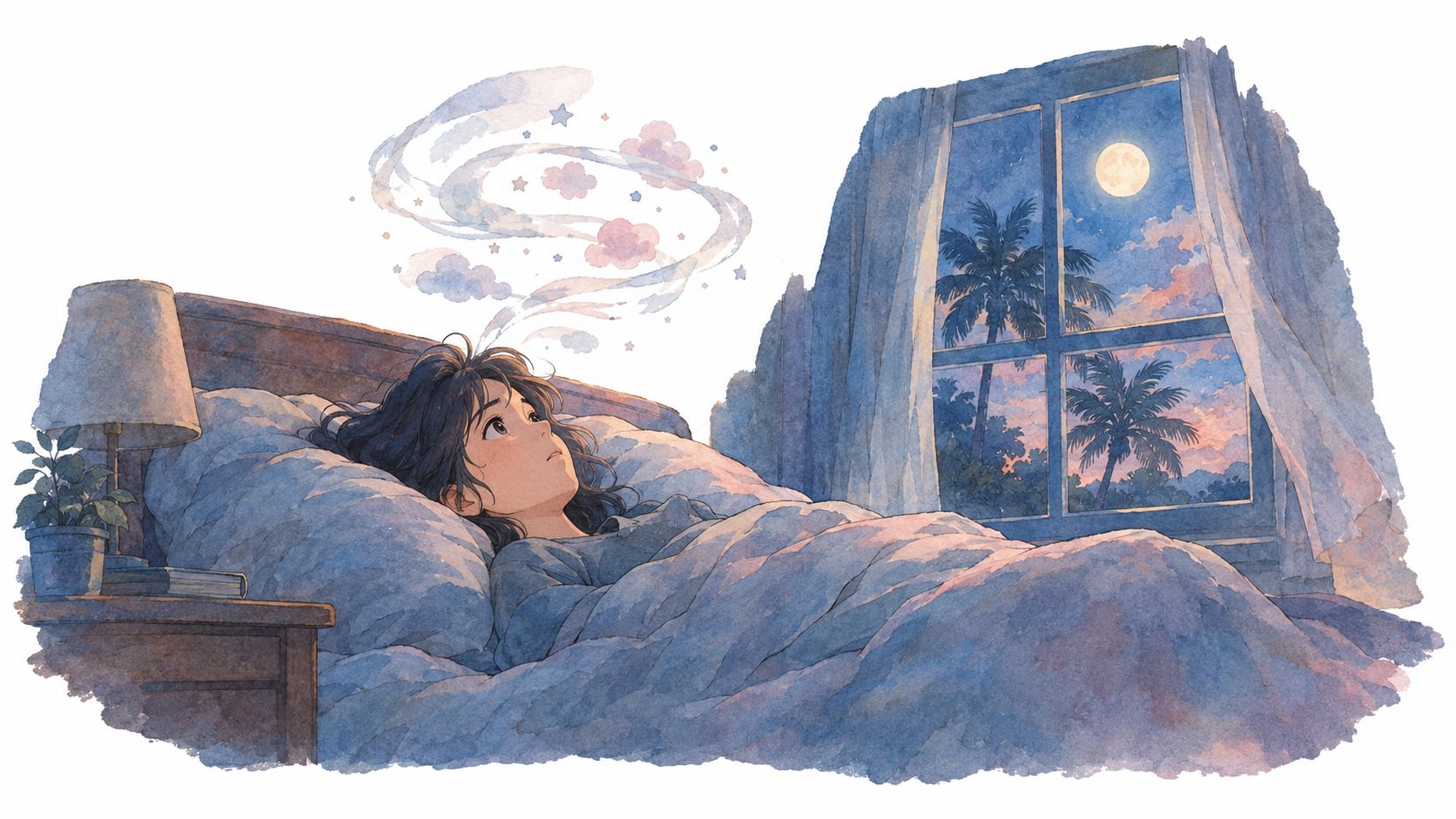
At 11 p.m., Maya switches off the light after a demanding day. Her body feels used up, yet her mind replays a difficult conversation, organizes tomorrow's responsibilities, and checks the time. Each glance at the clock creates another calculation about the sleep she may lose. The body is asking for recovery while the brain remains positioned to solve a problem.
Fatigue and sleepiness describe different experiences. Fatigue is a drained battery: low energy, reduced motivation, or mental depletion. Sleepiness is the biological pull toward dozing, such as heavy eyelids, nodding off, or losing focus during a quiet moment. A person can feel profoundly exhausted without having that involuntary drive to sleep.
Hyperarousal can explain the gap. Stress, worry, frustration, or repeated clock-watching may keep the nervous system on alert, much like a smoke alarm that stays sensitive after the danger has passed. The body may be tired, but the brain continues scanning, planning, and anticipating problems.
The experience is common. A nationally representative U.S. survey conducted in 2020 found that 14.5% of adults reported trouble falling asleep on most days or every day during the preceding 30 days, while 17.8% reported trouble staying asleep (National Heart, Lung, and Blood Institute guidance). Difficulty falling asleep affected different age groups, including 15.5% of adults aged 18 to 44 and 12.1% of adults aged 65 and older.
Why this feels so personal
After a sleepless night, self-criticism often follows. You may question your discipline or assume you are handling bedtime incorrectly. Difficulty sleeping can instead reflect a mismatch between sleep pressure, circadian timing, and arousal. Work stress and burnout can intensify that cycle, as described in this overview of insomnia and burnout. Understanding the mechanism can reduce the pressure to force sleep, since that pressure may keep the nervous system activated.
The central idea: Your body can be exhausted while your brain's timing and alertness systems still signal, “Stay awake.”
How Sleep Pressure and Your Body Clock Work Together
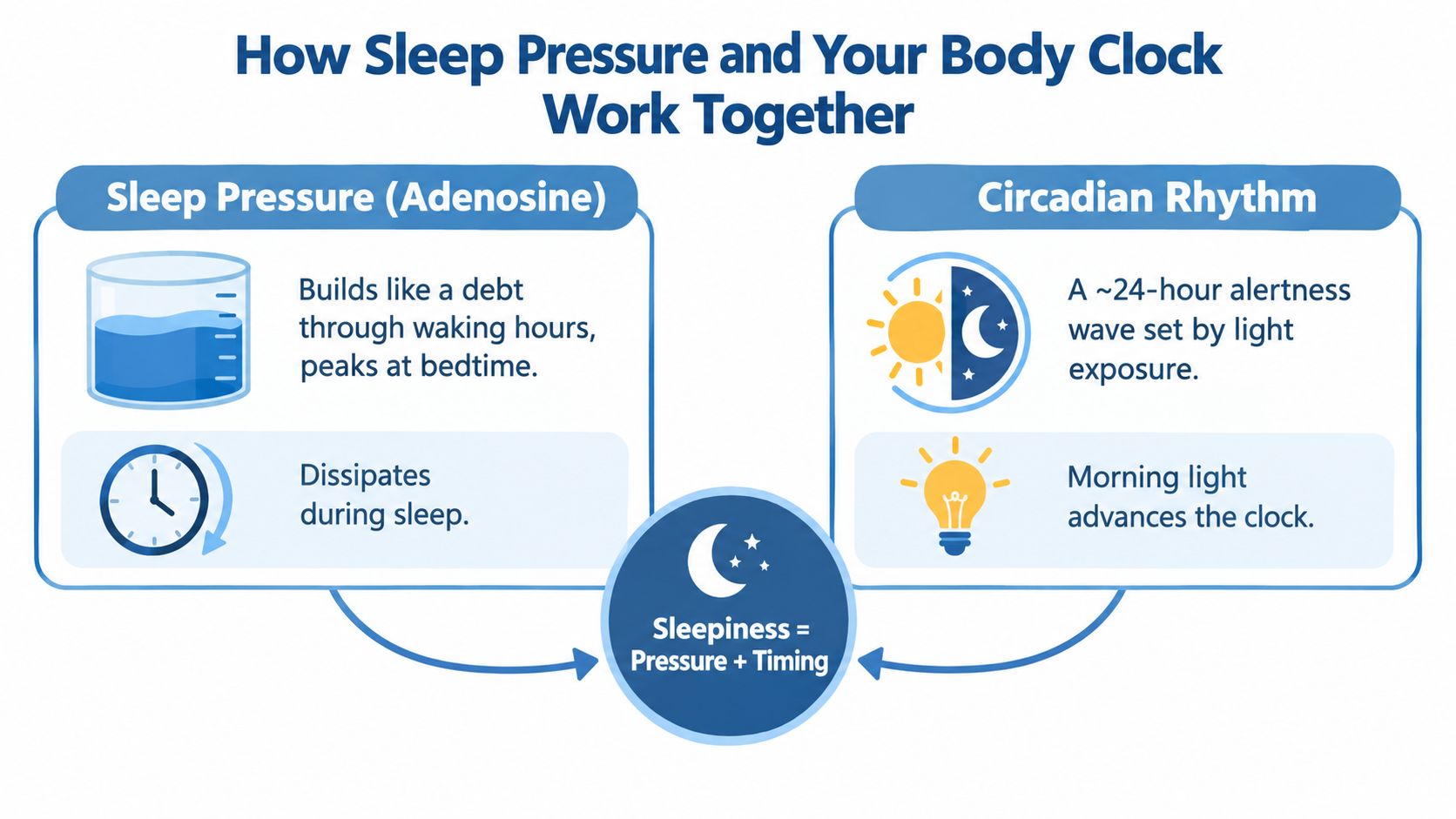
Falling asleep depends on two biological systems reaching the same conclusion at the same time. Sleep pressure reflects how long you have been awake, while your circadian rhythm determines whether your brain's internal clock is signaling daytime alertness or nighttime rest. You can feel physically worn out when these systems are out of sync.
Sleep pressure builds throughout wakefulness. Adenosine, a chemical produced during normal brain activity, accumulates as the day continues and increases the drive for sleep. Sleep gradually clears that pressure, much like paying down a biological debt. The longer you remain awake, the stronger the need for recovery usually becomes.
Your circadian rhythm follows a different schedule. This internal timing system coordinates sleep, alertness, body temperature, hormone release, and other daily functions across roughly a day. The suprachiasmatic nucleus, a timekeeping center in the brain, helps coordinate this rhythm. Light exposure, wake time, meals, activity, and daily routines provide signals that can shift or reinforce it.
When the systems disagree
Consider someone who wakes early, works all day, and feels exhausted by evening. If that person spends the night in bright light, sleeps late on many mornings, or keeps changing their schedule, the body clock may still promote wakefulness at bedtime. Sleep pressure is pushing toward rest, while circadian timing is applying the brakes. The experience can feel like pressing the gas and brake pedals together.
Melatonin normally rises in the evening as a signal of biological darkness. A delayed or mistimed melatonin rhythm can leave you depleted without creating a strong internal sense that sleep should begin. Evening light, jet lag, rotating shifts, travel, and irregular wake times can all contribute to this timing problem.
Some people naturally run later than the schedule they need to follow. For them, going to bed earlier may produce frustration rather than sleep, even after a tiring day. Other contributors, including stress, medications, health conditions, and changing routines, can also affect sleep timing, as described in this overview of insomnia causes.
Physical fatigue therefore does not guarantee biological sleepiness. Supporting sleep may require aligning both systems, while also reducing the alertness that can keep a tired brain switched on.
Understanding Hyperarousal and Conditioned Alertness
You finish a demanding day with heavy limbs, low energy, and a strong wish to sleep. Then the lights go out, and your thoughts speed up. You review conversations, plan tomorrow, notice every sensation, and remain awake. Physical fatigue is present, but biological sleepiness has not fully taken over.
Sleep hygiene can support better rest, yet insomnia is not always caused by a phone, pillow, or imperfect bedtime routine. Hyperarousal is another frequently overlooked mechanism. It occurs when cognitive, autonomic, and physical activation remain high even though you feel exhausted.
Hyperarousal may appear as racing thoughts, muscle tension, a heightened sense of threat, or difficulty stopping plans and mental problem-solving. Research on insomnia describes increased nighttime sympathetic activity, changes in stress-system activity, and higher-frequency brain activity during sleep. Some studies also report increased 24-hour ACTH and cortisol secretion (review of insomnia hyperarousal).
Fatigue is not the same as sleepiness
Fatigue means, “I have little energy left.” Sleepiness means, “If I sit still, I may fall asleep.” The two commonly overlap, but they can separate.
Consider two different experiences:
A person with anxiety may feel drained after a day spent anticipating problems, while remaining mentally alert in bed.
A person who has not slept enough may feel tired and sleepy, perhaps nodding off while reading, watching television, or sitting still.
This distinction helps clarify what is happening. Do you doze during passive activities? Does your mind become more active only after the lights go out? Do you feel physically weak without feeling close to falling asleep? Your answers can point toward different contributors.
How the bed can become an alertness cue
After several difficult nights, bedtime may start to feel like a performance test. You enter the bedroom, monitor your body, calculate how long sleep will take, and worry about tomorrow. The bed gradually becomes linked with frustration and vigilance rather than rest.
The learning loop is straightforward:
You expect another poor night.
That expectation activates the nervous system.
Wakefulness and frustration increase.
The brain learns that bed is a place for monitoring and struggle.
Nighttime anxiety can intensify the pattern because the evening may be the first quiet period after a busy day. Information about anxiety at night may help explain why thoughts become louder at bedtime.
Trying harder to sleep often increases the alertness you're trying to remove.
Practical Steps to Reset Your Sleep Timing
A tired body does not always mean a sleepy brain. Fatigue can feel like heaviness, low energy, or sore muscles, while sleepiness is the biological pull toward falling asleep. A late schedule, evening light, caffeine, worry, or hyperarousal can leave you physically worn out while your alerting system remains switched on. The aim is to give your body clock clearer signals and stop reinforcing wakefulness at bedtime.
Anchor the morning
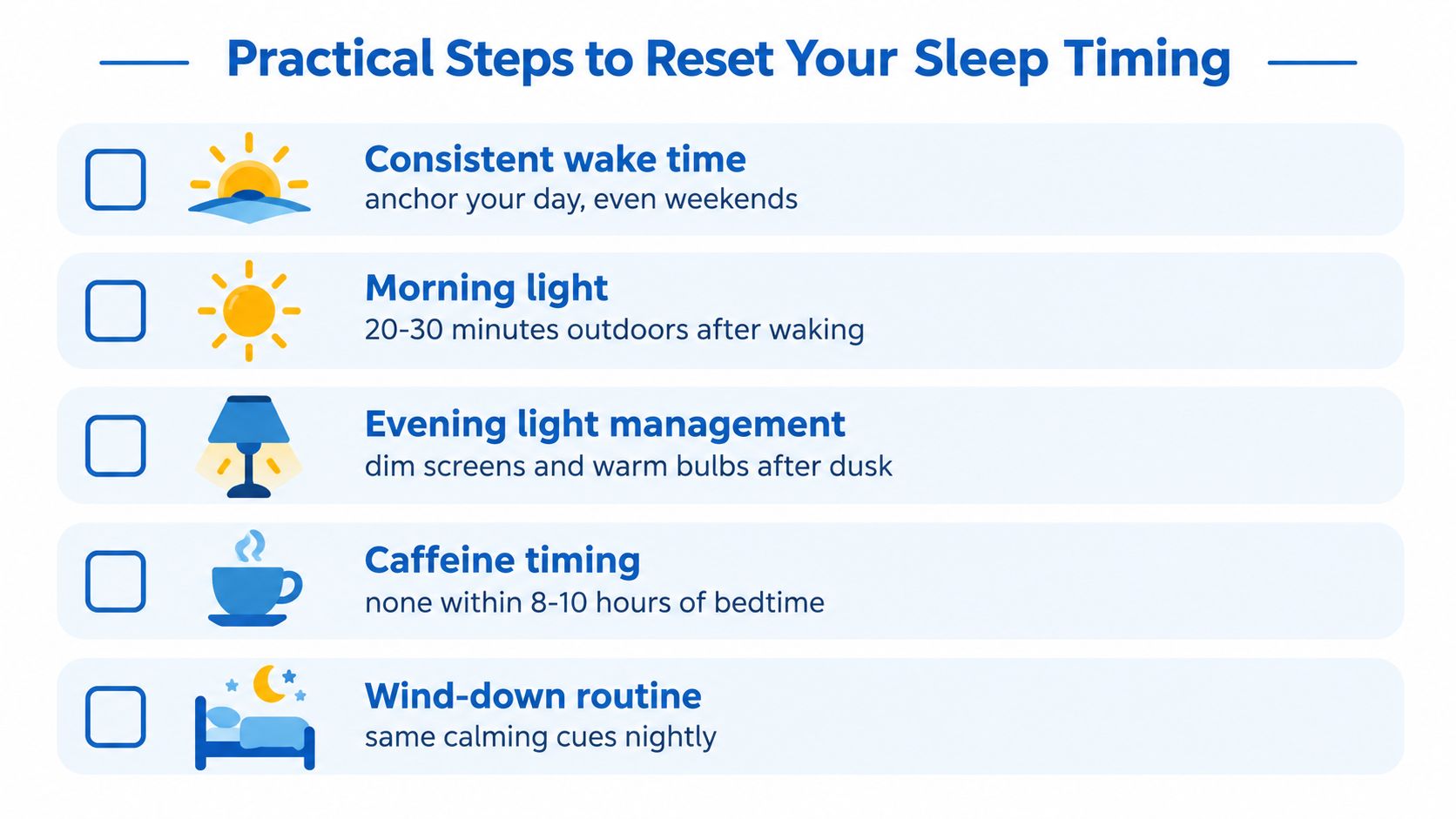
Choose one wake time and keep it steady each day, including after a poor night. This morning anchor helps your body recognize when the day starts and allows sleep pressure to build before the next evening. Sleeping late may feel restorative, yet it can reduce the drive to sleep that night.
Get bright outdoor light soon after waking. Morning light helps shift timing earlier when your schedule has drifted late. Evening light can send the opposite message, encouraging alertness later, so the timing of light matters as much as the amount.
Lower evening activation
During the final hours before bed, dim indoor lighting and limit bright screens. A quieter room, fewer work messages, and less stimulating content give a hyperaroused nervous system fewer reasons to stay on guard. You do not need a flawless bedtime ritual. Repeating a calmer transition matters more than performing it perfectly.
Review caffeine timing, not only your total intake. Caffeine later in the day can weaken the sleepiness signal even when your body feels exhausted. Move it earlier and watch whether falling asleep becomes easier.
Rebuild the bed-sleep connection
Go to bed when you feel sleepy, rather than only because the clock says bedtime has arrived. If you remain awake and frustrated for roughly 15 to 20 minutes, leave the bed, keep the light dim, and do something quiet. Return when drowsiness comes back. That practice, called stimulus control, is a core behavioral strategy for insomnia (CBT-I recommendations from the American Academy of Sleep Medicine).
Use this simple checklist:
Morning anchor: Wake at the same time daily.
Outdoor light: Get bright light soon after waking.
Evening calm: Dim lights and reduce stimulating content.
Caffeine review: Move caffeine earlier if it disrupts sleep.
Bed boundaries: Reserve the bed for sleep, not prolonged worrying.
Physical discomfort can keep the body alert even when sleep pressure is high. Families considering bedroom changes for an older adult can review adjustable beds for seniors, while remembering that positioning support will not resolve every cause of insomnia.
These habits provide a foundation, not a universal cure. Anxiety, trauma symptoms, medication effects, a delayed body clock, pain, or another sleep disorder may continue to drive hyperarousal. You can review natural insomnia treatment approaches alongside a broader plan.
When Difficulty Sleeping Becomes a Disorder
An occasional restless night can follow stress, travel, illness, emotional discomfort, noise, temperature changes, or a schedule disruption. It doesn't automatically indicate chronic insomnia.
The American Academy of Sleep Medicine describes chronic insomnia as difficulty falling asleep, staying asleep, or waking earlier than desired despite enough opportunity and suitable circumstances for sleep. The symptoms must occur at least 3 nights per week for at least 3 months, with daytime effects such as fatigue, impaired concentration, irritability, or reduced functioning (AASM insomnia definition).
Use frequency, duration, and impact
Ask yourself three questions:
Frequency: Is difficulty sleeping happening repeatedly rather than occasionally?
Duration: Has the pattern continued for the clinical time frame described above?
Impact: Is it affecting work, school, relationships, mood, concentration, or safety?
The numbers alone don't tell the whole story. A person can be distressed by sleep before meeting the definition of chronic insomnia, and early support may prevent the pattern from becoming more entrenched.
In 2024, 30.5% of U.S. adults reported sleeping fewer than 7 hours on average, while 15.4% reported trouble falling asleep most days or every day and 18.1% reported trouble staying asleep with that frequency (CDC report published through the American Academy of Sleep Medicine). These findings show that insufficient sleep and difficulty initiating sleep can occur together.
Look beyond insomnia
Snoring, gasping, breathing pauses, restless legs, medication changes, severe daytime sleepiness, or unusual mood changes deserve attention. Sleep apnea and other conditions can coexist with insomnia but require different evaluation and treatment.
A plain-language overview of sleep apnea symptoms and effective treatment options can help you recognize signs to discuss with a clinician. Don't use sleep-restriction techniques without professional guidance if you have severe daytime sleepiness, safety-critical work, or suspected sleep apnea.
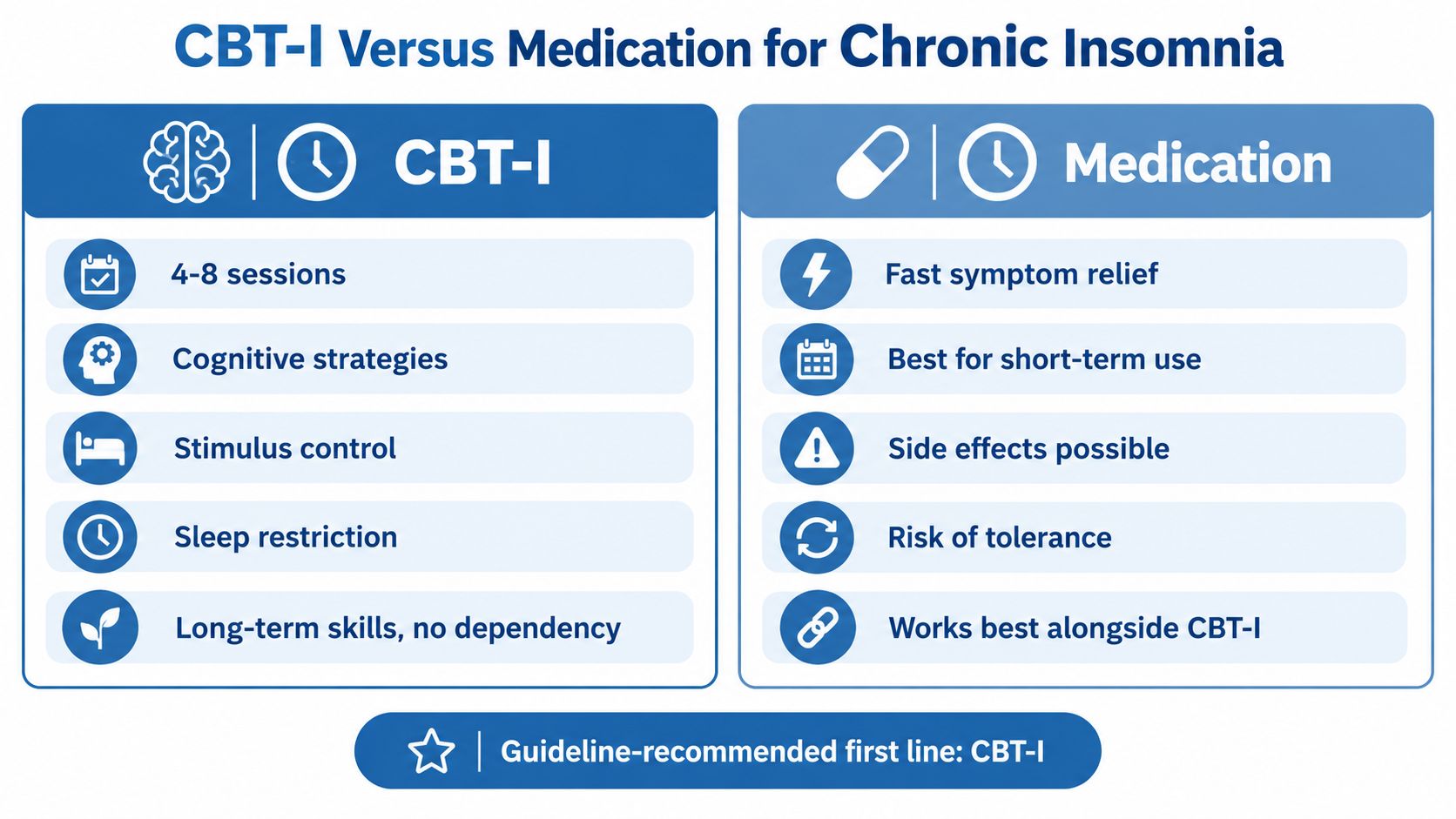
CBT-I Versus Medication for Chronic Insomnia
For chronic insomnia, multicomponent cognitive behavioral therapy for insomnia, usually called CBT-I, addresses the processes that keep the brain awake. It combines sleep education with cognitive strategies, stimulus control, and carefully adjusted time in bed. Relaxation training and sleep-hygiene guidance may also be included.
Fatigue and sleepiness are related, but they are not identical. Fatigue can feel like having no physical or mental energy, while sleepiness is the biological pull toward sleep. Someone may feel worn out after work yet remain alert in bed because worry, clock-watching, or conditioned arousal keeps the nervous system activated. CBT-I targets that mismatch rather than just trying to sedate it.
CBT-I often uses sleep diaries and is delivered over a structured course of sessions. It helps identify patterns, change unhelpful predictions, and rebuild the connection between bed and sleep.
What CBT-I changes
Stimulus control teaches the brain that the bed is for sleep, not prolonged frustration. Cognitive work challenges predictions such as, “If I do not fall asleep immediately, tomorrow will be impossible.” Sleep-restriction therapy then adjusts time in bed to strengthen sleep pressure. It should be individualized, particularly when other sleep or medical concerns are present.
These techniques work like retraining a misplaced association. If the bed has become a cue for alertness, repeated wakeful struggle can make bedtime activate the nervous system. CBT-I changes the routine until sleep becomes the more familiar response.
Where medication fits
Medication may help when CBT-I is unavailable, symptoms continue after therapy, or short-term support is appropriate. The 2025 VA/DoD guidance recommends CBT-I before medication and advises against routine use of antipsychotics, benzodiazepines, diphenhydramine, or trazodone specifically for chronic insomnia (VA/DoD guideline discussion).
Prescribers weigh side effects, interactions, substance use, other diagnoses, and the reason sleep has become difficult. Information about trazodone for sleep can support a medication discussion, but treatment should not be started, stopped, or adjusted independently.
Making the Decision to Seek Professional Help
You don't have to wait until sleep becomes unbearable. Seek an evaluation when difficulty sleeping persists despite reasonable changes, interferes with daytime functioning, or comes with symptoms that suggest another condition.
A practical decision pathway
Start by tracking your sleep pattern, wake time, caffeine, evening light, stress, and daytime sleepiness. Notice whether you doze during passive activities, whether worry intensifies at bedtime, and whether someone has observed snoring or breathing pauses.
Arrange professional assessment when:
The pattern persists: Sleep-onset or sleep-maintenance problems keep returning.
Your function declines: Fatigue, concentration problems, irritability, or reduced performance affect daily life.
Safety is at risk: Severe sleepiness affects driving, machinery use, or other safety-sensitive tasks.
Another disorder is possible: Snoring, gasping, restless legs, medication effects, or unusual mood elevation accompany the sleep problem.
Mental health symptoms overlap: Anxiety, depression, trauma symptoms, panic, or ADHD-related mental overactivity make it difficult to settle.
A psychiatric evaluation may review your sleep timing, current medications, caffeine and substance use, mood symptoms, anxiety, trauma history, and possible medical contributors. The clinician may recommend CBT-I, psychotherapy, medication management, a sleep-medicine referral, or coordinated care.
Insomnia isn't a personal failure. Transient insomnia symptoms occur in approximately 30% to 35% of the population, while chronic insomnia disorder affects about 10%, according to the American Academy of Sleep Medicine (AASM chronic insomnia guidance). Persistent symptoms are common, and they deserve a thoughtful explanation rather than indefinite self-blame.
Contact Refresh Psychiatry to Begin Your Sleep Recovery
If you live in Florida and can't sleep even though you're tired, an evaluation can help separate fatigue from sleepiness and identify whether hyperarousal, anxiety, mood symptoms, medication effects, or sleep timing is involved. Refresh Psychiatry offers psychiatric evaluations, therapy, medication management, and telepsychiatry care for insomnia and related mental health concerns.
Contact us or call Refresh Psychiatry at (954) 603-4081 to schedule your evaluation.
We accept Aetna, United Healthcare, Cigna, Blue Cross Blue Shield, Humana, Tricare, UMR, and Oscar insurance plans. Coverage can vary by plan, so confirm benefits and eligibility before scheduling.
This blog is for informational purposes only and does not constitute medical advice. Please consult a qualified mental health professional for personalized guidance.
Refresh Psychiatry & Therapy offers Florida telepsychiatry with psychiatric evaluations, medication management, and evidence-based therapy for insomnia, anxiety, mood conditions, ADHD, PTSD, and related concerns. Visit Refresh Psychiatry & Therapy to request an appointment and discuss a sleep plan designed for your symptoms.