
Propranolol for Performance Anxiety: A Patient Guide

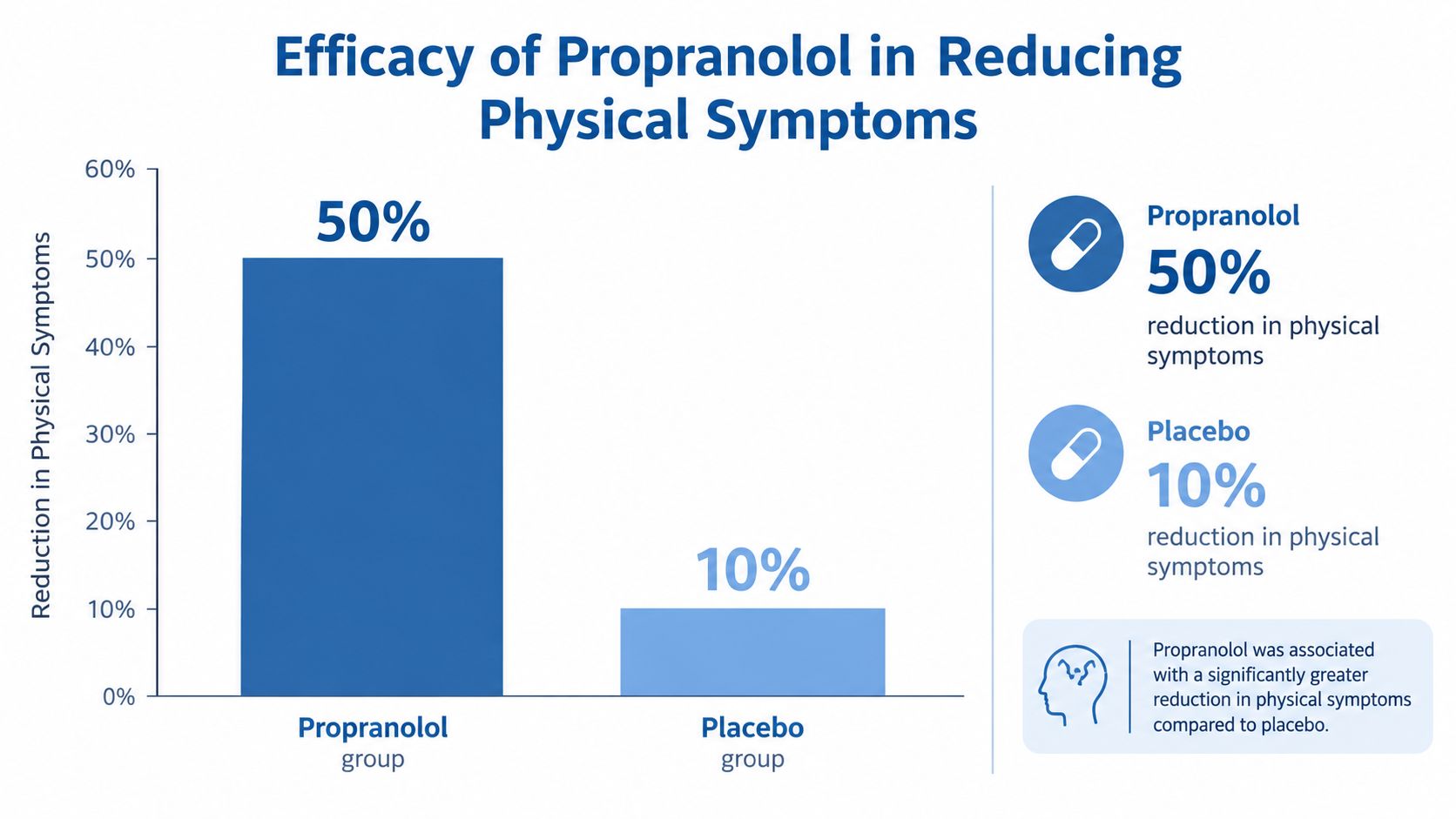
Propranolol for performance anxiety is commonly used in an immediate-release dose of 10 to 40 mg taken about 30 to 60 minutes before an event, primarily to reduce physical symptoms such as trembling, palpitations, and sweating. It doesn't treat the cognitive fear, worry, or catastrophic thinking that can drive stage fright.
You may be sitting backstage with a prepared speech, a polished presentation, or a difficult solo performance waiting ahead. Your notes are organized, your material is familiar, and yet your heart is pounding as if you're in danger. Your hands shake, your mouth goes dry, and you wonder whether everyone in the room can see how anxious you feel.
That experience explains why propranolol has become a widely discussed off-label option for performance anxiety. It can quiet some of the body's adrenaline-driven reactions without acting as a primary tranquilizer. The important limitation is just as clear: it may steady your hands while leaving your anxious thoughts intact.
What Performance Anxiety Actually Feels Like
A violinist walks onto a stage and feels the bow begin to tremble before the first note. A junior partner rises to present a closing argument and notices a racing pulse, damp palms, and a dry mouth. A medical student defending a thesis may understand the material completely, yet feel nausea, shallow breathing, and a sudden fear of visibly losing control.
These reactions are the body's sympathetic nervous system response to perceived threat. The body prepares for action, even when the “threat” is an audience, an examination, or an important professional conversation. A pounding heart, sweating, trembling, flushing, tight breathing, and stomach discomfort can arrive within minutes of the performance.
At the same time, a second process may be running in the background. You may be rehearsing possible mistakes, predicting judgment, imagining a blank mind, or thinking, “If I stumble, everyone will remember it.” That is the cognitive side of anxiety, and it can continue even when the physical symptoms become less intense.
Clinical distinction: Physical arousal and anxious thinking often travel together, but they aren't the same treatment target.
Performance anxiety is normal at low intensity. It becomes a clinical concern when it reliably interferes with work, school, music, public speaking, relationships, or other meaningful activities. Someone who feels nervous before a recital may need no treatment at all. Someone who repeatedly avoids auditions, presentations, interviews, or examinations may need a broader evaluation.
For practical skills that address the behavioral side of stage fright, conquer stage fright strategies can complement medical care. If interviews are the main trigger, the discussion may also overlap with interview anxiety treatment considerations.
The central point is simple. Propranolol is most relevant when physical symptoms are the main obstacle. It may reduce shaking, palpitations, and sweating, but it won't resolve rumination, fear of judgment, avoidance, or ingrained beliefs about failure.
How Propranolol Works in the Body
Propranolol is a non-selective beta-adrenergic blocker. To understand that phrase, think of adrenaline as a key and beta receptors as locks on cells throughout the body. When adrenaline activates those receptors, the heart beats faster, blood vessels and muscles respond, and the body produces familiar signs of alarm.
Propranolol occupies those receptors and reduces the force of the adrenaline signal. It doesn't erase the stressful situation, and it doesn't remove every sensation of anxiety. Instead, it dampens parts of the physical response that can interfere with a speech, recital, examination, or presentation.
What the medication can change
The effects are most relevant to peripheral adrenergic symptoms, including:
Heart rate: The pulse may feel less forceful or rapid.
Tremor: Shaking in the hands, voice, or instrument may become less noticeable.
Sweating: Excessive perspiration may lessen.
Palpitations: The uncomfortable awareness of the heartbeat may decrease.
Propranolol generally isn't used as a sedative for performance anxiety. Its clinical value comes from changing the body's response rather than creating emotional numbness. That distinction matters to musicians, surgeons, speakers, students, and anyone whose performance depends on attention and fine motor control.
The medication doesn't directly treat the mental stream of anxiety. Racing thoughts, fear of humiliation, catastrophic predictions, intrusive worry, and avoidance require different interventions. Therapy, rehearsal, exposure, and treatment for a broader anxiety disorder may be more important when those symptoms dominate.
For more practical medication questions, including how long effects may last, review how long propranolol lasts with a prescribing clinician rather than relying on a generic schedule.
The most accurate expectation is not “propranolol removes anxiety.” It is “propranolol may reduce the body signals that amplify anxiety during a predictable event.”
What the Evidence Actually Shows
The classic evidence comes from stage-fright research in musicians. A double-blind trial included 29 professional and student musicians, each of whom performed two solo recitals, one after propranolol and one after placebo, with the medication given 90 minutes before the event. In that study, average heart rate fell from 148 beats per minute with placebo to about 104 beats per minute with propranolol, and experienced music critics judged performance quality to be significantly improved. The findings are described in the PubMed record for the stage-fright trial.
That result is clinically meaningful, but it doesn't prove that propranolol treats every form of anxiety. It shows that reducing a strong physical response may help some people perform more effectively in a controlled, high-pressure setting.
A separate study involving 32 high school students with test anxiety found that 40 mg given one hour before retaking the SAT was associated with a mean score increase of 130 points compared with the earlier test. That finding helps explain why propranolol became widely discussed for performance-linked anxiety, but it shouldn't be interpreted as a guaranteed score improvement for an individual patient.
Study | Population | Design | Dose | Outcome |
|---|---|---|---|---|
Stage-fright trial | 29 professional and student musicians | Double-blind recital comparison | Given 90 minutes before performance | Heart rate averaged 148 beats per minute with placebo and about 104 with propranolol. Critics judged performance quality significantly improved. |
Test-anxiety study | 32 high school students | Retaking the SAT after an earlier test | 40 mg one hour before the retake | Mean score increase of 130 points compared with the earlier test |
The broader evidence base remains limited. Reviews describe propranolol as most useful when autonomic symptoms cause the main impairment, while cognitive fear and generalized anxiety require other approaches. Some reviews conclude that the evidence isn't strong enough to support routine use for stage fright, so a responsible clinician should discuss uncertainty rather than present the medication as a universal solution.
A patient seeking broader context can also find test anxiety relief with Ace Med, particularly when preparation, exposure, and academic coping skills are part of the problem. Medication decisions should still be individualized, and a guide to common anxiety medications can help frame the conversation without replacing an evaluation.
Typical Dosing, Timing, and Real-World Use
Clinicians generally use propranolol for performance anxiety on an as-needed, situational basis. The commonly described range is 10 to 40 mg of immediate-release propranolol taken about 30 to 60 minutes before the event. Some expert sources specifically describe 40 mg about one hour before performance as a regimen used in stage-fright settings, but the appropriate dose depends on medical history, sensitivity, resting heart rate, blood pressure, and the nature of the event. See the clinical review of propranolol for anxiety disorders for the limits of the evidence.
A prescription should include more than a number. It should clarify whether the tablet is immediate-release, when to take it, what symptoms to monitor, and what to do if dizziness, unusual fatigue, breathing difficulty, or faintness occurs.
A practical first-use approach
A clinician may recommend trying the prescribed dose at home before an important performance. That trial helps reveal whether you experience excessive fatigue, dizziness, cold extremities, nausea, or an unexpectedly slow pulse. Don't make the first trial immediately before an audition, examination, surgery, or major presentation.
Food instructions can vary by prescription and formulation. Follow the directions from the prescriber or pharmacist rather than changing the schedule independently. Propranolol isn't a daily antidepressant, and using it every day for isolated stage fright can expose you to unnecessary side effects without addressing the underlying fear.
Parameter | Typical range | Practical note |
|---|---|---|
Immediate-release dose | 10 to 40 mg | The prescriber chooses the dose after reviewing health history and response. |
Timing | 30 to 60 minutes before the event | The schedule is intended for predictable, short-term situations. |
Use pattern | As needed | It is generally used for selected performances rather than automatically every day. |
Trial run | Before the important event | A supervised or clinician-directed trial can show how your body responds. |
Never borrow propranolol from another person or adjust the dose because a previous performance felt difficult. A dose that feels tolerable for one person may cause excessive slowing of the heart rate or blood pressure in another. The goal is not to eliminate every physical sensation. The goal is to reduce impairment without creating a new performance problem.
How Propranolol Compares With Other Options
Propranolol belongs in a layered treatment model, not a one-medication-fits-all plan. If the main problem is a shaky hand, racing pulse, or visible sweating, a beta blocker may match the symptom pattern. If the main problem is fear of judgment, mental blanking, avoidance, or persistent worry, medication that only changes peripheral arousal will leave a major part of the problem untouched.
Cognitive behavioral therapy and exposure-based treatment are better suited to the thought and behavior cycle. They can help a person identify catastrophic predictions, practice tolerating bodily sensations, rehearse feared situations, and reduce avoidance. These approaches may require effort between appointments, but they address skills that can generalize beyond one event.
Selective serotonin reuptake inhibitors, or SSRIs, may be considered when anxiety extends beyond performances into daily life. They aren't event-day medications. They require ongoing treatment and clinical monitoring, and their role is different from a situational beta blocker.
Benzodiazepines such as lorazepam can affect a broader range of anxiety symptoms, but that broader effect comes with trade-offs. Sedation, cognitive clouding, impaired coordination, and dependence risk matter greatly for musicians, speakers, pilots, clinicians, and anyone who must think or move precisely under pressure.
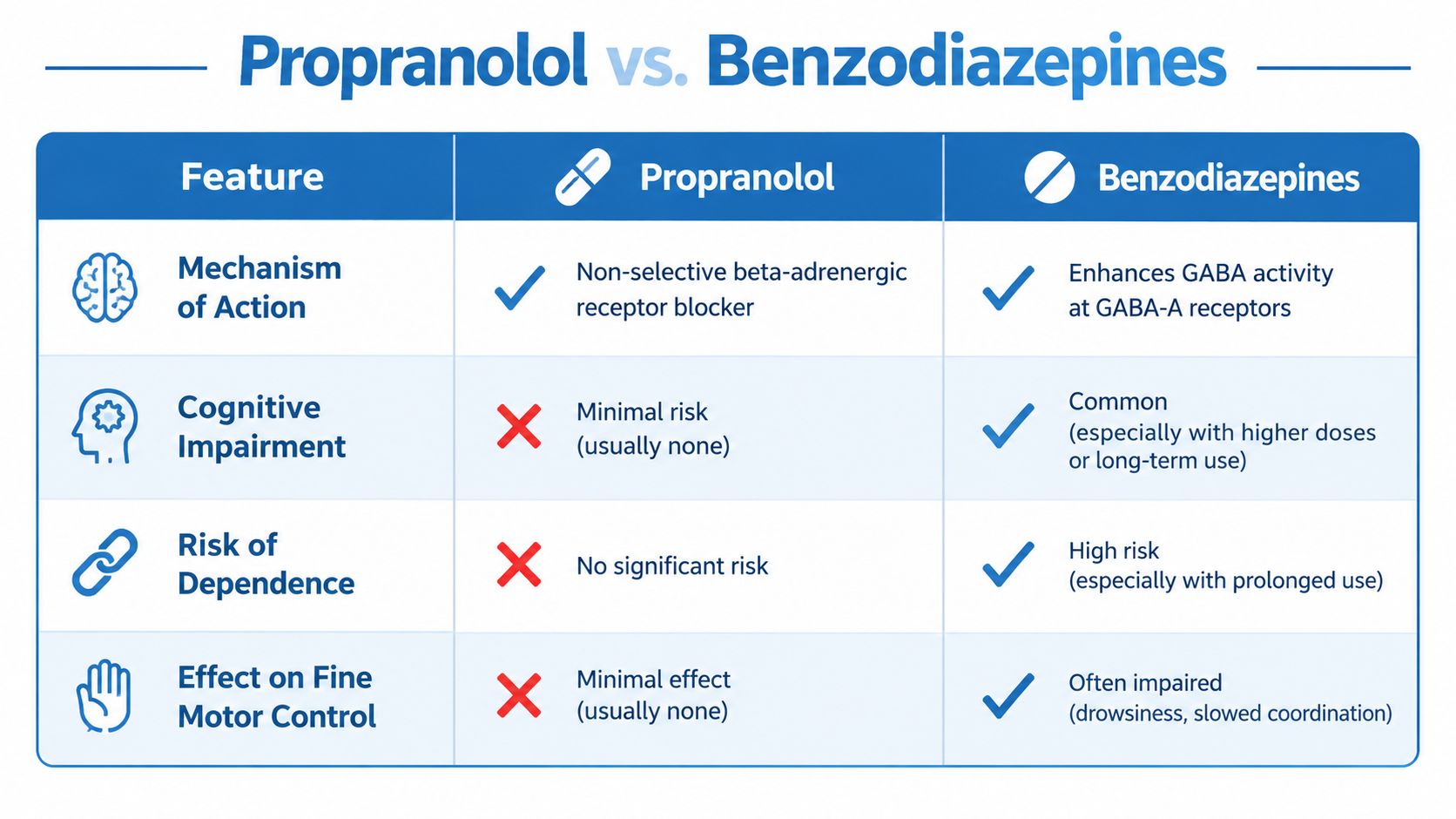
The practical question is not which medication is strongest. It is which intervention matches the symptom cluster with the fewest unacceptable costs. A person with one predictable presentation and severe tremor may need a different plan from someone with panic symptoms, generalized worry, and avoidance across many settings.
For a focused comparison of sedating options, discuss hydroxyzine versus Xanax with a qualified prescriber. A psychiatric assessment can also determine whether therapy alone, medication alone, or coordinated care makes the most sense.
Risks, Contraindications, and Drug Interactions
The simple-fix framing becomes unsafe when people treat propranolol as harmless because it isn't generally perceived as a sedative. It changes cardiovascular and respiratory physiology, so a prescriber needs a complete medical history before recommending it.
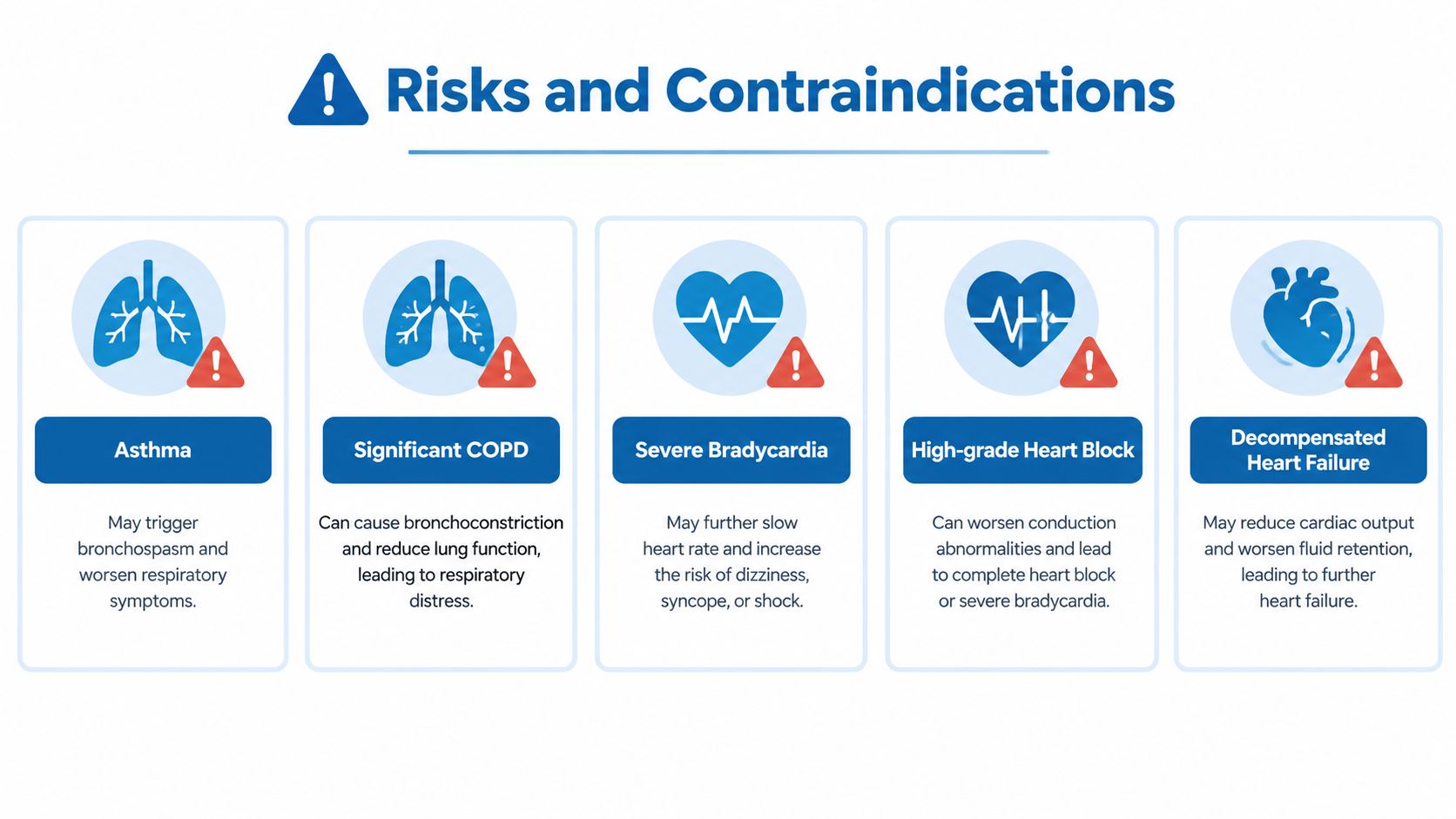
Propranolol may be inappropriate or require particular caution with:
Asthma or significant COPD: Beta blockade can worsen bronchospasm in susceptible patients.
Severe bradycardia or high-grade heart block: Further slowing can be dangerous.
Decompensated heart failure: The medication may not be appropriate during instability.
Diabetes treated with insulin: Propranolol can mask warning symptoms of hypoglycemia.
Raynaud phenomenon or peripheral vascular disease: Reduced peripheral circulation may worsen symptoms.
Pregnancy: The risks and benefits require individualized medical review.
Medication interactions also deserve direct discussion. Verapamil and diltiazem can add to cardiac slowing. Clonidine requires careful management because changes in treatment can create blood pressure problems. Epinephrine-containing local anesthetics used in dental or surgical settings should be disclosed to the relevant clinicians.
At situational doses, some people experience fatigue, cold hands or feet, mild dizziness, nausea, or a slower pulse. Those effects may be manageable, but they still matter if you must sing, perform delicate movements, drive, or make high-stakes decisions.
Urgent warning: Blackout, fainting, or significant shortness of breath after taking propranolol requires immediate medical evaluation.
Tell the prescriber about stimulants, recreational substances, cardiovascular symptoms, breathing conditions, blood sugar problems, and every prescription or supplement you use. A safe evaluation is not a formality. It is how a clinician determines whether reducing physical anxiety is worth the medical risk.
Is Propranolol the Right Fit for You
A useful self-assessment starts with one question: What fails first when the performance begins, your body, your thoughts, or both?
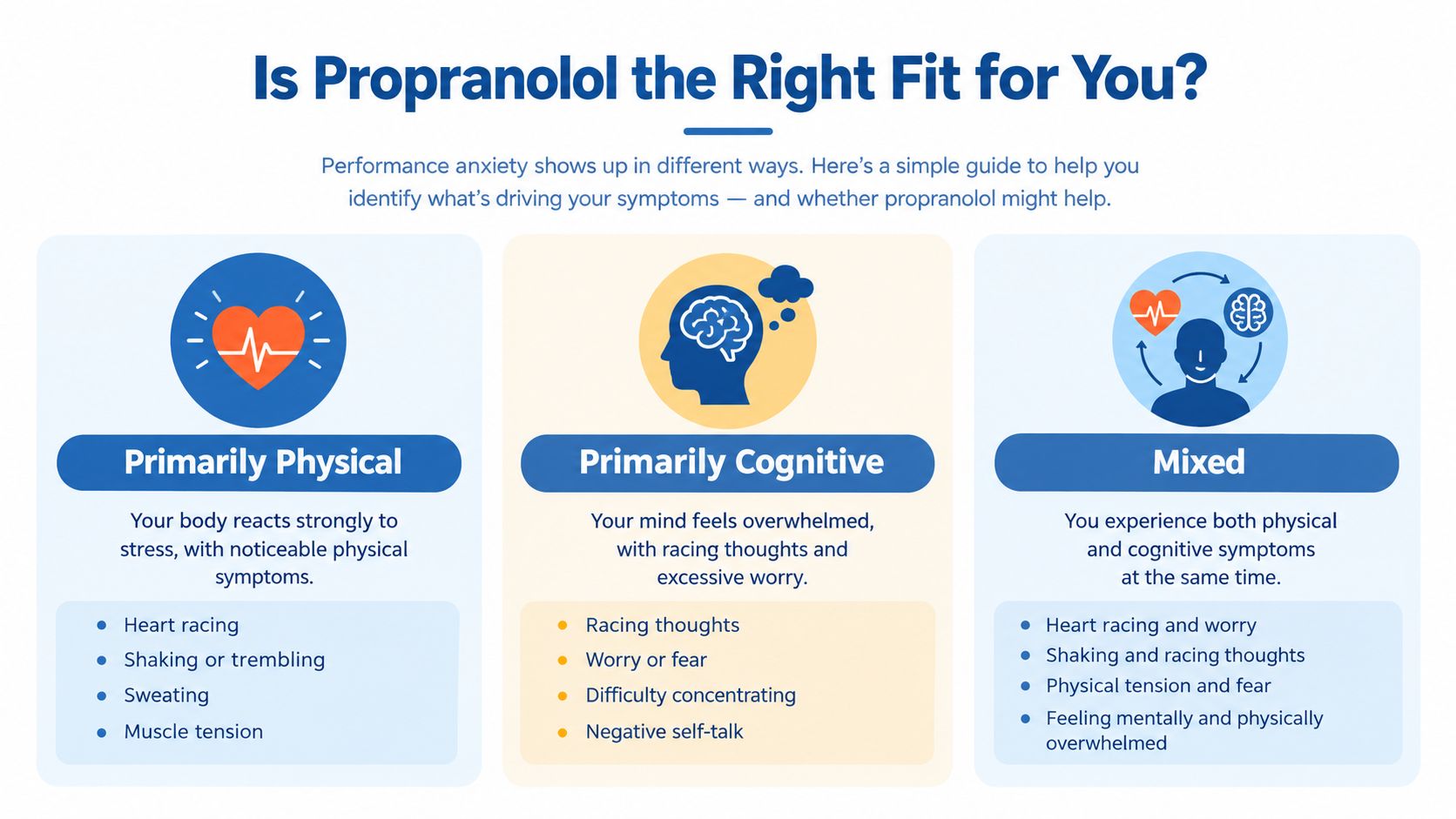
Primarily physical
You understand your material and can think clearly, but your hands shake, your voice quivers, your heart pounds, or you sweat visibly. This is the pattern most likely to benefit from propranolol, assuming you have no contraindication and a clinician agrees that the medication is appropriate.
Primarily cognitive
Your body may feel only mildly activated, but your mind races. You anticipate humiliation, lose your train of thought, replay previous mistakes, or avoid the event entirely. Propranolol may not address the main problem. CBT, exposure-based work, preparation strategies, and treatment for an underlying anxiety disorder may be more useful.
Mixed symptoms
You experience both severe physical activation and a powerful worry loop. Propranolol may reduce the bodily escalation, but it won't teach your mind that the situation is manageable. A combined plan may include skills training, therapy, and medication selected for the broader pattern.
Performance anxiety that appears across many settings, persists between events, or reaches panic-level intensity deserves a wider assessment. A single pill may be a small part of care, but it shouldn't become a substitute for understanding why the fear continues.
Before an appointment, write down the event that triggers symptoms, the first sensation you notice, the thoughts that follow, what you avoid, and what outcome you want. “I want to feel calm” is less useful than “I want my hands steady enough to play” or “I want to remain focused while answering questions.” Specific goals help a psychiatrist judge whether propranolol fits the problem you have.
Talking With a Psychiatrist and Next Steps
A Florida telepsychiatry evaluation for performance anxiety should begin with more than a request for a prescription. The clinician will typically review your symptoms, medical history, medications, allergies, substance use, and the situations in which anxiety appears. Screening for asthma, significant breathing problems, heart conditions, low resting heart rate, diabetes, circulation concerns, pregnancy, and medication interactions is essential.
Bring a short list of upcoming performances or high-pressure events. Include the date, the expected duration, what you need to do, and the symptoms most likely to interfere. Also bring prior medication trials, relevant medical records, home blood pressure or pulse information if you already monitor those safely, and a description of whether your anxiety is primarily physical, cognitive, or mixed.
What a responsible plan may include
A symptom target: For example, reducing tremor or palpitations rather than promising complete emotional calm.
A medication decision: The clinician may decide propranolol isn't appropriate, may recommend another option, or may prescribe a carefully selected trial.
Written instructions: These should identify the prescribed dose, timing, formulation, precautions, and what symptoms require help.
A test run: A clinician may recommend trying the medication before an important event so your response is known in advance.
A broader treatment pathway: Recurrent anxiety may lead to therapy, CBT, exposure work, or evaluation for an SSRI or SNRI rather than repeated event-day medication alone.
A psychiatric evaluation is also a chance to identify conditions that can resemble performance anxiety. Thyroid symptoms, medication effects, panic symptoms, substance use, sleep problems, and cardiovascular conditions can all affect the experience of a racing heart or shaking. The safest plan addresses those possibilities rather than assuming every symptom is psychological.
Patients seeking therapy can use therapist search tips from Uptown Psychology to think through specialization, treatment style, and practical fit. For medication questions, a psychiatric evaluation at Refresh Psychiatry & Therapy can help determine whether a situational medication, psychotherapy, or coordinated care is appropriate.
Refresh Psychiatry & Therapy provides Florida telepsychiatry and medication management alongside therapy services. The practice accepts Aetna, United Healthcare/UHC, Cigna, Blue Cross Blue Shield, Humana, Tricare, UMR, and Oscar insurance plans. Confirm current coverage and scheduling details directly with the practice because insurance participation can change.
This blog is for informational purposes only and does not constitute medical advice. Please consult a qualified mental health professional for personalized guidance.
Contact us or call Refresh Psychiatry at (954) 603-4081 to schedule your evaluation. Refresh Psychiatry & Therapy offers Florida telepsychiatry, psychiatric evaluation, medication management, and therapy for anxiety, including a careful assessment of whether propranolol fits your performance symptoms. Visit Refresh Psychiatry & Therapy to request an appointment and discuss a treatment plan customized to your health and goals.