
💊 Weight Neutral Antidepressants: What the Data Shows

The antidepressant with the most favorable early weight profile still wasn't a guarantee against weight gain. In a large study, bupropion users averaged about 1.2 pounds of gain by 24 months, despite a smaller early gain than sertraline, as summarized in ScienceDaily's coverage of the antidepressant comparison. That's the distinction a pharmacy brochure may leave unexplained: weight neutral usually means relatively weight-friendly, not weight-proof.
In practical terms, the label describes a comparison between medications, not a prediction about your own body.
For someone deciding whether to start treatment, that distinction can be reassuring rather than discouraging. You don't need a promise that your weight will never change. You need a medication that fits your symptoms, an honest discussion about trade-offs, and a plan for responding if unwanted changes occur.
Which Antidepressants Come Closest to Weight Neutral
Bupropion came closest to weight neutral in the largest recent comparison, while escitalopram sat at the opposite end of the ranking. A 2024 cohort study of 183,118 adults compared eight commonly prescribed antidepressants, using sertraline as the reference point. Participants weren't randomly assigned to their medications, and adherence during follow-up was low, so the figures describe averages across large groups rather than a prediction of what your own scale will show.
That average works like a weather forecast. A forecast calling for light rain doesn't tell you whether your street will get wet; it tells you what happened across the whole region. Medication comparisons work the same way, and knowing that upfront keeps the table below in perspective.
Antidepressant Weight Change Compared With Sertraline
The table combines the study's six-month comparisons with longer-term figures summarized in Harvard Health's explanation of antidepressant-associated weight changes. The early column shows differences from sertraline, not total weight gained. The risk column describes relative risk of gaining 5% or more of body weight, again compared with sertraline.
Antidepressant | 6-Month Change vs Sertraline | Risk of Gaining 5% or More | Longer-Term Pattern | Relative Standing |
|---|---|---|---|---|
Bupropion | About 0.22 kg less gain | About 15% lower | About 1.2 lb gained by 24 months | Most favorable overall |
Fluoxetine | About 0.07 kg less, not statistically significant | Unknown in this summary | Unknown in this summary | Similar to sertraline early |
Sertraline | Reference | Reference | About 3.2 lb gained by 24 months | Reference point |
Citalopram | About 0.12 kg more | Unknown in this summary | Unknown in this summary | Small early difference |
Venlafaxine | About 0.17 kg more | Unknown in this summary | Unknown in this summary | Small early difference |
Duloxetine | About 0.34 kg more | About 10% to 15% higher | About 1.7 lb gained by 24 months | Higher early, lower at two years |
Paroxetine | About 0.37 kg more | About 10% to 15% higher | About 2.9 lb gained by 24 months | Higher early gain |
Escitalopram | About 0.41 kg more | About 10% to 15% higher | About 3.6 lb gained by 24 months | Least favorable early comparison |
Duloxetine illustrates why timing matters. Its early comparison looks less favorable than sertraline's, but its longer-term average looks more favorable. A ranking based only on the beginning of treatment can therefore give an incomplete picture.
Unknown doesn't mean no risk. It means a reliable value isn't available in this summary, and filling that gap with a reassuring estimate would be misleading.
Use Comparisons Without Mixing Studies
A separate population study found that nonsmokers starting bupropion had 7.1 pounds less weight gain than nonsmokers starting fluoxetine over two years. Among smokers, the bupropion comparison was 2.2 pounds higher, but that difference wasn't statistically significant, according to the population-based antidepressant study. These are differences between treatment groups, not proof that everyone taking bupropion lost that amount.
Those results can't be merged with the table because the populations and comparisons differ. Smoking status changed the direction of the finding, which is a useful reminder that the same medication can behave differently across groups. For a closer discussion of one common pairing, our comparison of Wellbutrin and Prozac covers how these two medications differ beyond weight.
Treat the table as a shortlist for a conversation, not a final verdict about which medication belongs in your treatment plan.
How Antidepressants Push Weight Up or Down
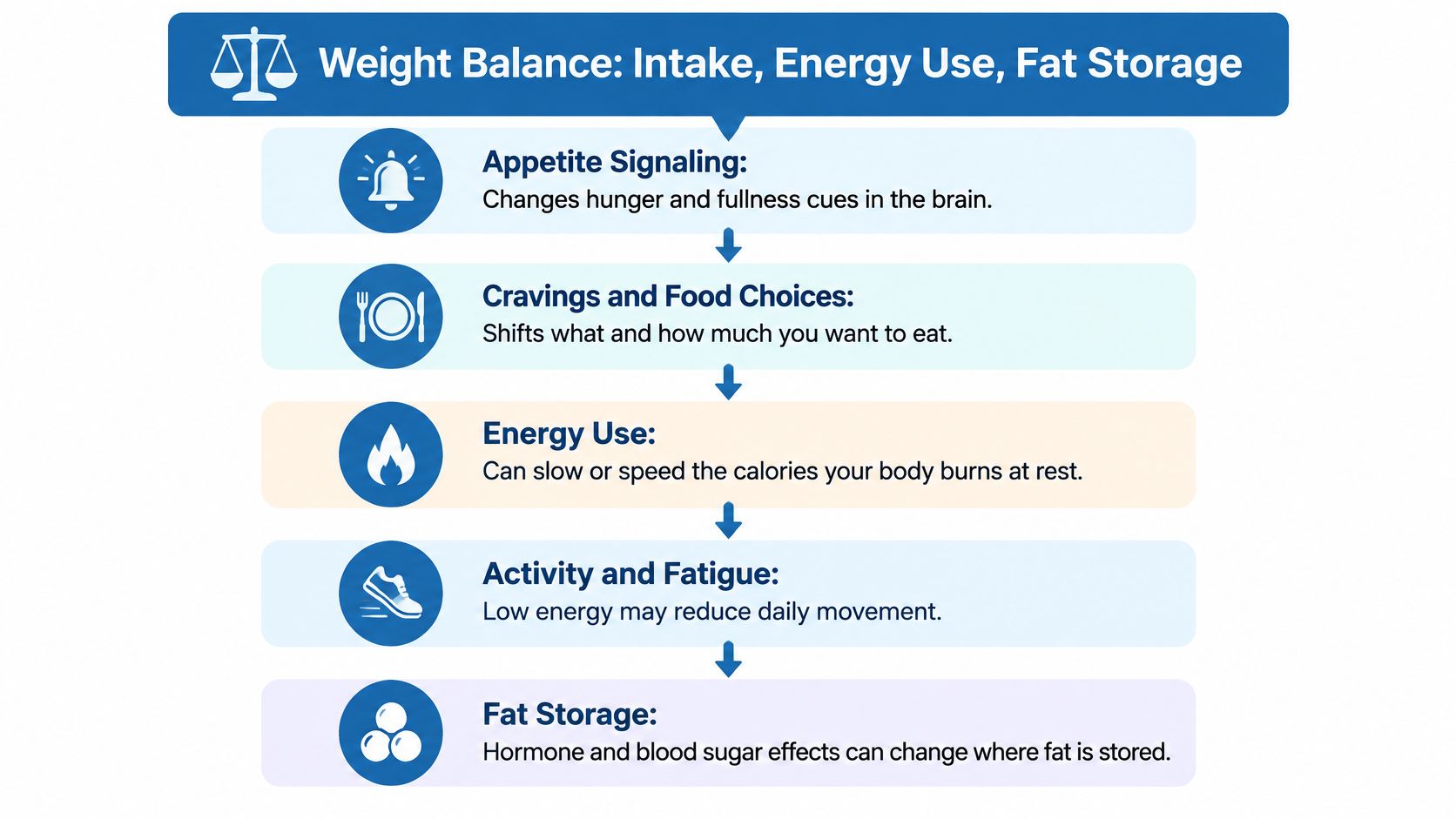
Two people can take the same antidepressant at the same dose and move in opposite directions on the scale. That spread makes sense once you break weight into its parts: food intake, energy use, activity, and energy storage. An antidepressant may touch several of those parts at once, and depression itself, along with recovery from it, shifts the same behaviors.
What follows are proposed explanations backed by mixed evidence. A group-level comparison showing more gain with one medication cannot reveal why your own weight changed.
Appetite, Reward, and Metabolism
Appetite signaling. Serotonin-related pathways help regulate hunger and fullness. When those signals shift, some people notice stronger appetite or carbohydrate cravings while taking an SSRI. Others notice nothing at all.
Reward and energy. Bupropion mainly affects dopamine and norepinephrine pathways. Reduced appetite or cravings may contribute to its comparatively favorable weight pattern for some people, although that profile does not make it an appetite treatment.
Metabolic effects. Changes in insulin sensitivity, blood sugar, or lipids are possible contributors to medication-associated weight change. Assuming every antidepressant slows metabolism or directly builds fat storage oversimplifies a messier picture.
The relationship involves more than appetite alone.
Movement and Recovery Also Matter
Activity and sedation. Fatigue or drowsiness may cut into ordinary movement: errands, household tasks, walking the dog. A person can eat exactly as before and still gain weight because daily activity dropped unnoticed.
Recovery itself. When depression lifts, appetite and energy often return. Someone who was barely eating may regain weight during recovery, while someone who ate in response to distress may settle into a different pattern.
A prospective Spanish cohort study followed more than 3,000 middle-aged adults and associated antidepressant use with a 1.78% to 2.08% greater increase in body weight over six years compared with never using antidepressants. The association held even when use was intermittent.
That study could not separate medication effects from depression severity, returning appetite, lifestyle, and other health factors. The practical takeaway is to describe what changed for you, such as hunger, sleepiness, food choices, or activity, rather than assuming a single cause. Our guide to psychiatric medication side effects can help you organize those observations before your next visit.
Weight works like a bank balance: several deposits and withdrawals determine the total, and switching medications changes only some of them.
What Weight Neutral Really Promises and Why It Is an Average
Weight neutral antidepressants are medications whose average weight effects are relatively small compared with alternatives. The phrase doesn't mean your body is prohibited from gaining or losing weight.
A city's average rainfall offers a useful analogy. It describes a broad pattern, but it can't tell you whether your own Tuesday will be dry.
Keep that distinction in mind when reading reassuring descriptions of a medication.

Translate a Research Threshold Into Your Own Terms
The early differences in the comparison table range from roughly a quarter of a pound to less than a pound. Those modest averages can coexist with more substantial changes in individual participants.
For example, the research threshold of 5% of starting weight would equal 10 pounds for an adult starting at 200 pounds. That's an arithmetic illustration, not a prediction or a requirement to wait before raising a concern.
Personal benchmark: Agree on a change that should prompt a conversation, rather than waiting until weight changes feel unmanageable.
Personalization Goes Beyond the Average
Genetic differences can affect medication response. Pharmacogenomic analysis examines how a patient's genetic makeup affects their response to medications and can inform recommendations for depression and anxiety, but it doesn't independently predict a person's weight outcome.
An average also leaves important questions unanswered: Did appetite recover? Did smoking change? Were other medications involved? The observational comparisons can't establish that the antidepressant alone caused the change.
The accompanying video offers another way to engage with the topic.
A useful clinical framework starts with baseline weight and metabolic risk, then considers appetite, sleep, and an agreed follow-up plan. Tracking your own experience turns a population estimate into information you and your psychiatrist can use in practice.
Clinical Factors That Change the Weight Question
Two adults can take the same antidepressant at the same dose and end up on opposite sides of the scale. That gap is the whole point of this section. A better average in a trial still leaves the individual question open, because your medical history, your other conditions, and how well a medication is already working all change what a weight finding means for you.
A 2025 review of cardiometabolic effects in depression treatment sorts the possible responses into two groups. Subtractive strategies mean switching to an antidepressant with less weight impact. Additive strategies mean keeping the current medication and pairing it with behavioral treatment or an approved anti-obesity medication. Switching is one option among several, particularly when the current medication is helping substantially.
The same review describes LIGHT trial findings in adults already taking antidepressants: weight loss with naltrexone/bupropion was similar to placebo, with no unique safety signal. Read that result carefully. It doesn't show the combination fails everyone, and it doesn't show that adding a second medication beats adjusting the first. It shows that in that particular group, the combination performed no better than placebo on weight.
Patient Situations That Shift the Weight Decision
Situation | Why It Changes the Weight Question | What to Ask Your Psychiatrist |
|---|---|---|
Current or recent smoking | Smoking status affected the bupropion comparison discussed earlier | How would quitting or relapsing change the plan? |
Obesity or metabolic syndrome | Existing metabolic risk changes how much further gain matters | Which measurements and labs should be on file first? |
Type 2 diabetes or prediabetes | Weight changes can complicate glucose management | How will my blood sugar be monitored after a change? |
Seizure disorder or history of anorexia or bulimia | Bupropion's labeling excludes these situations | Is bupropion ruled out before we consider it? |
Bipolar-spectrum symptoms | A medication change requires particular attention to mood stability | How will my mood be checked during and after a switch? |
Anxiety or insomnia | Activating or sedating effects may complicate sleep and appetite | Which option fits my sleep and anxiety pattern? |
Adolescents | Weight needs interpretation alongside growth, not adult targets alone | How will growth and weight be tracked over time? |
Older adults | Unintended loss may indicate poor intake or another health concern | What amount of weight loss should prompt review? |
Protect Mood Stability While Addressing Weight
Antidepressants prescribed for mood disorders and medications approved for obesity serve different purposes, even when they share an ingredient. Psychiatric and primary-care prescribers should coordinate any decisions about metabolic monitoring or weight-focused treatment rather than acting separately.
When the timeline is unclear, our explanation of whether depression can cause weight gain may help sort out whether mood itself played a role. At Refresh Psychiatry, Dr. Justin Nepa has experience helping patients get off medications that caused them unwanted side effects.
When it is appropriate, deprescribing is the gradual reduction of a psychiatric medication dose under the guidance of a healthcare professional, with a personalized tapering plan. The process follows your response, your symptoms, and your goals over time.
Bupropion's comparative advantage stays secondary to safety. Its prescribing information rules out use in people with a seizure disorder or a current or prior diagnosis of anorexia nervosa or bulimia, so screening for those conditions comes before the option is even considered.
How to Raise Weight Concerns at Your Psychiatry Visit
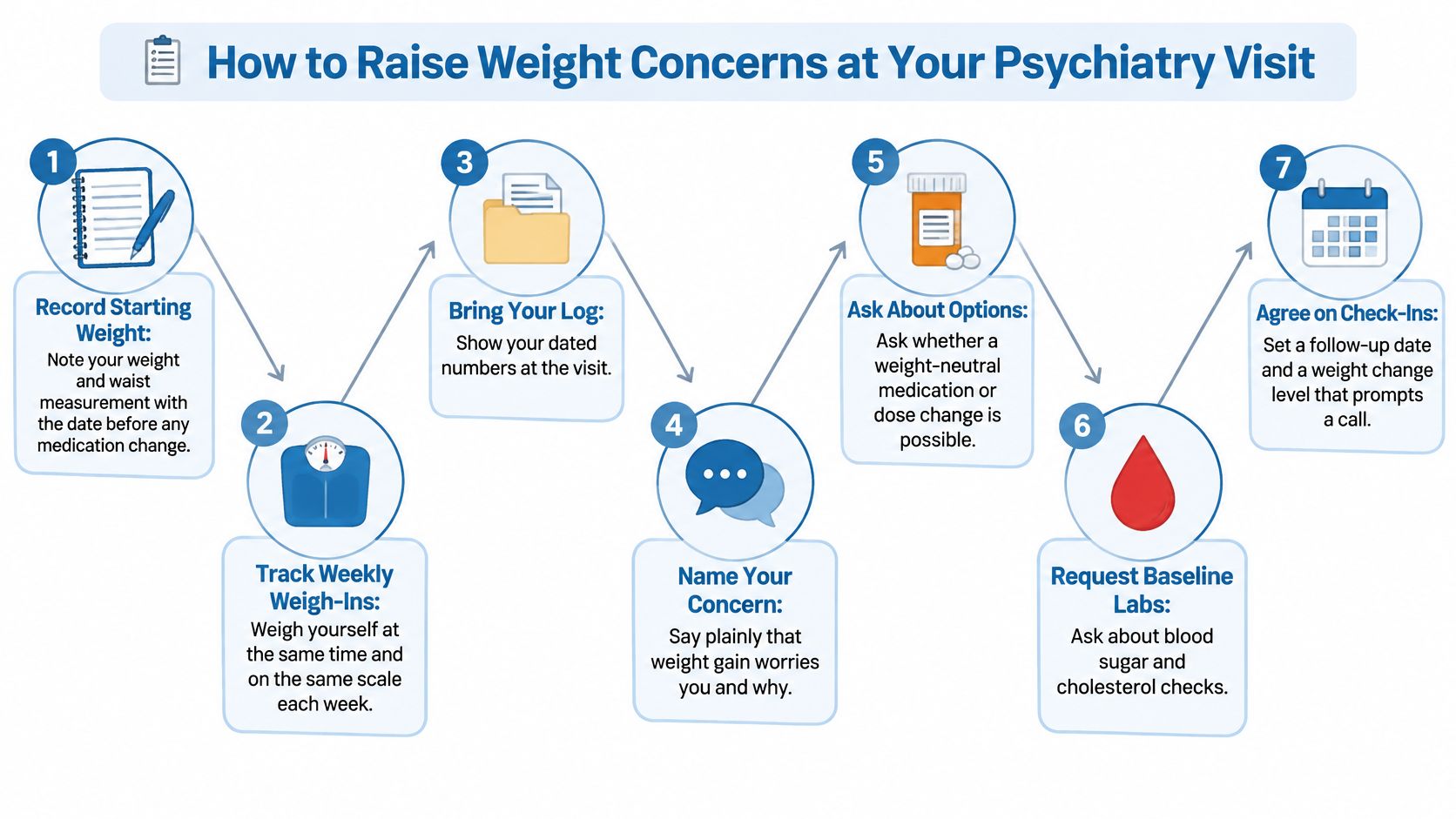
A good appointment starts with dates, not conclusions. If your weight changed after treatment began, say so plainly. Your clinician's job is to help work out why; yours is only to describe what happened and when.
Our guide to talking to a doctor about depression can help you organize that conversation. Weight belongs in it alongside symptom relief, daily functioning, and any other side effects you have noticed.
Prepare Information Your Psychiatrist Can Use
Record your starting measurements. Note your weight, waist measurement, and the date before a medication change whenever possible. A dated baseline separates a new trend from a change that began earlier, which matters because the two point toward different explanations.
Track consistently, if tracking feels safe for you. Use the same scale at the same time of day for weekly measurements, and bring the record rather than relying on memory. Keep the research threshold discussed earlier in mind, and contact your clinician sooner if a change feels concerning. If weighing yourself triggers eating-disorder symptoms, ask for a different monitoring approach.
Write your medication history. Include each antidepressant's name, dose, duration, benefit, side effects, and any associated weight change. A medication that previously worked well may deserve a different discussion from one that never helped.
Share relevant health and lifestyle information. Include smoking status, alcohol use, sleep patterns, and any diabetes, blood pressure, or bipolar history. Mention your other medications too, so your clinician can weigh overlapping contributors.
Leave With an Agreed Plan
Ask which options fit your whole symptom pattern. Weight matters. So do depression severity, anxiety, sleep, and safety. Our psychiatrists conduct thorough assessments before recommending any approach, medication is not always part of the plan, and the decision to use it is collaborative.
Request an individualized monitoring schedule. Ask when weight and any appropriate metabolic labs should be reviewed, including longer-term checkpoints. Clarify what would prompt a dose adjustment, a switch to an alternative, or an added behavioral approach, rather than assuming every increase requires a new medication.
Confirm the next check-in and between-visit instructions. Know which changes to report and how to report them.
You should never leave unsure whether a concern can wait until the next appointment.
Before you leave: Make sure you can explain the plan in your own words, including what you'll track and when you'll contact the clinician.
Telepsychiatry makes this follow-through easier. You can review home weight logs during a video visit, raise concerns between appointments, and ask how any local laboratory testing will be arranged. Prescriptions are sent electronically to the pharmacy, so no paper prescription is needed. Because Refresh Psychiatry is in-network with Aetna, UnitedHealthcare/UMR, Cigna, Humana, AvMed and Oscar Health, most patients pay only their standard copay for these visits.
Do not stop or switch an antidepressant on your own. When a change is appropriate, our clinicians may adjust the dosage, select an alternative medication, or explore different treatment options as part of a personalized plan.
Non-Medication Habits That Support a Healthy Weight
One difficult week can undo a routine built for your best days. Depression already taxes energy, concentration, and motivation, so the habits worth building are the ones small enough to survive a symptom flare. Treat each change below as a floor to stand on, the minimum you keep doing when things get hard, rather than a target you abandon after one missed day.
Habits work alongside treatment. They are not a measure of willpower, and they do not replace depression care.

Build a Routine You Can Repeat
Start from the energy you have, not the energy you wish you had. A plan sized to a good week collapses the moment a bad one arrives.
Choose manageable movement. Pick a walking route or activity that fits your current health and stamina. A phone or watch can reveal patterns, though a step count works better as information than as a pass-or-fail score.
Add strengthening activity when appropriate. Ask your clinician what suits your mobility and medical history. The aim is a routine you will keep, not exercise used to compensate for eating.
Protect sleep consistency. Sleep and appetite share biological wiring, so an irregular sleep window can make hunger cues harder to read. Keep a regular sleep opportunity, and describe persistent insomnia or daytime drowsiness to your clinician. Those symptoms deserve attention rather than dismissal as a motivation problem.
Make meals more predictable. A protein source, fiber-containing foods, and consistent meal times reduce the guesswork. If sugar-sweetened drinks are part of your usual routine, cutting back may be one practical change.
Movement also plays a role in mood itself. Our discussion of how exercise can support depression treatment frames activity as part of mental health care, which can make it easier to approach without treating it as repayment for eating.
Address Emotional Eating Without Rigid Rules
Emotional eating usually answers a need, even when the need is hard to name. Cognitive behavioral therapy skills, one of the approaches our clinicians use for mood and anxiety concerns, can help you notice a trigger, identify the response you are seeking, and plan an alternative. If eating follows an upsetting conversation, the useful question is what support you need in that moment, not which food to forbid.
A registered dietitian or structured behavioral program can translate broad advice into a plan that respects your preferences, budget, and health needs. Tell whoever supports you about your psychiatric treatment so the recommendations do not pull in conflicting directions.
Avoid restrictive dieting if you have an eating-disorder history, and don't combine a medication taper with aggressive calorie cuts without medical review.
Start with one habit. Watch how it affects daily life before adding another, since a supportive routine built slowly outlasts an ambitious plan abandoned quickly. The goal is steadier ground under your treatment, not a promised number on a scale.
Book Your Evaluation Before Switching Medications
Don't stop or switch an antidepressant on your own. The right decision depends on depression severity, anxiety, sleep, safety, prior treatment response, and your weight history, not just a medication's position in a comparison table.
A planned change gives you and your psychiatrist a chance to define what you want to preserve and what you want to improve. That might mean maintaining relief from depression while reducing an unwanted side effect, or clarifying whether medication is the main contributor at all.
Bring Your Priorities to the Evaluation
Useful priorities include how you're functioning, which symptoms remain difficult, and how strongly weight concerns affect your willingness to continue treatment. You don't have to choose between discussing mental health and discussing physical health.
Bring your records. A medication list and dated observations help us assess the sequence of changes.
Explain what matters most. Tell us whether appetite, fatigue, sleep disruption, or body-image distress is the biggest concern.
Expect an individualized discussion. A favorable research average doesn't replace a review of your history and safety needs.
Our board-certified psychiatrists provide medication management, monitor progress, and adjust treatment as necessary. When a reduction or switch is appropriate, a personalized tapering plan helps guide the process.
Florida Telepsychiatry and Coverage
Refresh Psychiatry is a telemedicine-only practice with clinicians licensed in Florida. HIPAA-compliant virtual visits are available anywhere in Florida on any device, and we accept both self-pay and insurance payments.
We accept Aetna, United Healthcare/UHC, Cigna, Blue Cross Blue Shield, Humana, Tricare, UMR, and Oscar insurance plans. Confirm your specific plan's benefits when scheduling so you understand your coverage.
Contact us or call Refresh Psychiatry at (954) 603-4081 to schedule your evaluation. Bring your medication history and weight concerns so we can discuss an approach that considers both symptom relief and unwanted side effects.
Refresh Psychiatry & Therapy offers coordinated psychiatric evaluation, medication management, and therapy to help you consider weight concerns alongside your mental health needs. Visit Refresh Psychiatry & Therapy to arrange an evaluation before making a medication change.
This blog is for informational purposes only and does not constitute medical advice. Please consult a qualified mental health professional for personalized guidance.