
💊 Antidepressant Drug Interactions: Risks and Safe Steps

A 2022 study of 13,617 outpatient prescriptions for depression found that 31.0% contained at least one potential drug interaction. That figure is a screening signal, not a count of patients harmed: an alert can flag a possible issue without proving that a combination caused a problem. The practical question is what the medicines do together, what symptoms to watch for, and whether a clinician should adjust or monitor treatment. (2022 outpatient prescribing study)
Antidepressant Interaction Quick-Reference Chart
The same study found that potential interactions became more common as the number of other medicines increased: 28.0% of prescriptions involving two to three concomitant drugs had a potential interaction, compared with 57.9% involving four to six drugs and 75.0% involving seven or more. These are prescribing alerts, not confirmed harms. Pain medicines, sleep aids, supplements, and treatments for chronic conditions all belong on the medication list a prescriber reviews. (2022 outpatient prescribing study)
Use the chart as a question list for your prescriber or pharmacist, not as a reason to stop a medicine on your own. Whether a combination is unsafe depends on the specific drugs, doses, timing, health factors, and monitoring plan. For example, combining Wellbutrin and Lexapro calls for a clinician's review of the exact regimen rather than a one-size-fits-all answer.
Antidepressant interaction combinations at a glance
Combination | Main risk | Typical examples | What to do |
|---|---|---|---|
MAOIs with SSRIs, SNRIs, or tricyclics | Serotonin syndrome | Phenelzine, tranylcypromine, selegiline | Never combine; a prescriber must set the gap |
Citalopram with an MAOI, linezolid, or IV methylene blue | Serotonin syndrome | MAOIs, linezolid, methylene blue | Contraindicated; transition only with prescriber-directed timing |
Linezolid with SSRIs or tricyclics | Serotonin syndrome | Linezolid antibiotic | Review all serotonergic drugs and arrange close monitoring |
Tramadol with SSRIs or SNRIs | Seizures and serotonin syndrome | Tramadol pain medicine | Get a prescriber's review before use |
Triptans, fentanyl, lithium, buspirone, or amphetamines with SSRIs or SNRIs | Serotonin syndrome | Sumatriptan, fentanyl, lithium | Disclose before starting; monitor after changes |
St. John's wort with any antidepressant | Serotonin syndrome and other interactions | Herbal supplement | Don't start without clinician approval |
Aspirin, NSAIDs, warfarin, or other anticoagulants with SSRIs or SNRIs | Bleeding | Ibuprofen, naproxen, apixaban | Discuss before using an over-the-counter pain reliever |
Citalopram or escitalopram with QT-prolonging drugs | QT prolongation | Methadone, some antipsychotics, some antibiotics | Ask whether ECG review and dose limits are needed |
Paroxetine or fluoxetine with tamoxifen, flecainide, or tricyclics | Higher drug levels or reduced tamoxifen activation | Tamoxifen, propafenone, nortriptyline | Prescriber reviews dose or selects an alternative |
Bupropion with CYP2D6-cleared drugs | Higher drug levels | Venlafaxine, nortriptyline | Have the prescriber review doses |
Benzodiazepines, opioids, or alcohol with antidepressants | Sedation and breathing depression | Alprazolam, oxycodone, wine | Limit alcohol and watch for excess sedation |
Esketamine with benzodiazepines, opioids, or alcohol | Excess sedation | Clonazepam, hydrocodone | Use only with required clinic monitoring |
The clearest “never combine” situations involve contraindicated MAOI combinations and the required transition periods. Other pairings may be used in selected situations, but only with a specific plan for dose review, symptom monitoring, or testing.
How Interactions Happen and Why Enzymes Matter
Antidepressant drug interactions aren't all the same. Some change serotonin activity, some change how quickly the body clears a medicine, and others add effects such as sedation or bleeding risk. The key is to assess the whole combination, including nonpsychiatric prescriptions, supplements, and alcohol, rather than focusing on the antidepressant alone. (FDA labeling on interaction risks)
An interaction changes what the body does to a drug, not just what two labels say.
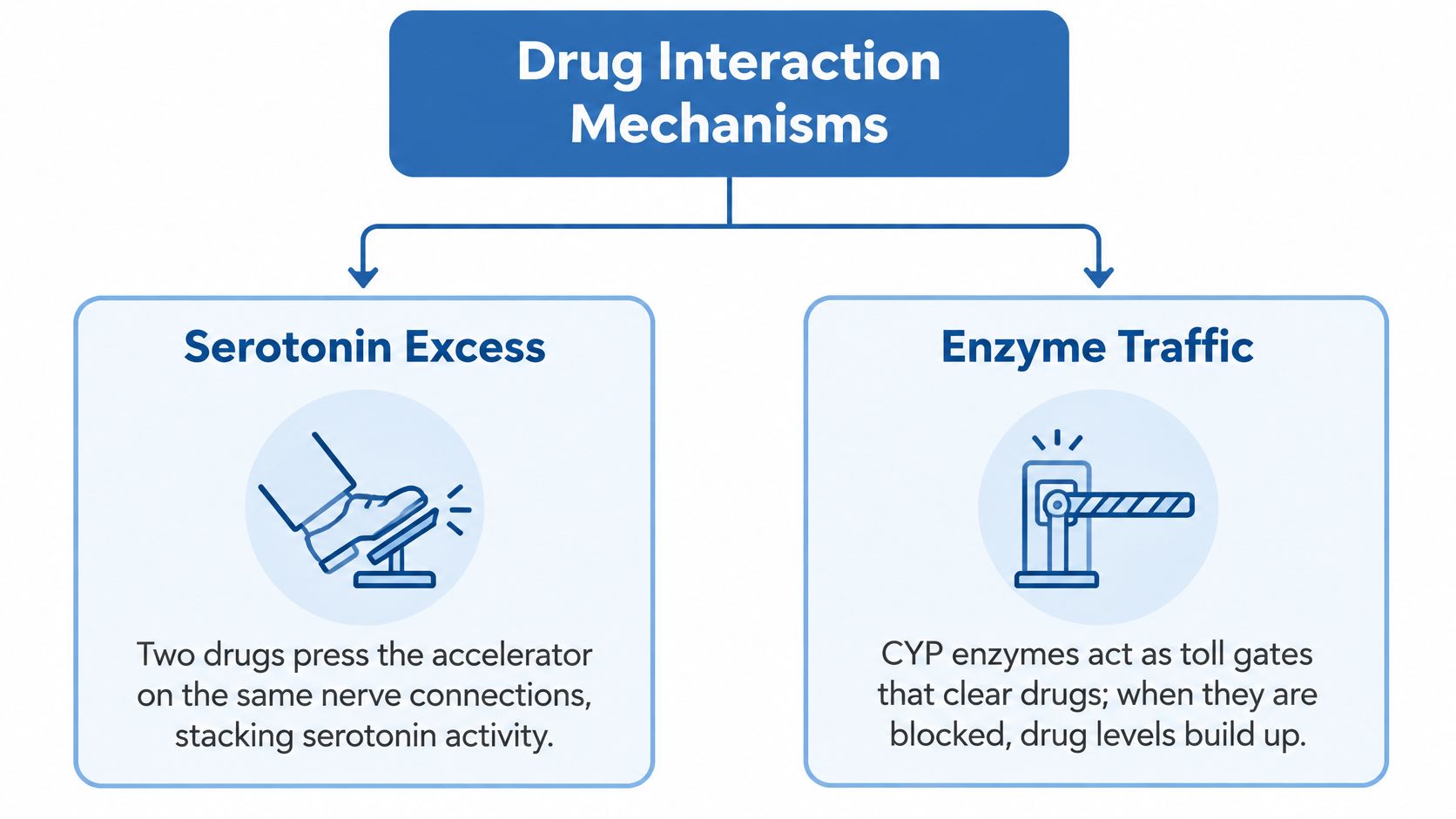
Four mechanisms explain many common alerts:
Serotonin excess: Two medicines can press the accelerator on the same nerve connections, raising serotonin activity too much.
Enzyme traffic: CYP enzymes act like toll gates that help clear medicines. An inhibitor can slow the traffic and let drug levels build up; an inducer such as St. John's wort can speed clearance and lower levels.
Stacked sedation: Medicines that slow the brain or nervous system can add together like volume knobs in one room. Benzodiazepines, opioids, alcohol, and esketamine deserve particular care.
Platelet and rhythm effects: Some SSRIs and SNRIs can affect clotting, while other medicines can alter heart rhythm. The combination may change risk even when each drug was prescribed for a separate condition.
Why CYP enzymes matter
Think of CYP enzymes as part of the liver's cleanup crew. If a drug blocks an enzyme that clears another medicine, the second medicine may accumulate. Paroxetine is a strong, partly irreversible inhibitor of CYP2D6. It can raise exposure to CYP2D6-cleared drugs, including some tricyclic antidepressants, certain antipsychotics, and antiarrhythmics such as flecainide and propafenone. The FDA paroxetine labeling advises monitoring or adjusting affected medicines when paroxetine starts, and reviewing them again when it stops because inhibition can persist.
Tamoxifen is a high-impact example. CYP2D6 converts it to endoxifen, an active metabolite, so paroxetine may reduce endoxifen levels. The FDA advises considering an antidepressant with little or no CYP2D6 inhibition when tamoxifen is needed. Fluoxetine and bupropion can also inhibit CYP2D6, so the prescriber should know about tamoxifen before choosing or changing an antidepressant.
Enzyme | Antidepressants processed | Common inhibitors or inducers |
|---|---|---|
CYP2D6 | Venlafaxine, nortriptyline, imipramine, desipramine; contributes to tramadol activation | Paroxetine, fluoxetine, bupropion, duloxetine (moderate inhibitor) |
CYP2C19 | Citalopram, escitalopram, sertraline (partly) | Fluvoxamine (strong inhibitor), omeprazole (especially at higher doses) |
CYP3A4 | Sertraline, trazodone, mirtazapine | Clarithromycin, ketoconazole, large amounts of grapefruit juice; St. John's wort (inducer) |
CYP1A2 | Duloxetine, clozapine, some tricyclics | Fluvoxamine (strong inhibitor); smoking (inducer) |
People also differ in how they metabolize medicines. A poor metabolizer may accumulate a drug, while an ultrarapid metabolizer may clear it before it has the expected effect. A review of 29 studies involving about 40,000 patients found CYP2D6 and CYP2C19 metabolic phenotypes were consistently associated with antidepressant concentrations and adverse events, while links with clinical response were more variable. (Evidence review of antidepressant metabolism)
Pharmacogenomic testing isn't a universal prerequisite or a guaranteed way to find the right medication. It may help a clinician interpret repeated side effects, treatment failure, or a complicated medication combination. For more on the role of testing, see Genomind testing and medication decisions. To prepare for a medication review, find the relevant enzyme in the table, then check your list for medicines that inhibit or induce it.
The Most Urgent Interaction
Serotonin syndrome is an urgent medical problem, not just a routine side effect. It can develop when medicines push serotonin activity too high across the brain, nerves, and gut. Symptoms can begin within hours to days of starting a serotonergic medicine, increasing its dose, or adding another one.

Triggers include tramadol taken with an SSRI or SNRI; linezolid with an SSRI or tricyclic; and combinations involving pethidine, fentanyl, ondansetron, metoclopramide, lithium, triptans, or buspirone. Risk can rise when several serotonin-acting medicines overlap or when an antidepressant is near the upper end of its licensed dose. St. John's wort and MAOIs are also important to report.
The tramadol label warns that combining tramadol with an SSRI or SNRI can increase seizure risk. It also documents post-marketing reports of serotonin syndrome with tramadol and SSRIs, SNRIs, or MAOIs. Fluoxetine, paroxetine, and amitriptyline can inhibit CYP2D6, which may reduce tramadol clearance and contribute to serious adverse effects. (FDA tramadol labeling)
Recognize the symptom pattern
Warning signs can include agitation or confusion, sweating, tremor, muscle rigidity or twitching, fever, diarrhea, incoordination, or rapid changes in heart rate or blood pressure. A mild isolated symptom doesn't by itself establish serotonin syndrome, but a cluster of new symptoms after a medication change needs urgent assessment.
Don't assume sudden agitation, sweating, or tremor is just anxiety or a depression flare if it follows a new medicine, a dose increase, or a switch. Clinicians can use structured clinical criteria, including the Hunter criteria, to distinguish serotonin syndrome from other conditions. Severe or rapidly worsening symptoms need emergency care.
Emergency teams generally stop the medicines causing the reaction and provide supportive care, including managing body temperature, blood pressure, and agitation. Don't try to manage a suspected severe reaction by stopping and restarting medicines without medical help.
Bleeding, Heart Rhythm and Sedation Risks
SSRIs and SNRIs can affect platelet function, which may make bleeding more likely when they're combined with aspirin, NSAIDs such as ibuprofen or naproxen, warfarin, or other anticoagulants. Check with a prescriber or pharmacist before buying an over-the-counter pain reliever. Seek urgent help for black stools, blood in vomit, or bleeding that won't stop; report unusual bruising as well.
Heart-rhythm risk is a separate concern. Citalopram and escitalopram can prolong the QT interval, and combining them with other QT-prolonging drugs may add risk. Potential add-ons include methadone, some antipsychotics, class III antiarrhythmics, certain macrolide and fluoroquinolone antibiotics, and some antifungals. Low potassium or magnesium can increase concern. Ask whether an ECG and electrolyte checks are appropriate, particularly if you have fainting, palpitations, or dizziness.
Sedation can also stack. Benzodiazepines, opioids, alcohol, and esketamine may increase drowsiness and slow breathing when used in combinations that depress the central nervous system. That can raise the risk of falls, especially for older adults. The Refresh Psychiatry guide to psychiatric medication side effects can help you prepare questions for a clinician, but it can't replace a review of your full medication list.
Risk | What to check | When to check |
|---|---|---|
Bleeding | Bruising, black stools, INR if taking warfarin | Before adding NSAIDs, aspirin, or anticoagulants, and at each review |
QT prolongation | 12-lead ECG, potassium, and magnesium | At baseline when risk factors exist, after dose changes, and if fainting or palpitations occur |
Sedation and breathing | Daytime drowsiness, falls, slowed breathing | After adding a sedative or opioid, or changing alcohol use |
Low sodium (hyponatremia) | Serum sodium test | For older adults, diuretic users, and early in treatment |
Supplements, Alcohol and Everyday Products
Say someone taking sertraline starts St. John's wort after a friend recommends it. During a cold, they also take a cough syrup containing dextromethorphan, then feel agitated and sweaty. That scenario calls for a medication review, not an assumption that a supplement or cold product is harmless because it's sold without a prescription.
St. John's wort: Can add serotonergic effects and induce CYP3A4, which may lower levels of some medicines, including hormonal contraception. Don't start it without clinician approval.
5-HTP, tryptophan, and SAMe: These supplements may increase serotonin-related effects when combined with antidepressants.
Dextromethorphan: Found in some cough and cold products. It can add serotonergic effects and is contraindicated with MAOIs.
Pseudoephedrine and phenylephrine: These decongestants can raise blood pressure, particularly with MAOIs.
Tyramine-rich foods: Aged cheeses, cured meats, and tap beer can be risky with MAOIs because of the potential for a sharp blood-pressure rise.
Alcohol: Can add to sedation from benzodiazepines, opioids, and esketamine, and may worsen mood or sleep.
Ginkgo, high-dose fish oil, and turmeric: May contribute to bleeding risk when taken with SSRIs.
Sleep supplements also deserve a closer look for ingredients and possible medication overlap. For a general framework, see sleep supplement guidance for busy executives, then discuss any product you're considering with a pharmacist or prescriber. You can also read about ashwagandha for anxiety and what the data shows.
Tell the pharmacist about every product, including vitamins, herbal remedies, cannabis, alcohol, and medicines bought without a prescription. Keep the packaging or a photo of the label available when asking about a specific ingredient.
Switching and Stopping Antidepressants Without a Dangerous Overlap
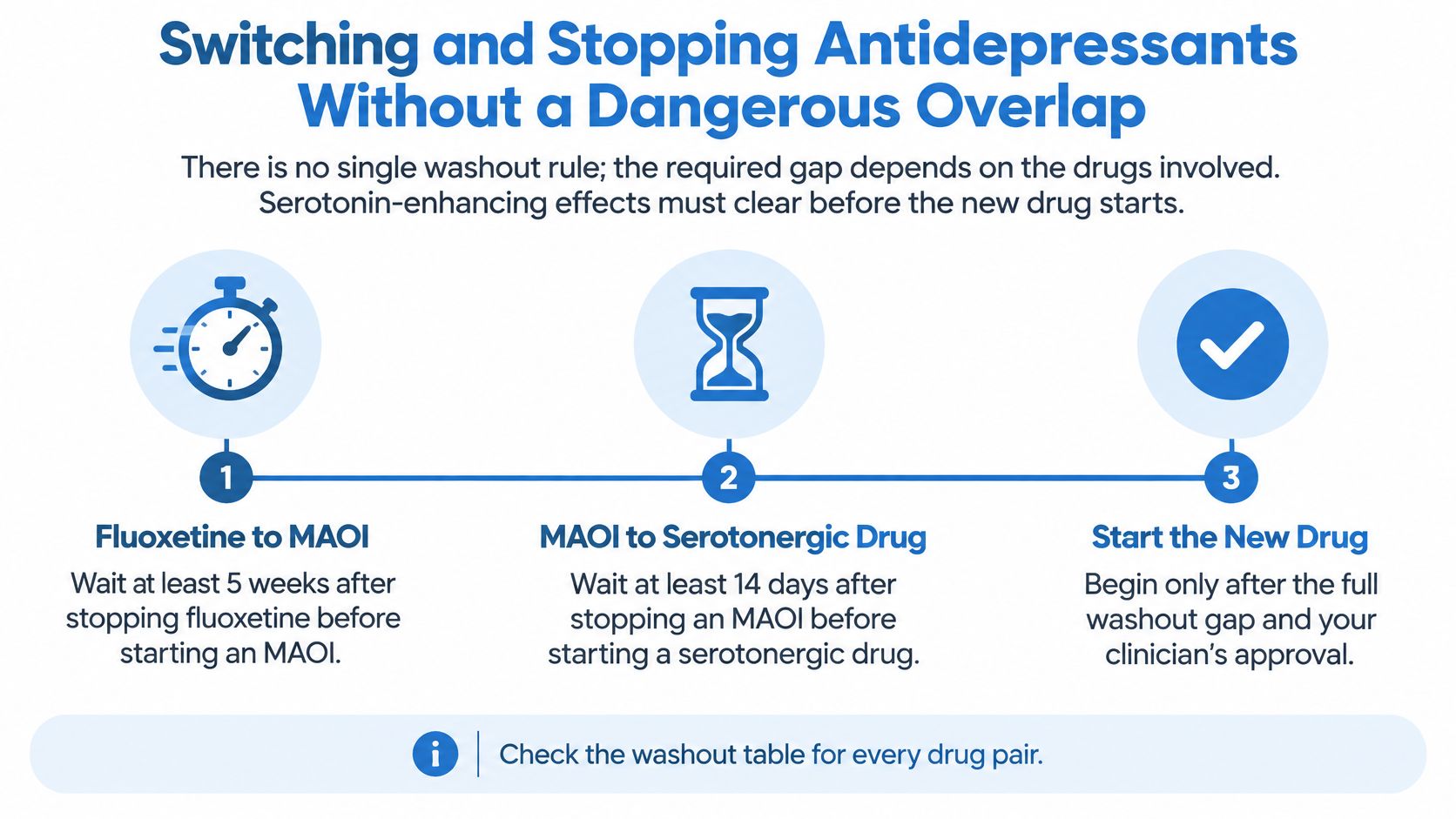
The riskiest moment for an interaction is often the space between two antidepressants. One medicine is fading out while the next one builds up, and if both raise serotonin at the same time, the effects can stack. There is no single washout rule that fits every switch, because each drug clears at its own pace. Fluoxetine is the classic example: its active metabolite stays in the body for weeks after the last dose, so it needs a much longer gap than other SSRIs.
A washout period works like a runway handoff, where one plane must clear the strip before the next can land. Cross-tapering, lowering one drug while raising the next, is a common approach for many switches, but it is not appropriate for contraindicated pairs such as an MAOI with an SSRI or SNRI. Readers often get confused at this point: an interaction alert during a supervised cross-taper usually describes a theoretical overlap your prescriber is already managing. A contraindicated combination is different. That warning exists because harm is a real possibility, so the gap cannot be skipped.
Typical minimum intervals look like this. Your prescriber determines the plan for your specific medicines and health situation.
Switch or stop | Typical gap or precaution | Why it matters |
|---|---|---|
MAOI to SSRI or SNRI | At least 2 weeks after the MAOI stops | MAOI effects must clear before serotonergic treatment starts |
SSRI to MAOI | At least 14 days after the SSRI stops | Serotonin-enhancing effects need time to wear off |
Sertraline to MAOI | At least 14 days after sertraline stops | Sertraline follows the same minimum gap as other SSRIs |
Fluoxetine to MAOI | At least 5 weeks after fluoxetine stops | Its active metabolite has a prolonged half-life |
Citalopram and MAOI | At least 14 days between stopping one and starting the other | The label contraindicates overlap |
Linezolid and MAOI | Avoid use within 14 days of each other | Linezolid acts as a reversible MAO inhibitor |
Paroxetine stopped | Prescriber review of interacting drugs | CYP2D6 inhibition can persist after the last dose |
Stopping safely works the same way in reverse. Do not stop an antidepressant abruptly on your own, because a sudden stop can bring on discontinuation symptoms or a return of mood symptoms. Deprescribing is the gradual reduction of a psychiatric medicine under a healthcare professional's guidance, following a personalized tapering plan. If a medicine does not suit you or causes unwanted effects, a clinician may adjust the dose, switch to an alternative, or explore different treatment options instead. Request refills in advance so a missed shipment or scheduling delay never forces an unplanned break. For practical context on why abrupt stops backfire, see guidance on stopping antidepressants cold turkey, and for a wider discussion of how these drugs act in the body, hear Dr Joanna Moncrieff on antidepressant drugs.
Before any switch, ask your prescriber three questions: What gap do I need? What should I take in the meantime? Which symptoms mean I should call? If paroxetine is being stopped, add a fourth: does any CYP2D6-cleared medicine need a dose or monitoring review as its enzyme effect wears off?
Reconcile Your Medications and Call Your Clinician
One complete list lets a prescriber see how the whole regimen fits together, including items written by different clinicians who may never see each other's notes. Keep it current and bring it to every appointment.
Write down everything. Include prescriptions, over-the-counter products, supplements, cannabis products, and typical alcohol use. Add each dose, the time you take it, and who prescribed it.
Mark possible interaction categories. Flag items that affect serotonin, bleeding, sedation, or heart rhythm, and medicines processed by CYP2D6, CYP2C19, CYP3A4, or CYP1A2.
Share the list. Hand it to every prescriber and pharmacist, and ask the pharmacist to run an interaction screen.
Ask before starting anything new. Find out whether it affects serotonin, bleeding, heart rhythm, or sedation, and whether a gap is needed before or after it.
Recheck after changes. Review the list whenever a medicine starts or stops, including when an enzyme-inhibiting drug is discontinued. Request refills in advance so a dose never runs out while the plan is being updated.
An interaction screen flags pairs worth examining, and a flag is a prompt to ask rather than proof of harm. The pharmacist or prescriber weighs the dose, the timing, and your history before deciding whether the risk is clinically meaningful or stays theoretical.
When to act on a symptom after an interaction
Situation | Action | Timing |
|---|---|---|
Agitation, confusion, fever, muscle rigidity, or twitching | Call 911 or go to the nearest emergency department | Now |
Fainting, racing heartbeat, or irregular heartbeat | Call 911 | Now |
Vomiting blood, black stools, or bleeding that won't stop | Call 911 or seek emergency care | Now |
New tremor, sweating, or diarrhea after starting or raising a medicine | Call your prescriber | Same day |
New mood or sleep symptoms after stopping a medicine | Call your prescriber before changing doses | Same day |
Unusual bruising or stomach upset after adding an over-the-counter product | Call your prescriber or pharmacist | Within 1–2 days |
For the rows marked "now," do not wait to see whether the symptoms pass on their own. For the same-day and follow-up rows, note when the symptom started and which medicine changed, because that detail helps the clinician judge whether the interaction is the likely cause.
Refresh Psychiatry offers integrated medication management and therapy in one coordinated setting, with clinicians who monitor progress and adjust medications when needed. The practice is in-network with insurers including Aetna, Cigna, United Healthcare, UMR, Oscar, and Blue Cross Blue Shield. Contact Refresh Psychiatry & Therapy to schedule your evaluation.
This blog is for informational purposes only and does not constitute medical advice. Please consult a qualified mental health professional for personalized guidance.