
🧠 Loneliness Epidemic Explained: Signs, Risks and Help

Loneliness is associated with approximately 871,000 deaths annually worldwide, according to the World Health Organization's social connection overview. That estimate reframes the loneliness epidemic as a public-health concern, not just an uncomfortable feeling. It doesn't mean loneliness directly causes every associated death, but it does mean persistent disconnection deserves attention alongside other health risks.
For Florida residents, the useful response combines clinical assessment with practical changes to everyday life. Therapy can help with withdrawal and fear of rejection, but it can't supply transportation, affordable childcare, or a welcoming place to meet people. Effective help starts by identifying what's missing.
How Big the Loneliness Epidemic Is
Loneliness is the distress of feeling that your desired relationships aren't enough. It differs from being alone, which can be restful, and from social isolation, the more objective lack of relationships or contact. Someone can have a crowded calendar and still feel emotionally disconnected.
The WHO's 2025 Commission on Social Connection findings put global loneliness at 15.8%, with about 21% among adolescents, 17% to 21% among people aged 13 to 29, 24.3% in low-income countries, and about 11% in high-income countries. The table places those estimates beside other widely cited measures.
Loneliness rates by population and source
Group | Reported loneliness | Source measure |
|---|---|---|
All people worldwide | 15.8% (about 1 in 6) | WHO 2025 Commission on Social Connection |
Adolescents | About 21% | WHO 2025 Commission on Social Connection |
People aged 13 to 29 | 17% to 21% | WHO 2025 Commission on Social Connection |
Older adults | About 11.8%, reported by the WHO commission | WHO 2025 Commission on Social Connection |
People in low-income countries | About 24.3% | WHO 2025 Commission on Social Connection |
People in high-income countries | About 11% | WHO 2025 Commission on Social Connection |
Adults across 148 countries | 21.3%, according to the European Journal of Epidemiology study | Gallup World Poll data, 2023 to 2024, published 2026 |
Worldwide, felt lonely a lot of previous day | 23%, according to Gallup | Gallup global measure, 2023 |
US adults | About half show measurable loneliness | US Surgeon General fact sheet |
US adults | About 1 in 3 feel lonely | CDC |
These measures don't contradict one another. Asking whether someone felt lonely during the previous day isn't the same as assessing measurable loneliness with a broader questionnaire. Survey years, populations, and wording also differ, so compare like measures rather than treating every row as a trend.
Interpretation matters: A population estimate describes a group. It doesn't tell a clinician how distressed an individual feels or what help they need.
The central takeaway is that loneliness isn't only an older-adult problem. Younger people and people living in lower-income settings carry a substantial burden. For a student living with roommates or a working parent surrounded by family, feeling lonely isn't evidence that their experience is unusual or invalid.
Why Loneliness Is Rising Across Generations
A social network is like a bridge with fewer lanes. Traffic may look busy from the outside, while the routes carrying dependable emotional support become narrower. A Florida student might exchange messages all day yet have nobody available for an unhurried conversation after a difficult exam.
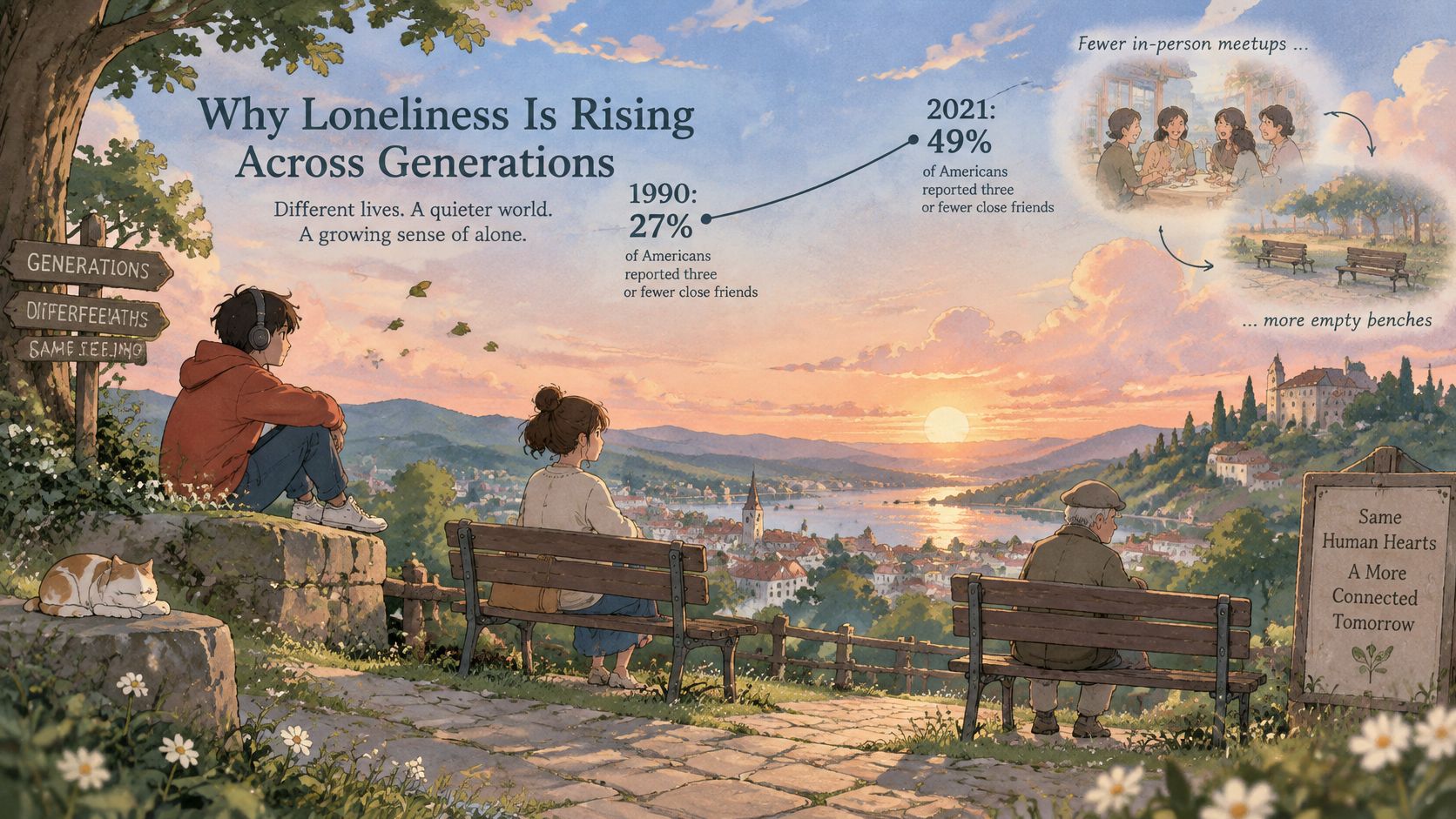
The changing shape of those networks matters. The US Surgeon General's fact sheet reports that 49% of Americans had three or fewer close friends in 2021, compared with 27% in 1990, and that in-person time with friends among people aged 15 to 24 fell from about 150 minutes daily in 2003 to about 40 minutes in 2020, nearly a 70% decline. The same document reports measurable loneliness in approximately half of US adults and describes young adults as nearly twice as likely as adults over 65 to report loneliness in 2021.
When daily logistics narrow the options
Consider a parent who wants to reconnect with friends but works evenings and cares for an older relative. Their obstacle isn't necessarily motivation. Practical pressures can make ordinary social advice difficult to follow:
Housing: Moving farther from friends makes spontaneous visits harder.
Transportation: Not driving, inaccessible transit, or disability can restrict participation.
Caregiving: Responsibilities may consume the hours other people have free.
Work schedules: Friends can care about one another without having overlapping time off.
Shared spaces: A neighborhood may lack accessible, comfortable places to linger.
For adolescents, withdrawal also deserves attention when it accompanies changes in mood or functioning. Parents can review these signs of depression in teens without assuming that every preference for privacy indicates illness.
The number of contacts doesn't settle whether someone feels connected. The bridge needs reliable lanes, not just traffic. Ask yourself: Who would I call at 2 a.m., and how often do we spend time together?
Health Risks Linked to Chronic Loneliness
Loneliness is a risk factor, not a psychiatric diagnosis. A lonely person doesn't automatically have depression, and an association with disease doesn't mean that disease is inevitable. Clinical assessment should establish what else is happening rather than turn loneliness into a catch-all explanation.
A peer-reviewed review of loneliness, isolation, and health describes stress pathways involving sustained physiological activation, blood pressure, and cortisol, and summarizes associations of social isolation with 29% higher relative cardiovascular risk and 32% higher relative stroke risk, and loneliness with a 22% higher hazard of all-cause mortality. These are relative measures, not percentage-point increases in an individual's absolute risk.
Health outcomes linked to loneliness and isolation
The CDC's social connectedness guidance reports that about 1 in 3 US adults feel lonely and identifies heart disease, stroke, diabetes, depression, anxiety, self-harm, and dementia among linked health concerns.
Outcome | Evidence in brief | Warning sign to act on |
|---|---|---|
Heart disease | Social isolation linked to 29% higher relative cardiovascular risk in the review above | New chest pain or severe breathlessness requires emergency assessment; discuss newly high blood pressure with a clinician |
Stroke | Social isolation linked to 32% higher relative risk | Sudden facial drooping, arm weakness, or speech difficulty requires emergency help |
All-cause mortality | Loneliness linked to 22% higher hazard | Persistent loneliness with declining health warrants an evaluation |
Type 2 diabetes | Linked to loneliness and isolation in WHO's assessment | Excess thirst, fatigue, or frequent urination warrants blood sugar assessment |
Depression | Linked to loneliness and frequently co-occurring | Persistent low mood or loss of interest warrants assessment |
Anxiety | Linked to loneliness and frequently co-occurring | Worry or avoidance that restricts ordinary activities warrants help |
Suicidality and self-harm | Listed by the CDC as a risk outcome | Thoughts of suicide or self-harm require immediate support |
Dementia and cognitive decline | CDC lists dementia as a linked outcome; this doesn't establish causation | Memory problems disrupting daily tasks warrant a cognitive evaluation |
What these associations mean in practice
Stress, disrupted sleep, difficulty regulating mood, and reduced attention to health routines can overlap. A person who stops seeing friends may also stop exercising, miss appointments, or struggle to prepare meals. A clinician should assess these changes separately rather than attribute every symptom to isolation.
Loss of enjoyment deserves particular attention. This explanation of depression with anhedonia can help distinguish feeling disconnected from losing the capacity to enjoy usually rewarding activities.
Hearing difficulties also belong in a broader assessment when conversations become exhausting or confusing. Z Audiology's hearing loss statistics offer additional context on hearing and cognitive concerns, not proof that loneliness causes dementia.
Don't wait if sleep disruption persists, you withdraw from all activities, or hopelessness develops. For thoughts of self-harm or suicide, call or text 988 in the US. Call 911 for an immediate emergency.
Does Online Contact Help or Hurt Loneliness?
The claim that social media always causes loneliness is too simple. A direct conversation with a trusted friend and an evening of passive browsing are different experiences, even when both happen on a phone.
Age and the type of interaction deserve separate consideration.
A 2025 study of 1,079 Australian adults aged 18 to 90 associated virtual contact with lower loneliness among younger and middle-aged adults, while older adults benefited more consistently from face-to-face contact; among older participants, both active and passive social-media use were associated with greater loneliness. The accompanying evidence synthesis described a 2025 review of 17 studies in which communication technology reduced isolation but had inconsistent effects on loneliness, influenced by personal characteristics and patterns of use.
Check the quality of the exchange
Reciprocity: Is there genuine back-and-forth, or am I mainly watching other people?
Substitution: Does this add contact, or replace time I wanted to spend together?
Emotional outcome: Do I feel more understood afterward, or more excluded?
For Florida students, caregivers, rural residents, and people with disabilities, video conversations can make otherwise difficult contact possible. Someone with anxiety may use a virtual meeting as a manageable starting point. The trade-off comes when online participation becomes a permanent way to avoid desired, feasible in-person experiences.
For concerns about compulsive use, this discussion of screen addiction and daily functioning provides another way to assess the problem without treating screen time alone as a diagnosis.
Use the same questions when considering the perspective in this video.
The useful question is which contact helps which person at which life stage. A blanket instruction to delete apps can remove a valuable connection without replacing it.
Which Interventions Reduce Loneliness Most
Increasing contact alone may not address why someone feels disconnected. Treatment needs to match the obstacle, whether that's anticipated rejection, difficulty communicating, limited support, or a lack of opportunities.
A rapid systematic review covering 101 studies found pooled short-term standardized mean differences of -0.79 for psychological interventions, -0.50 for social-interaction interventions, and -0.34 for social-support interventions. Its discussion of earlier meta-analytic evidence also provides the group, individual, access, and social-cognitive estimates below.
Pooled effect sizes by intervention type
Intervention type | Pooled effect size (SMD) | What it targets |
|---|---|---|
Psychological interventions | -0.79 | Maladaptive thoughts, rejection expectations, and avoidance |
Social-interaction interventions | -0.50 | Repeated, meaningful contact |
Group-based interventions | -0.53 | Shared activity and belonging |
Individual-based interventions | -0.16 | One-to-one support |
Social-support interventions | -0.34 | Perceived availability of support |
Social-activity or access interventions | -0.27 | Opportunity to participate |
Social-cognitive training | -1.58 | Interpersonal interpretation and skills, with an imprecise estimate |
More negative values indicate greater reductions in loneliness, not percentages of people cured. The earlier meta-analysis reports mean effect sizes for some categories, so the SMD label shouldn't imply identical methods across every row. These estimates come from different comparisons and can't establish a universal ranking.
Psychological interventions had the largest pooled short-term effect in the rapid review. Social-interaction approaches also helped, while support-focused approaches showed a smaller average effect. Earlier comparisons favored group over individual formats, but the especially large social-cognitive estimate was imprecise and shouldn't be treated as a guaranteed result.
More invitations won't necessarily help someone who interprets every delayed reply as rejection. More cognitive work won't create a bus route for someone who can't reach a group.
Match the intervention to the mechanism
I would start by identifying the specific loop that maintains disconnection:
Name the automatic thought. A person may assume they're a burden or that others are only being polite. Distinguish that prediction from observable evidence.
Test it through a behavioral experiment. Send a clear, manageable invitation, then compare the response with the prediction. A declined invitation isn't automatically personal rejection.
Build skills in a suitable setting. Practice asking questions, expressing needs, tolerating uncertainty, and repairing misunderstandings through structured activities or appropriate group referrals.
The pattern supports psychological work and purposeful group participation rather than just assigning more social events. Still, study populations, formats, and follow-up periods differ substantially. A group can be useful yet poorly matched to someone's interests, accessibility needs, or readiness.
A practical treatment approach to social isolation should therefore connect clinical goals with feasible opportunities. Track progress using a validated loneliness measure alongside depression, anxiety, sleep, and functioning assessments. Improved mood and reduced loneliness are related goals, but improvement in one shouldn't be assumed to prove improvement in the other.
How Clinical Care Targets Loneliness
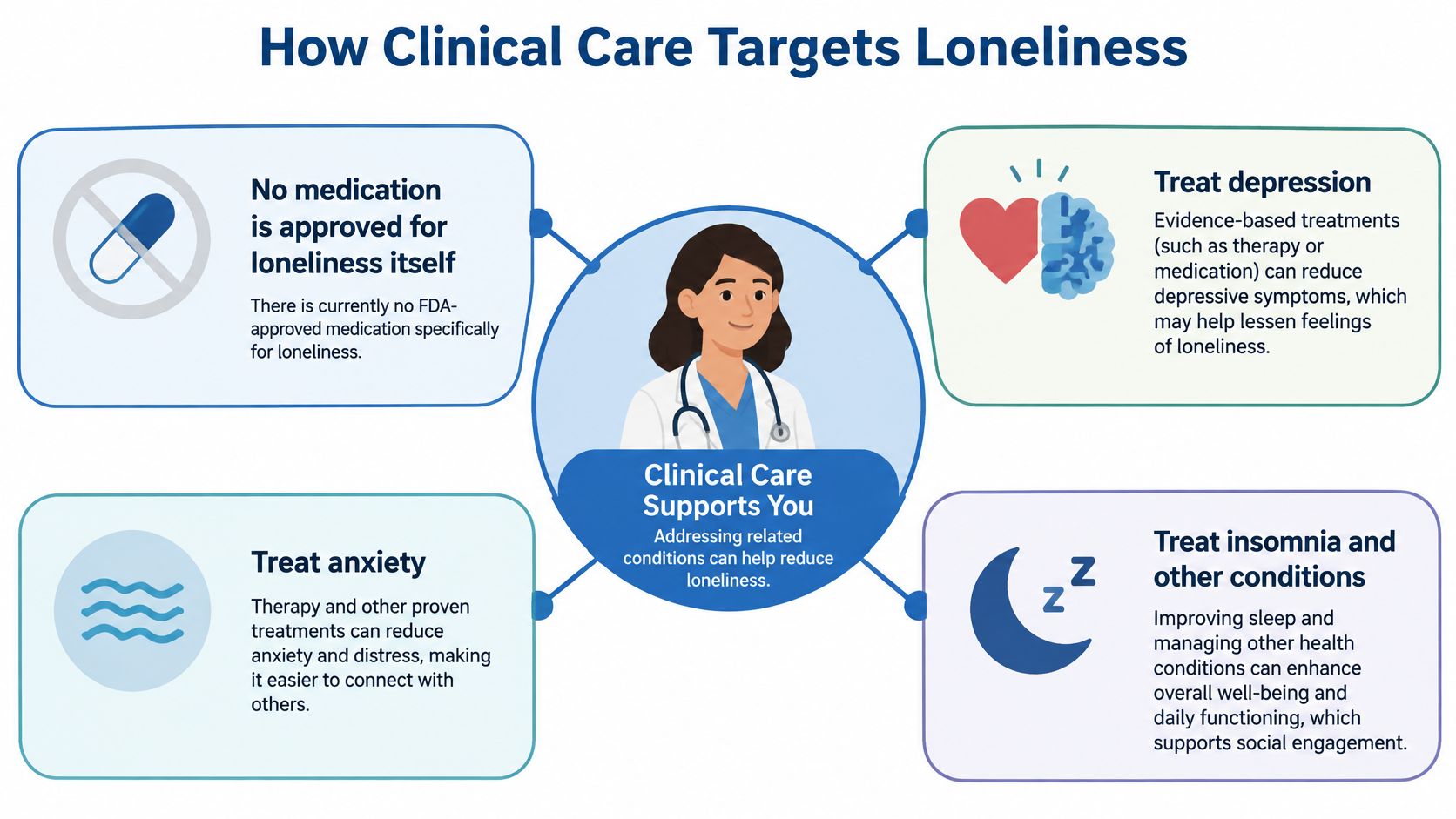
No medication is currently approved to treat loneliness itself. Medication management addresses conditions that may accompany it, such as depression, anxiety, or insomnia. An evaluation should clarify symptoms, medical and psychiatric history, current social contact, sleep, and safety before treatment decisions are made.
Choose care with a clear purpose
CBT addresses thoughts that encourage withdrawal. DBT-informed skills support emotion regulation and more effective communication. Group therapy, when appropriate and available, creates repeated contact with peers working through related difficulties.
Telepsychiatry uses video visits on a smartphone, laptop, or desktop, making access more practical when travel, work, or caregiving interferes. Our visits are private, HIPAA-compliant, and available on any device. Clinical appointments support recovery, but they don't replace friendships or community participation.
Dr. Justin Nepa's medication-management approach is “less is more.” When appropriate, deprescribing means gradually reducing a psychiatric medication dose under professional guidance using a personalized tapering plan. Don't stop medication abruptly or change a dose on your own.
Bring these questions to an evaluation:
Connection: How might loneliness relate to my current symptoms?
Fit: Which therapy approach addresses my main obstacle?
Measurement: How will we tell whether treatment is helping my daily life?
The aim is a plan with a defined clinical purpose, not medication for every painful emotion.
Practical Steps to Rebuild Connection
Choose actions you can repeat within your actual schedule. A modest commitment that fits your life is more usable than an ambitious plan you can't sustain.
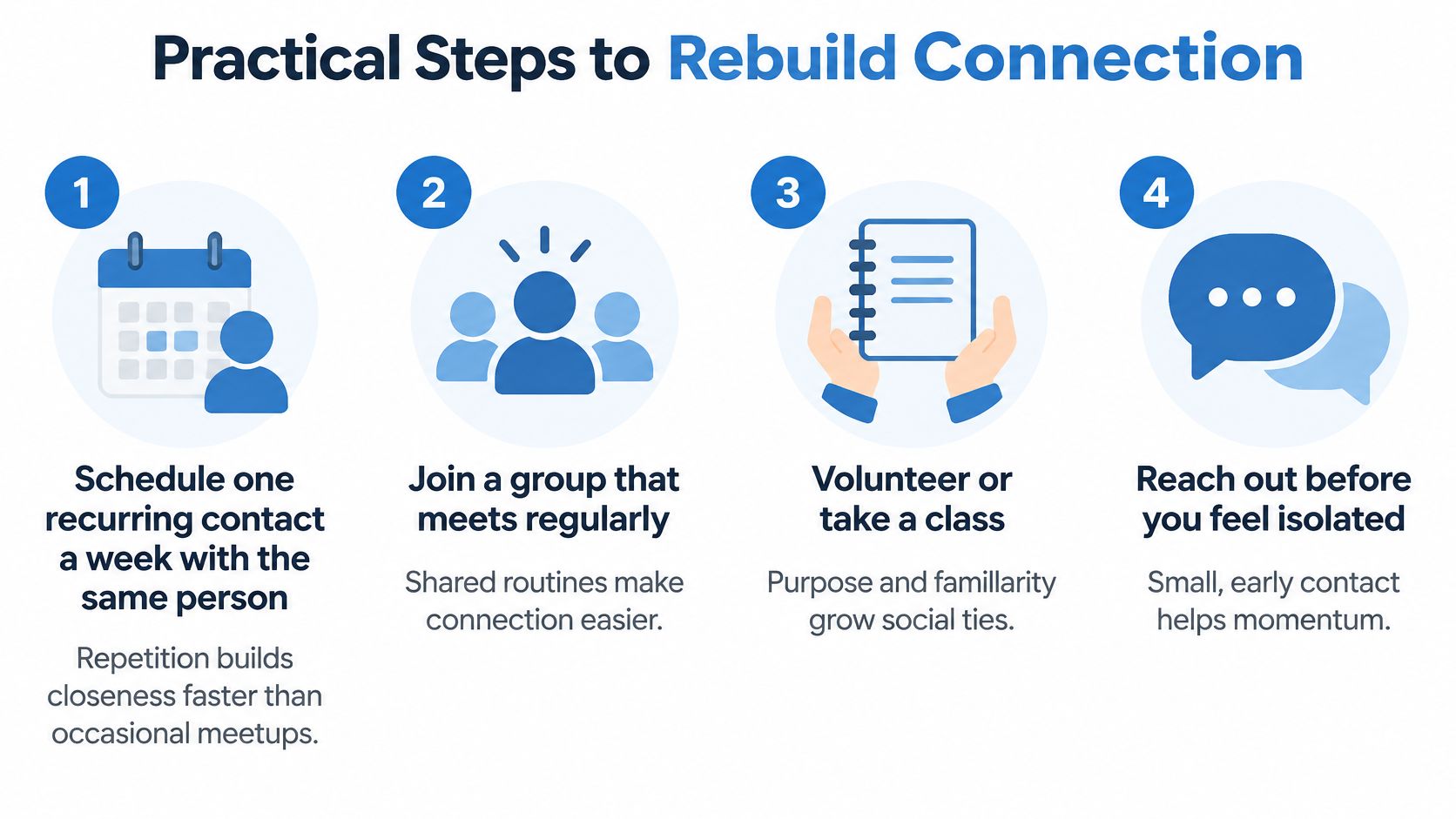
Schedule a recurring weekly contact with the same person. Familiarity gives conversations room to develop beyond a brief update.
Join a structured group with a fixed meeting time. A class, volunteer shift, or peer-support meeting removes the need to renegotiate every encounter.
Choose an affordable shared place. Libraries, parks, and community centers can provide a practical setting for repeat visits without expensive plans.
Practice behavioral activation. Put a small, previously enjoyable activity on your calendar and try it even when motivation is low, rather than waiting to feel ready.
Send a specific invitation. For example, suggest walking the park loop Saturday morning instead of offering an indefinite plan to catch up.
Evaluate online contact deliberately. Use reciprocity, substitution, and how understood you feel to decide which exchanges deserve more time.
Protect a caregiver's identity beyond care. If respite is available, reserve some of it for a social commitment that isn't another caregiving task.
Make the environment part of the plan
Transportation, cost, safety, language access, and mobility can limit what personal effort achieves. A review of community and environmental approaches supports considering accessible spaces and coordinated support alongside individual interventions. Tell your clinician what prevents participation so the plan addresses that barrier rather than labeling it noncompliance.
For families exploring what organized companionship can involve, Cream Home Care's elderly companionship support illustrates that service model. It's a UK resource, not a Florida referral.
A manageable goal: Over the next 30 days, aim for one new contact, one shared activity, and one check-in where you describe how connected you feel.
When to Get Professional Help in Florida
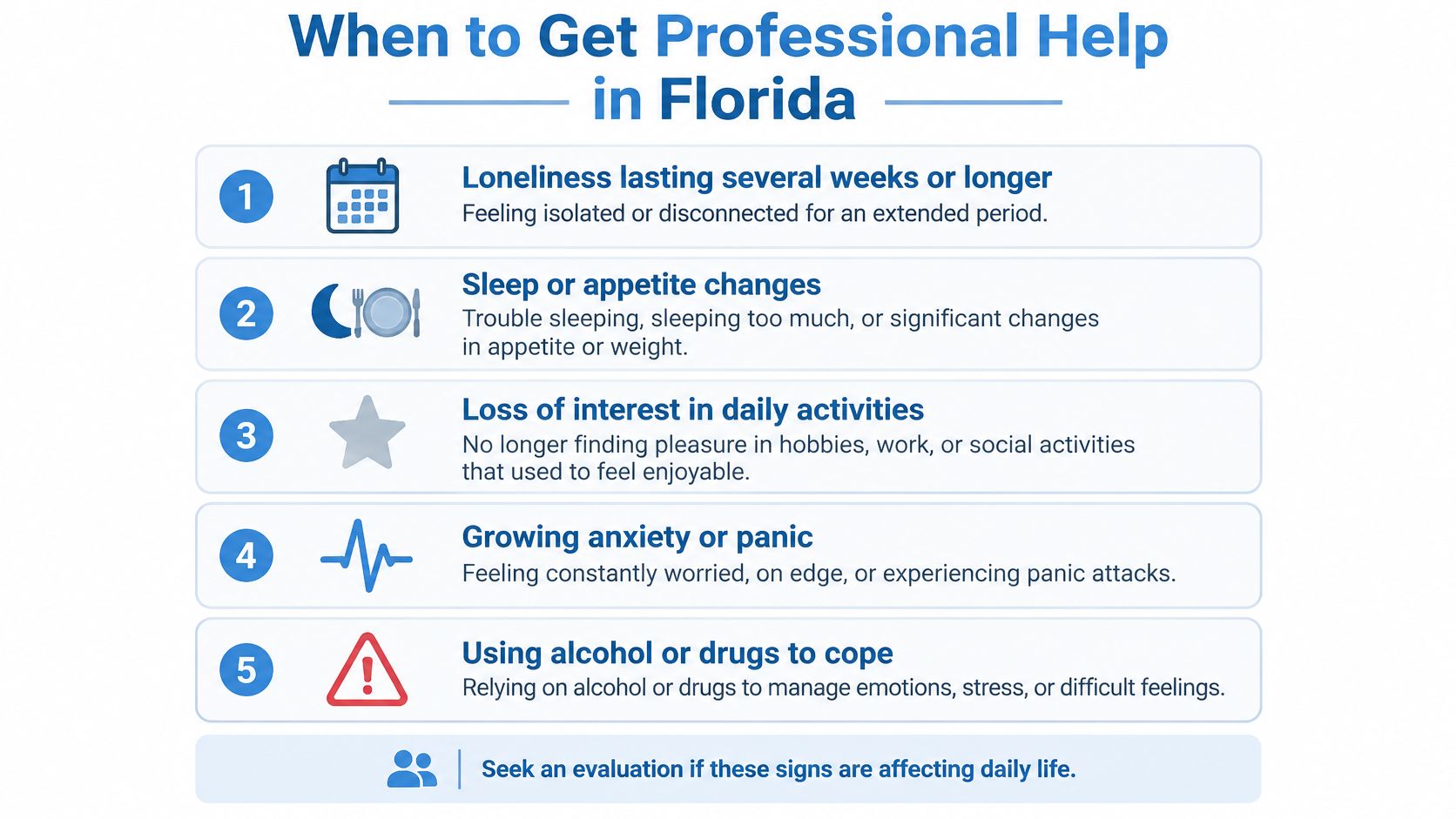
Consider a mental health evaluation if loneliness persists and begins affecting sleep, appetite, enjoyment, or daily responsibilities. Growing anxiety, panic, or reliance on alcohol or drugs to cope are also reasons to seek support. The concern is not loneliness alone, but how long it lasts and how much it disrupts your life.
Arrange the right level of support
For thoughts of self-harm or suicide, call or text 988 in the US. Call 911 in an emergency. Do not wait for a scheduled appointment.
Refresh Psychiatry & Therapy provides statewide, HIPAA-compliant telepsychiatry. Visits can be done on any device with an active internet connection and a webcam; patients must also download the video chat app. This guide to when to see a psychiatrist can help you consider whether an evaluation may be appropriate.
For urgent psychiatric support outside emergencies, contact the clinic to connect with a mental health professional. If intensive monitoring is needed, such as for acute psychosis, the clinic helps coordinate appropriate in-person care.
The practice lists coverage through Aetna, UnitedHealthcare/UHC, Cigna, Blue Cross Blue Shield, Humana, Tricare, UMR, and Oscar. Confirm coverage with the clinic before booking.
This blog is for informational purposes only and does not constitute medical advice. Consult a qualified mental health professional for personalized guidance.
Refresh Psychiatry & Therapy offers psychiatric evaluations, therapy, and coordinated medication management for Florida residents. Contact the clinic through its website to schedule an evaluation.